
Governance sector receives billions in additional allocations in 2026/27 budget
Abstract
Kenya's governance sector, encompassing the Auditor General, Office of the Director of Public Prosecutions (ODPP), Judiciary, and Ethics and Anti-Corruption Commission (EACC), has received substantial additional allocations in the 2026/27 financial year budget. These increases, totaling billions of shillings, signal a renewed governmental commitment to bolstering accountability, enhancing the administration of justice, and intensifying anti-corruption efforts. For legal practitioners, this development portends potential improvements in the efficiency of legal processes, greater capacity for investigations and prosecutions, and strengthened oversight of public finances, ultimately reinforcing the rule of law and constitutionalism in Kenya.
Introduction
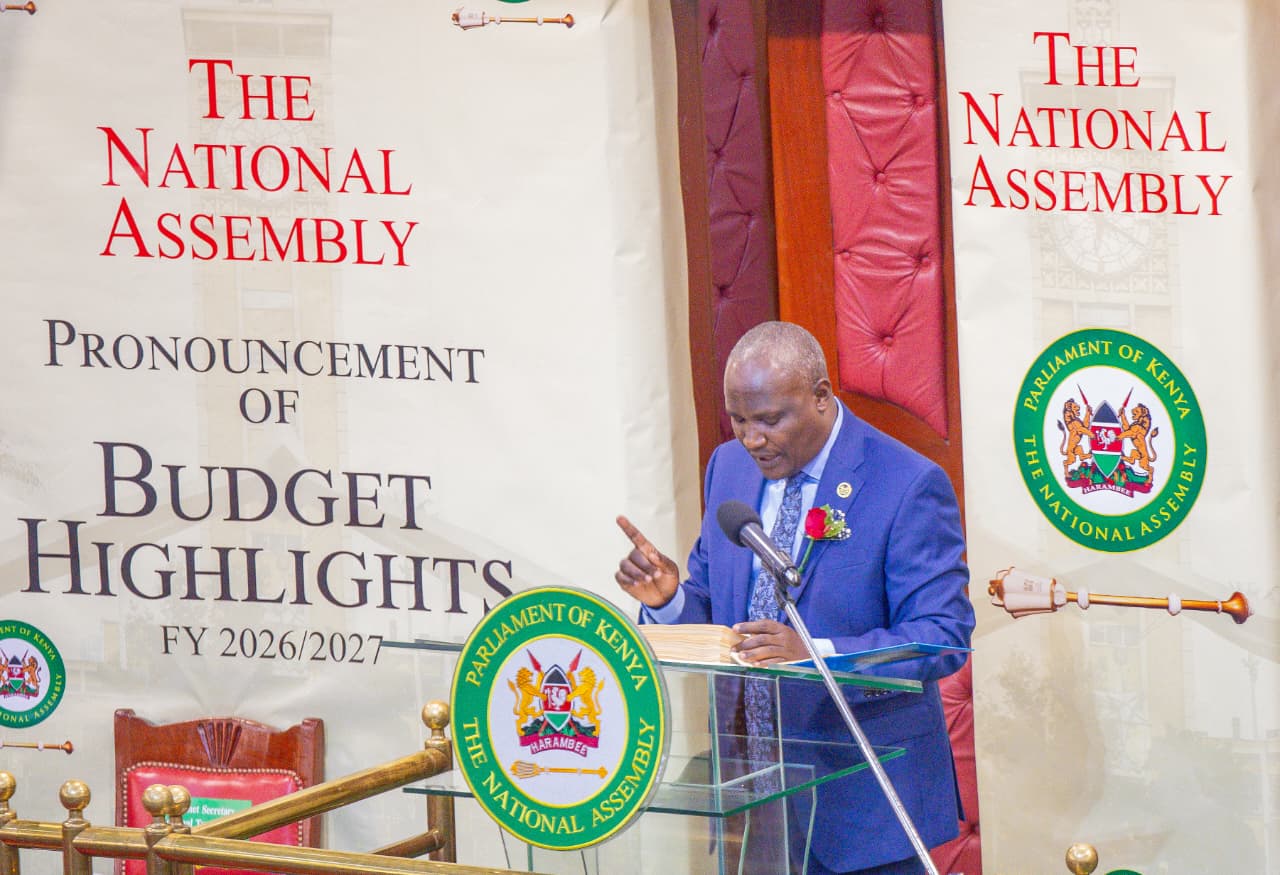
Kenya's commitment to strengthening its governance and anti-corruption architecture has been underscored by significant budgetary increases allocated to key institutions in the 2026/27 financial year. The Auditor General, the Office of the Director of Public Prosecutions (ODPP), the Judiciary, and the Ethics and Anti-Corruption Commission (EACC) are among the beneficiaries, receiving billions of shillings in additional funding compared to the previous financial year. This move, announced by Treasury and Economic Planning Cabinet Secretary John Mbadi, reflects a broader government strategy to enhance transparency, accountability, and the effective administration of justice across the nation.
Background
The constitutional framework in Kenya establishes a robust system of checks and balances, with independent institutions playing a critical role in upholding the rule of law and ensuring good governance. The Constitution of Kenya, 2010, particularly Articles 157, 173, 229, and 249, enshrines the independence and mandates of the ODPP, Judiciary, Auditor-General, and EACC, respectively. For instance, Article 173 establishes the Judiciary Fund, administered by the Chief Registrar, to ensure financial autonomy for the Judiciary, with its expenditure charged to the Consolidated Fund upon parliamentary approval. Similarly, Article 249(3) mandates Parliament to allocate adequate funds to commissions and independent offices, with their budgets forming separate votes to prevent executive interference.
Analysis
The 2026/27 budget proposals reveal specific and substantial increases for the governance sector. The Ethics and Anti-Corruption Commission (EACC) has been allocated KSh 5.1 billion, a KSh 600 million increase from the previous year, aimed at strengthening its mandate to combat and prevent corruption and economic crime. The Office of the Director of Public Prosecutions (ODPP) received a notable KSh 7.0 billion, marking a KSh 2.5 billion increase, intended to bolster prosecution and anti-corruption efforts. The Judiciary's allocation rose to KSh 30.4 billion, an increase of KSh 2.6 billion, to support the administration of justice and enhance public confidence. This is particularly significant given past concerns about underfunding impacting judicial operations and access to justice. The Office of the Auditor General also saw an enhanced allocation of KSh 9.8 billion, up by KSh 1.1 billion, to reinforce public financial oversight and accountability. This increase addresses long-standing appeals for more resources to tackle audit backlogs and expand oversight capacity, especially in the context of devolved governance.
These allocations are crucial for the operationalisation of the constitutional mandates of these institutions. The EACC, established under the Ethics and Anti-Corruption Commission Act, 2011, pursuant to Article 79 of the Constitution, is tasked with law enforcement, prevention, public education, and promotion of integrity. Increased funding will enable more robust investigations and asset recovery efforts. The ODPP, deriving its mandate from Article 157 of the Constitution, is the national prosecuting authority responsible for instituting and undertaking criminal proceedings. The additional funds are expected to enhance its capacity to handle complex cases and improve the efficiency of the criminal justice system. The Judiciary, as an independent arm of government, relies on adequate funding to expand access to justice, improve infrastructure, and embrace technology, which has historically been hampered by budget cuts. The Auditor General, mandated by Article 229 of the Constitution and the Public Audit Act, 2015, to audit public accounts, has consistently highlighted resource constraints as a challenge to its effectiveness, particularly with the expanded scope under devolution.
While the increased allocations are a positive step, the perennial debate surrounding the 'adequacy' of funding for independent institutions persists. Previous reports by bodies like the Law Society of Kenya and the International Commission of Jurists (ICJ Kenya) have highlighted that the Judiciary's budget, even with increases, often falls below international recommended standards (2-6% of the national budget), impacting its independence and operational efficiency. Similarly, the Auditor General's office has faced challenges with insufficient human resources and logistics despite its critical role in safeguarding public finances. The Public Finance Management Act, 2012 (PFM Act), which anchors Kenya's budget-making process, emphasizes transparency and public participation, but the ultimate decision on allocations rests with Parliament. Ensuring that these funds translate into tangible improvements in service delivery and accountability will require diligent oversight and a continued commitment to the principles of financial independence for these crucial governance bodies.
Conclusion
The substantial additional allocations to Kenya's governance sector in the 2026/27 budget represent a critical inflection point, offering a promising outlook for the enhancement of the rule of law, anti-corruption efforts, and public accountability. For legal practitioners, this could translate into more efficient court processes, better-resourced investigative and prosecutorial agencies, and more robust audit oversight, ultimately fostering a more predictable and just legal environment. However, the true impact will hinge on the judicious and transparent utilisation of these funds, coupled with sustained political will to uphold the independence of these institutions.
Practitioners should closely monitor the implementation of these budgets, observing how the increased funding translates into improved operational capacity, reduced case backlogs, and more effective enforcement actions. Engagement with these institutions, through various legal and advocacy channels, remains vital to ensure that the spirit of these allocations—to strengthen governance—is fully realised. The legal community has a crucial role to play in holding these institutions accountable for their performance, advocating for continued adequate resourcing, and championing the constitutional principles that underpin their existence.
Citations
- 1.Constitution of Kenya, 2010
- 2.Public Finance Management Act, 2012
- 3.Ethics and Anti-Corruption Commission Act, 2011
- 4.Public Audit Act, 2015
- 5.Governance sector receives billions in additional allocations in 2026/27 budget | KBC Digital
- 6.About Us - EACC
- 7.Ethics and Anti-Corruption Commission - Wikipedia
- 8.Understanding the Public Finance Management Act (PFMA): The Engine for Devolution
- 9.Who we are – The Office of the Director of Public Prosecutions (ODPP)
- 10.EACC Kenya: Anti-Corruption, Asset Recovery & Chapter 6 Guide - Huduma Global
- 11.Ethics and Anti-Corruption Commission (EACC) - Yellow Pages Kenya Ltd
- 12.Module 2 Planning and Budgeting Processes
- 13.FAQ Categories: Mandate - EACC
- 14.Director of Public Prosecutions of Kenya - Wikipedia
- 15.Auditor General Sounds Alarm Over Funding Shortfall as Audit Backlog Mounts Under Devolution Pressure | Dawan Africa
- 16.Mandate & Functions – The Office of the Director of Public Prosecutions (ODPP)
- 17.Explainer: The Kenya budget cycle - People Daily
- 18.STRENGTHENING PUBLIC AUDIT ACCOUNTABILITY IN KENYA
- 19.Article 173 of The Constitution of Kenya: Judiciary Fund. - sheriaplex.com
- 20.Understanding the Budget Making Process in Kenya - Viva Africa Consulting
- 21.The Public Finance Management Act, 2012 | ConstitutionNet
- 22.Judiciary Mtef Budget Report Fy 2025-26 2027-28 From The Judiciary - Parliament of Kenya
- 23.Judicial Reform in Kenya In 2010, Kenya adopted a new constitution. Part of the goal of this constitution was to ensure the cr
- 24.Commissions and Independent Offices of Kenya - Grokipedia
- 25.50 Things Every Kenyan Needs - Public Finance Under The Constitution - International Budget Partnership
- 26.KENYA'S BUDGET CALENDAR: - National and County
- 27.Mbadi to present FY 2026/27 budget statement to Parliament on June 11 - The Star
- 28.173. Judiciary Fund - Kenya Law Reform Commission (KLRC)
- 29.Funding the Judiciary: Law Society of Kenya's Perspective - Policy Commons
- 30.Article 249 of The Constitution of Kenya: Objects, authority and funding of commissions and independent offices. - sheriaplex.com
- 31.249. Objects, authority and funding of commissions and independent offices
- 32.Here's why Kenya's independent agencies still depend on politics - Katiba Institute
- 33.Challenges Of Strategy Implementation In The Office Of Auditor General Of Kenya - UoN Digital Repository
- 34.examining the independence & functionality of independent fiscal institutions in kenya - Kenya Human Rights Commission (KHRC)
- 35.COMMUNIQUE ON JUDICIARY FUNDING IN KENYA AND THE REGION
- 36.Factchecking Kenya's chief justice on judiciary funding and backlog of cases - Africa Check
- 37.The Public FInance Management Act | The Kenyan Parliament Website
- 38.Article 229 of The Constitution of Kenya: Auditor-General. - sheriaplex.com
- 39.JUDICIARY FUND OPERATIONALISED
- 40.Auditor-General's Report on the National Government Year 2024/2025
- 41.IMPACT OF JUDICIARY BUDGET CUT
- 42.The Public FInance Management Act | The Kenyan Parliament Website
- 43.OFFICE OF THE AUDITOR-GENERAL - Enhancing Accountability - Parliament of Kenya
- 44.Concerns Over Threats to Financial and Functional Independence of the Judicial Arm of Government - Kenya Human Rights Commission (KHRC)
- 45.229. Auditor-General - Kenya Law Reform Commission (KLRC)
- 46.Parliament seeks stronger powers, independent funding for Auditor-General to curb public fund waste | The Eastleigh Voice
- 47.FAQ'S – Office of the Auditor-General
How does this affect your business?
Get an AI analysis of this article grounded in your jurisdictions, practice areas, and any policy documents you've uploaded to Wansom.