
IEBC Committee Rejects Muhia Jurisdiction Challenge
Abstract
The Independent Electoral and Boundaries Commission (IEBC) Electoral Code of Conduct Enforcement Committee recently dismissed a jurisdictional challenge brought by Kipipiri MP Wanjiku Muhia's legal team. The committee affirmed its mandate to hear allegations of code of conduct breaches stemming from remarks made during the Ol Kalou by-election campaigns. This decision, which saw the legal team walk out citing procedural unfairness and questions regarding the committee's composition, reinforces the IEBC's quasi-judicial authority in enforcing electoral integrity. The ruling is significant for practitioners, highlighting the robust nature of electoral dispute resolution mechanisms and the high bar for challenging the jurisdiction of such tribunals in Kenya.
Introduction
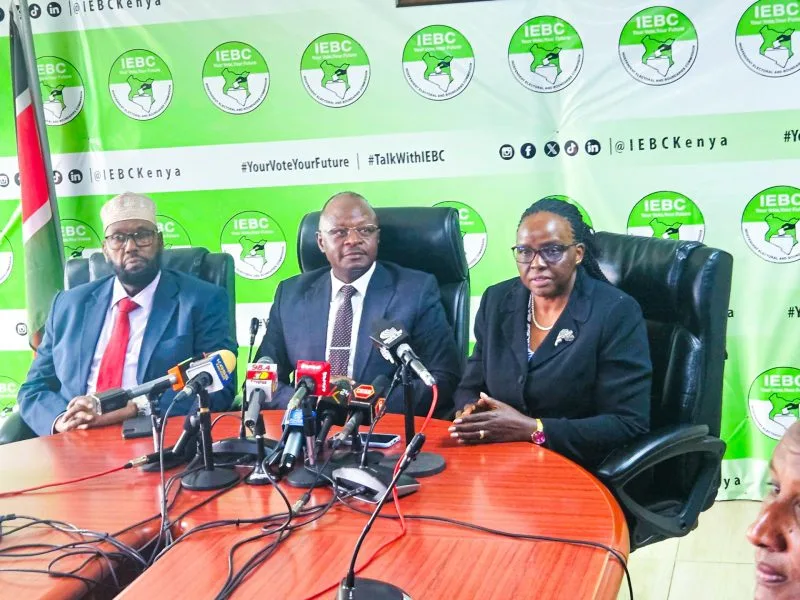
In a development underscoring the Independent Electoral and Boundaries Commission's (IEBC) commitment to upholding electoral integrity, its Electoral Code of Conduct Enforcement Committee recently rejected a jurisdictional challenge in a high-profile case involving Kipipiri Member of Parliament, Wanjiku Muhia. The committee's decision to proceed with the hearing into alleged breaches of the Electoral Code of Conduct, despite a dramatic walkout by Muhia's legal team, signals a firm assertion of its quasi-judicial powers and its role in regulating political conduct during election periods.
This incident, which saw advocates Edward Muriu and Ndegwa Njiru accuse the committee of procedural unfairness and question its composition, brings to the fore critical questions regarding the scope of the IEBC's mandate, the principles of fair administrative action, and the practical challenges faced by legal professionals in electoral dispute resolution. The committee, comprising Commissioners Alutalala Mukhwana, Hassan Noor, and Karen Sorobit, maintained that it was properly constituted and legally empowered to adjudicate the matter.
This article will delve into the legal framework underpinning the IEBC's authority, analyze the implications of the committee's decision to reject the jurisdictional challenge, and discuss the procedural fairness concerns raised by the defence. It aims to provide practitioners with insights into the evolving landscape of electoral justice in Kenya and the standards expected in challenging administrative actions by electoral bodies.
Background
The Independent Electoral and Boundaries Commission (IEBC) is an independent regulatory agency established under Article 88(1) of the Constitution of Kenya, 2010. Its broad mandate, outlined in Article 88(4) of the Constitution and further elaborated in the Elections Act, 2011, includes the continuous registration of voters, delimitation of electoral units, regulation of political parties, and crucially, the settlement of electoral disputes, excluding election petitions and disputes subsequent to the declaration of election results.
Central to the IEBC's regulatory function is the development and enforcement of an Electoral Code of Conduct, which candidates and political parties are mandated to subscribe to and observe. Section 110 of the Elections Act, 2011, alongside Paragraph 6(a) of the Electoral Code of Conduct (found in the Second Schedule of the Elections Act), provides the legal basis for addressing violations of electoral ethics. The IEBC's Electoral Code of Conduct Enforcement Committee is specifically tasked with hearing complaints relating to breaches of this code and imposing sanctions as prescribed by law.
In exercising its dispute resolution functions, the IEBC operates as a quasi-judicial body. Its decisions are subject to the principles of fair administrative action enshrined in Article 47 of the Constitution, which guarantees every person the right to administrative action that is expeditious, efficient, lawful, reasonable, and procedurally fair. The Fair Administrative Action Act, 2015, further operationalizes these constitutional rights, providing a statutory framework for challenging administrative actions on grounds such as procedural impropriety, illegality, and irrationality.
Analysis
The IEBC Electoral Code of Conduct Enforcement Committee's rejection of the jurisdictional challenge in the Muhia case reaffirms the robust nature of its mandate to enforce electoral laws and regulations. The legal team's objection was primarily based on the committee's composition and alleged procedural unfairness, including claims that the panel was not chaired by the gazetted office holder and that insufficient time was provided for preparation. However, the committee, comprising Commissioners Alutalala Mukhwana, Hassan Noor, and Karen Sorobit, ruled that it was properly constituted and legally empowered to proceed.
This decision aligns with established jurisprudence that administrative bodies, when exercising quasi-judicial functions, possess the inherent power to regulate their own proceedings, provided they adhere to the rules of natural justice. The Elections Act, 2011, specifically Section 74, grants the IEBC the power to settle certain electoral disputes, including those arising from nominations, up to the election date. This statutory backing provides a strong foundation for the committee's assertion of jurisdiction over code of conduct breaches occurring during campaigns, as these are pre-election disputes falling squarely within its purview.
The procedural fairness concerns raised by Muhia's legal team, leading to their walkout, invoke Article 47 of the Constitution and the Fair Administrative Action Act, 2015. These provisions entitle individuals to written reasons for administrative actions and ensure that such actions are procedurally fair. While the committee dismissed the objection, the walkout itself highlights the tension that can arise between an administrative tribunal's self-asserted authority and a party's perception of due process. Such procedural objections, if not adequately addressed, can form grounds for subsequent judicial review applications in the High Court, as contemplated by Muhia's legal team.
However, challenging the jurisdiction of an electoral tribunal or committee, particularly on grounds related to panel composition rather than a clear statutory prohibition, typically requires a high threshold. The committee's decision to proceed despite the walkout indicates its confidence in its legal standing and adherence to internal procedures. The specific allegations against Muhia, concerning Section 110 of the Elections Act and Paragraph 6(a) of the Electoral Code of Conduct, pertain to remarks allegedly made during a public rally. The outcome of the committee's substantive ruling on these allegations will further define the boundaries of acceptable political speech and conduct during electoral campaigns.
This case also subtly touches upon the distinction between the IEBC's dispute resolution mandate and that of other electoral justice institutions like the Political Parties Disputes Tribunal (PPDT) and election courts. The IEBC's role is primarily focused on pre-election disputes and code of conduct enforcement, while election courts handle post-declaration petitions. The committee's firm stance reinforces the importance of exhausting administrative remedies within the IEBC's framework before resorting to higher courts, although judicial review remains an option for challenging the legality or procedural fairness of the committee's decisions.
Conclusion
The IEBC Electoral Code of Conduct Enforcement Committee's decision to reject the jurisdictional challenge by Kipipiri MP Wanjiku Muhia's legal team marks a significant affirmation of the Commission's powers in maintaining electoral integrity. For legal practitioners, this case underscores the critical importance of understanding the precise scope of the IEBC's quasi-judicial authority, particularly under Article 88(4) of the Constitution and the Elections Act, 2011, in settling pre-election disputes and enforcing the Electoral Code of Conduct. The high threshold for successfully challenging the jurisdiction or composition of such tribunals is a key takeaway, reminding counsel to meticulously prepare and present objections within the established legal framework.
Looking ahead, practitioners should closely monitor the committee's substantive ruling on the alleged code of conduct breaches, as it will provide further clarity on the standards of conduct expected from political actors during campaigns and the potential sanctions for non-compliance. Furthermore, any subsequent judicial review applications to the High Court challenging the committee's procedural fairness or legality will offer valuable precedents on the interplay between administrative tribunals and the constitutional right to fair administrative action. Advising clients on strict adherence to the Electoral Code of Conduct and navigating the IEBC's dispute resolution mechanisms effectively will remain paramount in Kenya's dynamic electoral landscape.
Citations
- 1.Constitution of Kenya, 2010
- 2.Elections Act, 2011 (No. 24 of 2011)
- 3.Fair Administrative Action Act, 2015 (No. 4 of 2015)
- 4.Independent Electoral and Boundaries Commission Act, 2011
- 5.IEBC committee rejects Muhia jurisdiction challenge, to rule on code of conduct breach (Capital FM Kenya, June 26, 2026)
- 6.Kenya: Muhia's Lawyers Walk Out of IEBC Code of Conduct Hearing Over Jurisdiction Dispute (allAfrica.com, June 26, 2026)
- 7.IEBC clashes with Kipipiri MP Wanjiku Muhia's lawyers at conduct hearing (Citizen Digital, June 27, 2026)
- 8.Wanjiku Muhia's lawyers walk out of IEBC hearing as legal team challenges committee's jurisdiction (TV47 Kenya, June 26, 2026)
How does this affect your business?
Get an AI analysis of this article grounded in your jurisdictions, practice areas, and any policy documents you've uploaded to Wansom.