
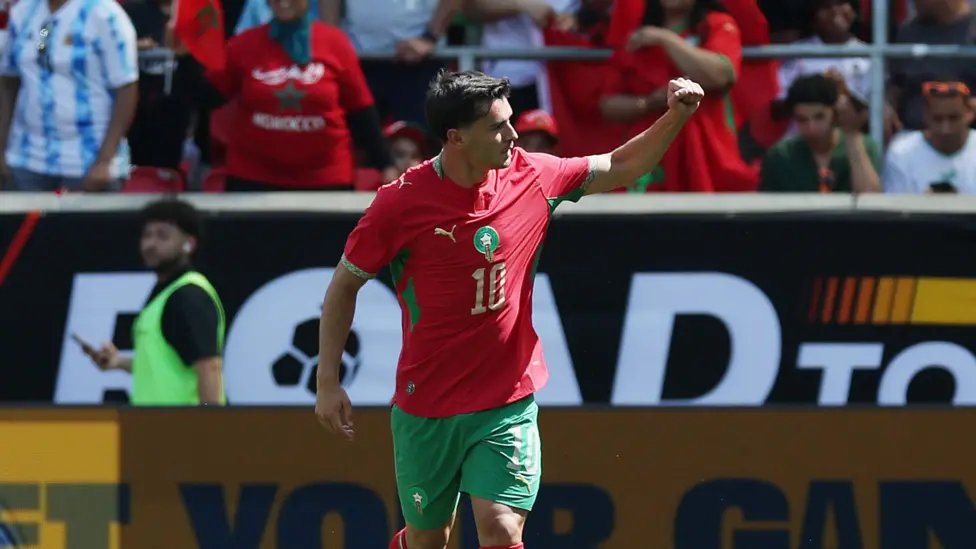
Injury worry for Morocco after friendly draw against Norway
Abstract
The recent 'injury worry' for a Moroccan player during a friendly match against Norway highlights the intricate legal and financial landscape surrounding professional football player injuries on international duty. This article examines the key legal frameworks, including FIFA's Club Protection Programme (CPP), player contractual obligations, and the broader insurance mechanisms designed to mitigate risks for clubs, national federations, and athletes. It delves into the scope of compensation available, the mandatory nature of player release for international fixtures, and the potential for liability in cases of negligence, providing a comprehensive overview for legal professionals navigating the complexities of sports law.
Introduction
The headline reporting an 'injury worry' for a Moroccan player following a friendly draw against Norway, while seemingly a straightforward sports update, immediately brings to the fore a complex web of legal and financial considerations within professional football. For clubs, the prospect of a key player sustaining an injury while on international duty represents not only a sporting setback but also a significant financial burden, given their ongoing salary obligations and potential loss of performance. This tension between club interests and national team commitments is a perennial feature of the global game.
Such incidents underscore the critical importance of robust legal and regulatory frameworks that govern player welfare, contractual agreements, and financial compensation. The implications extend beyond the immediate medical treatment, touching upon employment contracts, insurance policies, and international football regulations. Understanding these interlocking legal mechanisms is essential for clubs, national associations, and player agents alike to effectively manage risk and ensure fair treatment.
This article will explore the legal ramifications of player injuries sustained during international matches, particularly friendlies, focusing on the role of FIFA's Club Protection Programme, the contractual obligations between players and clubs, and the broader landscape of sports insurance. It aims to provide legal practitioners with a clear understanding of the rights, responsibilities, and remedies available when such 'injury worries' materialise.
Background
The relationship between football clubs and national associations regarding player release for international duty has historically been a source of contention. Clubs invest heavily in player development and salaries, viewing players as valuable assets, while national associations assert their right to call upon eligible players to represent their country. To reconcile these competing interests, FIFA, the international governing body of football, established a comprehensive regulatory framework, primarily through its Regulations on the Status and Transfer of Players (RSTP).
Under Annex 1 of the FIFA RSTP, clubs are unequivocally obliged to release their registered players for representative teams of their country when called upon, and this release is not subject to compensation from the national association to the club. However, recognising the financial exposure of clubs when players are injured while representing their national teams, FIFA introduced the Club Protection Programme (CPP) in 2012. The CPP was a landmark development, aiming to provide financial security to clubs by compensating them for the fixed salaries of players who suffer temporary total disablement during international duty. This programme has since been updated and expanded, reflecting an ongoing effort to balance the demands of international football with the financial realities faced by clubs.
Analysis
The FIFA Club Protection Programme (CPP) is central to mitigating the financial impact of player injuries sustained during international duty. The programme provides compensation to clubs for professional players who are under an employment contract and are released to an association for international 'A' matches, including approved friendlies listed in the FIFA International Match Calendar. For a claim to be eligible, the player must suffer a temporary total disablement (TTD) as a result of an accident, and this injury must prevent the player from playing for more than 28 consecutive days. Compensation is based solely on the player's fixed salary, paid directly by the club, and is capped at a maximum of EUR 7,500,000 per player per accident, calculated on a daily pro-rata basis for up to 365 days, with a daily maximum of EUR 20,548. It is important to note that the CPP does not cover permanent total disablement, death, or medical treatment costs.
Beyond the CPP, player contracts themselves often contain crucial provisions regarding injury. Professional football contracts typically include 'injury guarantees' which stipulate that if a player is released but is unable to perform due to an injury sustained from team activities, they are entitled to any money in their contract protected against injury. This ensures that clubs remain obligated to pay a player's salary even when they are sidelined, an obligation that the CPP is designed to partially offset when the injury occurs on international duty. Furthermore, contracts may include clauses restricting players from engaging in high-risk activities outside of their official club duties to prevent off-field injuries, highlighting the club's vested interest in player fitness.
The broader insurance landscape for professional athletes also plays a significant role. Many professional athletes secure various forms of personal insurance, including Permanent Total Disability (PTD) and Temporary Total Disability (TTD) coverage, which protect against career-ending or temporary incapacitation. While some leagues may offer sponsored disability plans, private high-coverage insurance is often critical, especially for players with non-guaranteed contracts or those approaching free agency. These policies can cover lost income, endorsement deals, and provide lump sums for critical injuries, offering a layer of protection beyond the club's contractual obligations and the FIFA CPP.
While injuries are an inherent risk in contact sports like football, legal liability can arise if an injury results from negligence. For a claim of negligence to succeed, it must be proven that a duty of care was owed, that duty was breached, and the breach caused the damage suffered. In football, all participants owe a duty of care to one another, but the threshold for proving a breach is high, requiring conduct that is reckless and falls below the standard of a reasonably skilful and competent professional player, rather than a mere error of judgment. Clubs, governing bodies, and even individual players can face legal action if their actions or omissions are found to be negligent, as seen in various international cases where players have successfully claimed damages for career-ending injuries caused by reckless play or inadequate safety provisions.
Conclusion
The 'injury worry' for a Moroccan player, while a sporting concern, serves as a potent reminder of the complex legal and financial ecosystem underpinning professional football. For legal practitioners, understanding the interplay between FIFA regulations, national association duties, club contractual obligations, and various insurance mechanisms is paramount. The FIFA Club Protection Programme provides a crucial safety net for clubs, ensuring partial compensation for player salaries during periods of temporary disablement sustained on international duty, including during friendly matches on the official calendar.
Practitioners advising clubs, players, or national federations must ensure that player contracts are meticulously drafted to include clear injury guarantees and clauses that align with international regulations. Furthermore, a thorough understanding of the scope and limitations of the FIFA CPP, alongside exploring supplementary private insurance options, is essential for comprehensive risk management. As the demands on professional athletes continue to grow, the legal frameworks governing their welfare and the financial implications of injury will remain a critical area of focus for the sports law community, requiring ongoing vigilance and expert legal counsel to navigate effectively.
How does this affect your business?
Get an AI analysis of this article grounded in your jurisdictions, practice areas, and any policy documents you've uploaded to Wansom.