
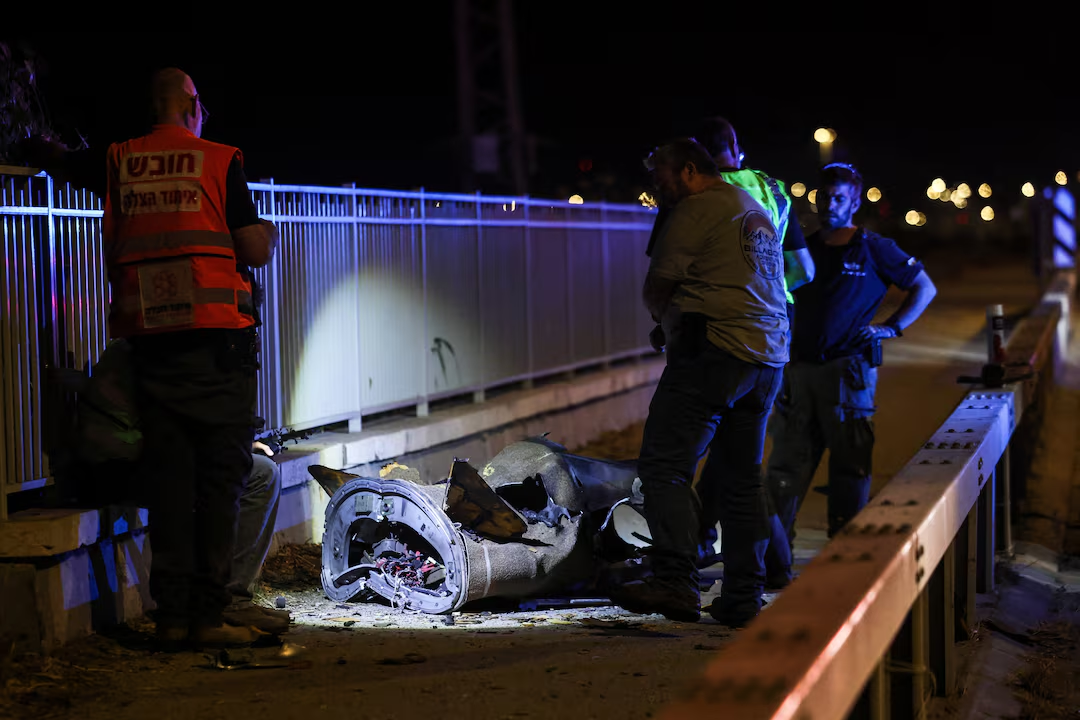
Israel hits Iran with new strikes despite Trump admonition
Abstract
The reported Israeli strikes on military targets in Iran, despite a purported admonition from the United States, raise critical questions under the international legal framework governing the use of force. This article examines the core principles of international law, specifically the prohibition on the use of force enshrined in Article 2(4) of the UN Charter and the exception of self-defence under Article 51. It delves into the nuances of state responsibility and the legal implications of third-party interventions or admonitions. For practitioners in Ghana, understanding these international norms is crucial, as Ghana's foreign policy is constitutionally anchored in promoting respect for international law and the peaceful settlement of disputes, aligning it with the broader international community's commitment to a rules-based order.
Introduction
Recent reports detailing Israeli military strikes against targets in western and central Iran, occurring despite a reported admonition from the United States President, underscore the volatile nature of international relations and bring to the fore fundamental principles of international law. This geopolitical event, while geographically distant, resonates globally, prompting legal professionals to consider the intricate framework governing the use of force between states. The incident necessitates an examination of the parameters within which states may lawfully resort to military action and the legal weight, if any, of external diplomatic pressures.
This article aims to provide a comprehensive overview of the international legal principles applicable to such cross-border military actions. It will primarily focus on the United Nations Charter's provisions concerning the prohibition on the use of force and the right to self-defence, alongside principles of state responsibility. Furthermore, it will briefly touch upon the relevance of these international norms to Ghana, a nation whose foreign policy is firmly rooted in the promotion of international law and peaceful dispute resolution, as enshrined in its own constitutional framework.
The central thesis is that any use of force by a state against another must strictly conform to the narrow exceptions permitted under international law, primarily self-defence in response to an armed attack, and that unilateral admonitions, while politically significant, do not alter the underlying legal obligations of states under the UN Charter and customary international law.
Background
The bedrock of modern international law concerning the use of force is Article 2(4) of the United Nations Charter, which unequivocally prohibits member states from the threat or use of force against the territorial integrity or political independence of any state, or in any other manner inconsistent with the Purposes of the United Nations. This prohibition is considered a cornerstone of the international legal order, aimed at maintaining international peace and security. However, this prohibition is not absolute, with the most significant exception being the inherent right of individual or collective self-defence, as codified in Article 51 of the UN Charter.
Article 51 stipulates that this right may be exercised "if an armed attack occurs against a Member of the United Nations, until the Security Council has taken measures necessary to maintain international peace and security." States exercising this right are obligated to immediately report such measures to the Security Council. Customary international law further refines the concept of self-defence, requiring that any such action must be both necessary and proportionate to the armed attack. The International Court of Justice (ICJ) in the case of *Military and Paramilitary Activities in and against Nicaragua (Nicaragua v. United States of America)* affirmed the customary nature of these principles, distinguishing between the "most grave forms of the use of force" amounting to an armed attack, and "less grave forms" which, while unlawful, may not trigger the right to self-defence.
Beyond the direct use of force, the principles of state responsibility, as articulated in the International Law Commission's Articles on the Responsibility of States for Internationally Wrongful Acts (ASR), are also pertinent. These articles establish that every internationally wrongful act of a state entails the international responsibility of that state, provided the conduct is attributable to the state and constitutes a breach of an international obligation. Circumstances precluding wrongfulness, such as self-defence, are also recognized within the ASR.
Analysis
The reported Israeli strikes on Iranian targets, if confirmed, would immediately trigger an assessment under Article 2(4) of the UN Charter. The critical legal question would revolve around whether these strikes could be justified under Article 51 as an exercise of self-defence. For such a justification to hold, Israel would need to demonstrate that an "armed attack" had occurred or was imminent, necessitating the use of force, and that the response was both necessary and proportionate. The concept of "imminent attack" for anticipatory self-defence is a highly debated area in international law, often requiring stringent conditions to prevent abuse.
The reported admonition from the U.S. President to the Israeli Prime Minister, while a significant diplomatic development, holds no direct legal weight in determining the legality of the strikes under international law. States are sovereign entities, and their actions are primarily governed by their international obligations, not by the unilateral requests or admonitions of other states, however powerful. Such admonitions might reflect political disapproval or strategic concerns, but they do not alter the legal permissibility of an act of self-defence or constitute a legal prohibition in themselves. The legal framework remains the UN Charter and customary international law.
The attribution of responsibility for the strikes would fall squarely on Israel if they were carried out by its state organs, consistent with Article 4 of the ILC Articles on State Responsibility. If the strikes are found to be in breach of international law, Israel would incur international responsibility, entailing obligations such as cessation of the wrongful act and reparation for any injury caused. The *Nicaragua* case is instructive here, where the ICJ found the United States in breach of its obligations under customary international law for supporting paramilitary activities against Nicaragua, emphasizing the principles of non-intervention and the prohibition on the use of force.
From a Ghanaian perspective, these international legal developments are highly relevant. Ghana's 1992 Constitution, particularly Article 40, mandates the government to promote respect for international law, treaty obligations, and the peaceful settlement of international disputes. Ghana is a signatory to the UN Charter and numerous other international instruments, including the Geneva Conventions and the Rome Statute of the International Criminal Court, demonstrating its commitment to a rules-based international order. Therefore, while not directly involved in the conflict, Ghana, through its foreign policy, would consistently advocate for adherence to international law and the peaceful resolution of such disputes, condemning any actions that violate the territorial integrity or political independence of states without lawful justification.
The complexities surrounding the definition of "armed attack" and the scope of anticipatory self-defence continue to be areas of contention in international law. The international community, including states like Ghana, consistently calls for strict adherence to the UN Charter's framework to prevent unilateral actions that could destabilize global peace and security. The absence of a clear, universally accepted definition for certain aspects of self-defence allows for varying interpretations, which can be exploited to justify military interventions, thereby challenging the very principles the UN Charter seeks to uphold.
Conclusion
The reported Israeli strikes on Iran, irrespective of the accompanying diplomatic pressures, serve as a stark reminder of the enduring importance of international law in regulating the conduct of states. The legality of such actions hinges critically on their conformity with the stringent requirements of self-defence under Article 51 of the UN Charter, a principle further elaborated by customary international law and judicial pronouncements like those of the International Court of Justice. Any deviation from these established norms risks undermining the foundational prohibition on the use of force and destabilizing the international order.
For legal practitioners, particularly those advising on international law, foreign policy, or human rights in jurisdictions like Ghana, these events underscore the necessity of a deep understanding of *jus ad bellum* and *jus in bello*. Ghana's constitutional commitment to international law and peaceful dispute resolution means that its legal and diplomatic posture will consistently align with upholding the UN Charter and advocating for a rules-based global system. Practitioners should remain vigilant to evolving interpretations of self-defence and state responsibility, as these will continue to shape international relations and potentially influence domestic legal frameworks concerning international obligations. The international community, including Ghana, must continue to advocate for dialogue and diplomacy as the primary means of resolving inter-state disputes, reinforcing the principles of sovereignty and non-intervention.
Citations
- 1.United Nations Charter, Article 2(4)
- 2.United Nations Charter, Article 51
- 3.International Court of Justice, *Military and Paramilitary Activities in and against Nicaragua (Nicaragua v. United States of America)*, Judgment of 27 June 1986, I.C.J. Reports 1986, p. 14.
- 4.International Law Commission, Articles on Responsibility of States for Internationally Wrongful Acts, 2001, General Assembly Resolution 56/83, Annex.
- 5.Constitution of the Republic of Ghana, 1992, Article 40
- 6.Constitution of the Republic of Ghana, 1992, Article 73
- 7.Geneva Conventions of 12 August 1949
- 8.Rome Statute of the International Criminal Court, 17 July 1998
How does this affect your business?
Get an AI analysis of this article grounded in your jurisdictions, practice areas, and any policy documents you've uploaded to Wansom.