
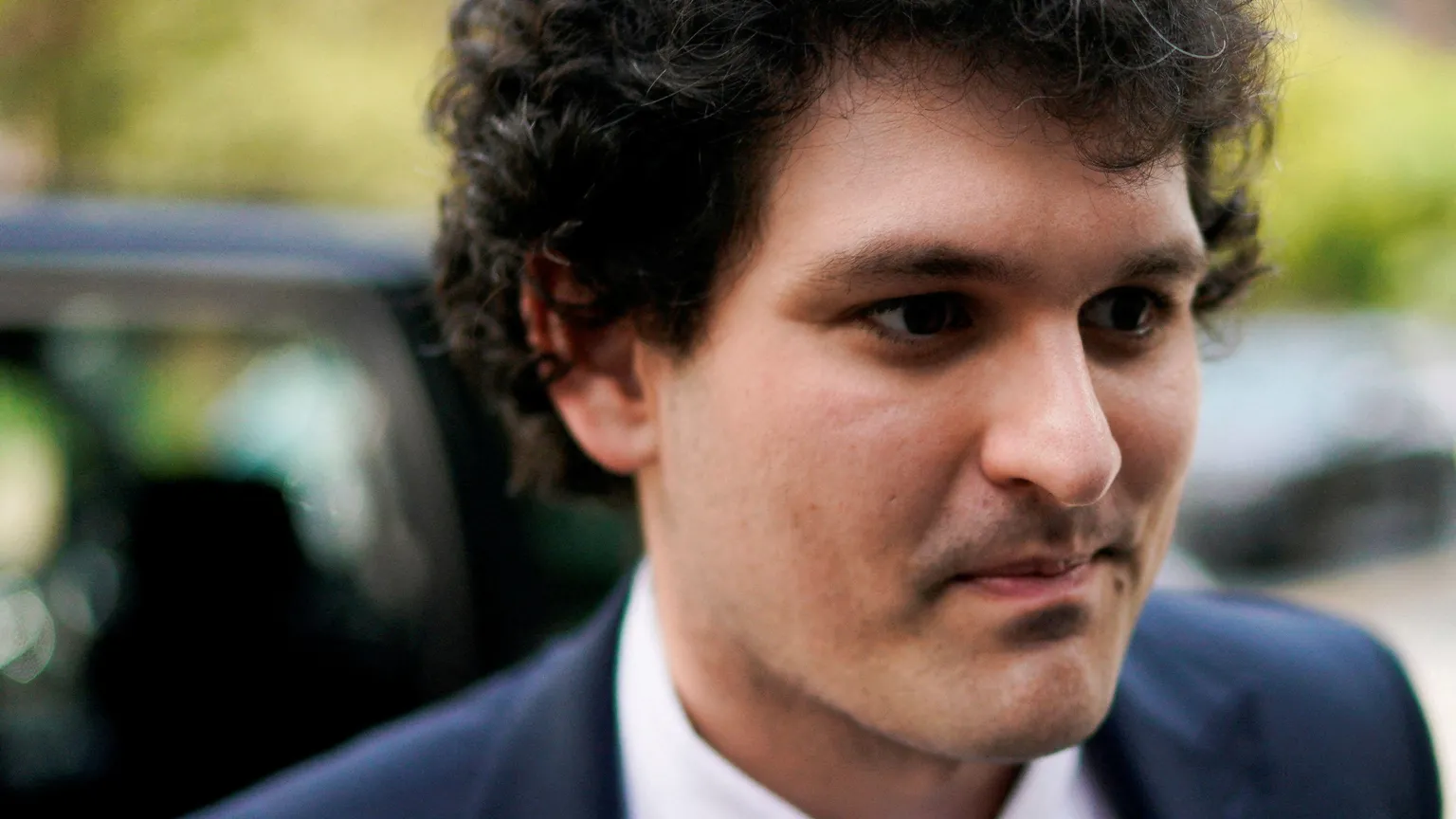
Jailed crypto founder Sam Bankman-Fried seeks Trump pardon
Abstract
Sam Bankman-Fried, the founder of the now-defunct cryptocurrency exchange FTX, recently sought a presidential pardon from former U.S. President Donald Trump, following his conviction and 25-year federal prison sentence for orchestrating a massive fraud. This development, occurring shortly after his appeal was denied, highlights the broad and often politically charged nature of the U.S. President's clemency power. The article delves into the constitutional basis of presidential pardons, the typical procedural requirements, and the historical context of such executive actions, particularly under former President Trump's administration. It also briefly contrasts the U.S. framework with Ghana's executive clemency provisions, offering a comparative perspective for legal professionals on the exercise of this significant executive authority in high-profile criminal cases.
Introduction
The legal landscape surrounding high-profile white-collar crime has been stirred by the recent news that Sam Bankman-Fried (SBF), the disgraced founder of the FTX cryptocurrency exchange, has applied for a presidential pardon from former U.S. President Donald Trump. This extraordinary move comes on the heels of his conviction on seven counts of fraud and conspiracy and a subsequent 25-year federal prison sentence, which was recently upheld on appeal.
Bankman-Fried's pursuit of executive clemency from a former president, especially one known for a distinctive approach to pardons, thrusts the case into a complex intersection of criminal justice, constitutional law, and political dynamics. For legal practitioners, this scenario offers a compelling study of the scope and limitations of presidential power, the criteria (or lack thereof) guiding such decisions, and the potential implications for the finality of judicial outcomes. The timing of the request, while appeals are still potentially ongoing, further complicates the traditional understanding of the pardon process.
This article will explore the legal framework governing presidential pardons in the United States, examining the constitutional authority, the conventional application process, and the historical precedents that inform such decisions. It will also consider the unique political dimensions that often accompany high-profile pardon requests, particularly in the context of a former president known for controversial clemency grants, and draw a brief comparative note to executive clemency powers in Ghana.
Background
Sam Bankman-Fried was at the helm of FTX, once a leading cryptocurrency exchange, and its affiliated hedge fund, Alameda Research. In November 2022, FTX collapsed amidst revelations of widespread fraud and mismanagement, leading to Bankman-Fried's arrest in the Bahamas and subsequent extradition to the United States. He was charged with, and later convicted of, two counts of wire fraud, two counts of conspiracy to commit wire fraud, one count of conspiracy to commit securities fraud, one count of conspiracy to commit commodities fraud, and one count of conspiracy to commit money laundering.
On March 28, 2024, U.S. District Judge Lewis A. Kaplan sentenced Bankman-Fried to 25 years in federal prison and ordered a forfeiture of over $11 billion, citing the extraordinary harm caused to victims whose life savings were wiped out. His conviction and sentence were affirmed by a three-judge panel of the New York-based Second U.S. Circuit Court of Appeals on June 12, 2026, rejecting claims of an unfair trial. Despite this, Bankman-Fried has reportedly sought a pardon, a power vested in the President of the United States by Article II, Section 2, Clause 1 of the U.S. Constitution.
This constitutional provision grants the President the power to grant reprieves and pardons for offenses against the United States, except in cases of impeachment. This power is exceptionally broad, extending to all federal criminal offenses and capable of being exercised before, during, or after legal proceedings. A pardon effectively forgives the offense, removes the punishment, and restores civil rights, though it does not expunge the conviction from the record. While there is a traditional process involving the Department of Justice's Office of the Pardon Attorney (OPA), which typically recommends a five-year waiting period after sentence completion, the President is not legally bound by these recommendations or procedures.
Analysis
The President's pardon power is a plenary executive authority, largely unfettered by legislative or judicial review, as affirmed by the U.S. Supreme Court in cases like *Ex parte Garland*, 71 U.S. 333 (1866). This broad discretion means that a President can grant a pardon for virtually any reason, or no reason at all, for federal offenses. The traditional criteria considered by the Office of the Pardon Attorney, such as remorse, post-conviction conduct, and the severity of the offense, serve as advisory guidelines rather than strict legal requirements for the President.
Sam Bankman-Fried's pardon request is notable for its timing. Typically, individuals seek pardons after exhausting all appeals and demonstrating significant rehabilitation or having served a substantial portion of their sentence. Bankman-Fried's appeal was only recently denied, and he has only just begun serving his 25-year sentence. This early application suggests an attempt to bypass the conventional process, a strategy that aligns with former President Trump's known tendency to issue pardons based on personal appeals or political considerations, often circumventing the Department of Justice's recommendations.
Former President Trump's history of granting clemency includes numerous controversial decisions, frequently benefiting political allies, supporters, or individuals convicted of white-collar crimes. His pardons have often been criticized for undermining the work of federal prosecutors and for appearing transactional. The request from Bankman-Fried, a figure whose case garnered immense public attention and involved significant financial fraud, would undoubtedly face intense scrutiny if considered by a future Trump administration.
From a comparative law perspective, the President of Ghana also possesses a prerogative of mercy, enshrined in Article 72 of the 1992 Constitution. This power allows the Ghanaian President, acting in consultation with the Council of State, to grant pardons (free or conditional), respites, substitute punishments, or remit penalties for criminal offenses. While the constitutional basis is similar in granting broad executive clemency, the requirement for consultation with the Council of State introduces a layer of collective deliberation not explicitly mandated for the U.S. President, who can act unilaterally. This difference highlights varying approaches to balancing executive power with checks and balances in the exercise of mercy.
Conclusion
The pardon request by Sam Bankman-Fried underscores the enduring significance of executive clemency in the criminal justice system and its susceptibility to political influence, particularly in the United States. For legal practitioners, understanding the expansive nature of the U.S. President's pardon power, its constitutional underpinnings, and the practical realities of its application is crucial. While the Department of Justice outlines a structured process, the President retains ultimate, largely unfettered discretion, which can lead to outcomes that diverge from conventional judicial or prosecutorial expectations.
Practitioners should advise clients on the complexities of seeking clemency, emphasizing that while the power is broad, its exercise is unpredictable and often influenced by factors beyond legal merit. The timing of Bankman-Fried's request, coming after a conviction and before the full exhaustion of all potential appeals, sets a precedent for aggressive pursuit of executive intervention. As the U.S. political landscape evolves, the potential for such high-profile pardons will remain a critical area to watch, influencing public perception of justice and the separation of powers. Legal professionals, both domestically and internationally, should continue to monitor developments in this area, recognizing the profound impact executive clemency can have on individual fates and the broader legal system.
Citations
- 1.U.S. Constitution, Article II, Section 2, Clause 1
- 2.Ex parte Garland, 71 U.S. 333 (1866)
- 3.Constitution of the Republic of Ghana, 1992, Article 72
- 4.United States v. Samuel Bankman-Fried, U.S. District Court for the Southern District of New York (2023)
- 5.U.S. Department of Justice, Office of the Pardon Attorney, Frequently Asked Questions (April 29, 2026)
- 6.Department of Justice, Samuel Bankman-Fried Sentenced to 25 Years for His Orchestration of Multiple Fraudulent Schemes (March 28, 2024)
- 7.Forbes, Disgraced FTX Founder Sam Bankman-Fried Loses Appeal Of 25-Year Sentence (June 12, 2026)
- 8.Fox Business, Convicted crypto fraudster seeking Trump pardon loses bid to overturn 25-year prison sentence (June 13, 2026)
- 9.Wikipedia, Trial of Sam Bankman-Fried
- 10.Forbes, FTX Founder Sam Bankman-Fried Loses Appeal Of Fraud Conviction And 25-Year Sentence (June 12, 2026)
- 11.International Association of Women Judges, Sam Bankman-Fried's Appeal Rejected: 25-Year Sentence Upheld - Earnings Call Transcript (June 12, 2026)
- 12.Army University Press, The President's Pardon Power
- 13.Congress.gov, Overview of Pardon Power | Constitution Annotated
- 14.Courthouse News Service, Second Circuit denies Sam Bankman-Fried's bid to overturn FTX crypto fraud conviction (June 12, 2026)
- 15.FindLaw, Presidential Pardons Under Article II - U.S. Constitution
- 16.Wikipedia, Every Pardon and Commutation Granted by Donald Trump: A Complete Verified Record (2017–2026) (June 12, 2026)
- 17.ACFE Insights Blog, Why a 25-Year Sentence? Sam Bankman-Fried's Conviction in Context
- 18.MoloLamken LLP, How Does Someone Obtain a Presidential Pardon?
- 19.Western District of Oklahoma, Applying for a Presidential Pardon
- 20.Law Offices of Peter Katz, Crimes Eligible for Presidential Pardon (March 30, 2025)
- 21.Wikipedia, List of people granted executive clemency in the first Trump presidency
- 22.Cato at Liberty Blog, President Trump's Pardons: An Embarrassment of Riches (February 11, 2026)
- 23.The Guardian, Sam Bankman-Fried loses bid to appeal against fraud conviction in FTX case (June 12, 2026)
- 24.Fox Business, Trump's pardons forgive financial crimes that came with hundreds of millions in punishments (January 20, 2026)
- 25.Wikipedia, Federal pardons in the United States
- 26.Scribd, Presidential Pardon Framework in Ghana
- 27.Laws Ghana, Article 72 - Prerogative Of Mercy
- 28.FAOLEX, Ghana's Constitution of 1992 with Amendments through 1996
How does this affect your business?
Get an AI analysis of this article grounded in your jurisdictions, practice areas, and any policy documents you've uploaded to Wansom.