
Jammu & Kashmir High Court seeks amicus report on Dal lake PIL pending since 2002
Abstract
The Jammu & Kashmir and Ladakh High Court has recently directed its amicus curiae to submit a comprehensive factual report on the progress of a Public Interest Litigation (PIL) concerning the preservation and conservation of Dal Lake, which has been pending for an extraordinary 24 years. Instituted in 2002 by Syed Iqbal Tahir Geelani, the PIL seeks judicial intervention to protect the ecologically vital lake from degradation caused by illegal constructions, encroachments, and pollution. The court's directive underscores the persistent challenges in environmental governance and the critical role of judicial oversight in long-standing public interest matters, aiming to gain a complete perspective on the litigation's trajectory and identify remaining actions required for the lake's restoration.
Introduction
The Jammu & Kashmir and Ladakh High Court has once again brought into focus the protracted struggle for environmental preservation, specifically concerning the iconic Dal Lake. In a recent order, a Division Bench comprising Acting Chief Justice Sanjeev Kumar and Justice Mohd Yousuf Wani called upon Senior Advocate ZA Shah, the appointed amicus curiae, to furnish a detailed factual note outlining the progress made in a Public Interest Litigation (PIL) that has been on the court's docket since 2002. This directive, issued on July 2, highlights the extraordinary 24-year pendency of a case critical to one of India's most significant freshwater ecosystems, *Syed Iqbal Tahir Geelani V/s State of J&K*.
The longevity of this PIL, spanning over two decades, underscores the inherent complexities and persistent challenges in enforcing environmental regulations and ensuring the sustained conservation of natural resources. Despite numerous judicial orders passed over the years aimed at improving the condition of Dal Lake, its ecological health remains a pressing concern. The court's request for a comprehensive report from the amicus curiae signals a renewed judicial impetus to assess the effectiveness of past interventions and chart a clear path forward for the lake's protection and restoration.
This article delves into the legal and environmental context of this significant development, examining the role of Public Interest Litigation in India's environmental jurisprudence, the specific challenges faced by Dal Lake, and the implications of such long-pending cases for environmental governance and legal practice. It aims to provide practitioners with insights into the judicial approach to complex environmental matters and the evolving responsibilities of legal stakeholders in ensuring compliance and accountability.
Background
Public Interest Litigation (PIL) has emerged as a transformative instrument in Indian jurisprudence, particularly in the realm of environmental protection. Originating in the 1980s, PIL relaxed the traditional rule of *locus standi*, allowing any public-spirited individual or organization to approach the higher courts (Supreme Court under Article 32 and High Courts under Article 226 of the Constitution) on behalf of those whose rights are affected or where a matter of public interest is at stake. This judicial innovation has been instrumental in addressing systemic failures in governance and ensuring the enforcement of fundamental rights, including the implicit right to a clean and healthy environment under Article 21 (Right to Life).
India's environmental legal framework is primarily anchored by the Environment (Protection) Act, 1986, an umbrella legislation enacted in the wake of the Bhopal Gas Tragedy to provide comprehensive powers to the Central Government for environmental protection and improvement. Complementing this is the Water (Prevention and Control of Pollution) Act, 1974, which specifically aims to prevent and control water pollution and maintain the wholesomeness of water bodies through the establishment of Central and State Pollution Control Boards. These statutes, alongside landmark judgments such as *M.C. Mehta v. Union of India* (Ganga Pollution Case) and *Vellore Citizens' Welfare Forum v. Union of India*, have laid down crucial principles like the 'Polluter Pays Principle,' 'Precautionary Principle,' and the 'Public Trust Doctrine,' significantly shaping environmental jurisprudence.
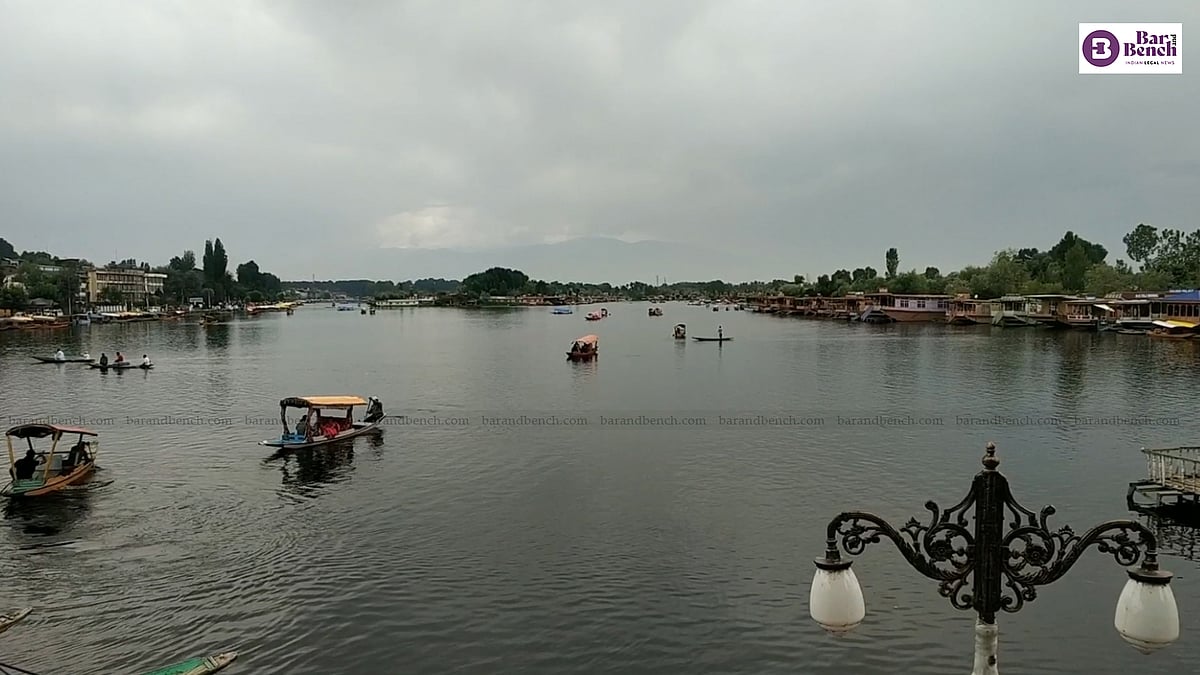
Dal Lake, a vital ecosystem and a symbol of Kashmir's natural heritage, has faced severe environmental degradation over decades. Its area has drastically shrunk from an estimated 50-75 square kilometers to barely 12-13.5 square kilometers due to rampant illegal constructions, encroachments, and the discharge of untreated sewage and solid waste. The PIL, *Syed Iqbal Tahir Geelani V/s State of J&K*, initiated in 2002 by a law student, brought these critical issues to the High Court's attention, seeking judicial intervention for the lake's protection and restoration. The court has, in the past, taken stringent measures, including banning construction activities within specified distances from the lake and declaring the lake *Custodia Legis* (in the custody of the law) to prevent further damage.
Analysis
The Jammu & Kashmir and Ladakh High Court's recent directive in *Syed Iqbal Tahir Geelani V/s State of J&K* to the amicus curiae to submit a factual note on the 24-year-old Dal Lake PIL underscores several critical aspects of environmental litigation in India. The court's observation that "many developments have taken place" and "multiple orders were passed from time to time" yet the PIL remains pending, highlights the persistent challenge of ensuring effective implementation of judicial directives in complex environmental matters. The sheer longevity of the case, initiated in 2002, reflects the administrative inertia and governance failures that often plague environmental protection efforts, despite robust legal frameworks like the Environment (Protection) Act, 1986, and the Water (Prevention and Control of Pollution) Act, 1974.
The role of the amicus curiae, Senior Advocate ZA Shah, is particularly crucial in this context. In cases of such prolonged duration and technical complexity, an amicus curiae provides an invaluable, objective perspective to the court, synthesizing vast amounts of information, monitoring compliance, and identifying remaining gaps. The request for a "brief factual note indicating as to how this public interest litigation has proceeded and what more is required to be done in the matter" demonstrates the court's intent to gain a holistic understanding of the ground realities, moving beyond mere procedural updates to a substantive assessment of conservation outcomes. This mechanism helps the judiciary maintain oversight and adapt its strategies in dynamic environmental scenarios.
While PILs have been hailed as potent tools for environmental justice, as seen in landmark cases like *Subhash Kumar v. State of Bihar* where the right to a pollution-free environment was recognized as part of the fundamental right to life, the Dal Lake case illustrates the limitations and challenges. The continuous degradation of the lake due to factors such as untreated sewage, solid waste, and illegal encroachments, despite judicial intervention, points to issues of enforcement, inter-agency coordination, and sustained political will. Reports indicate that earlier court directions, including bans on construction and demolition drives, were often "observed in breach," with authorities like the Lakes and Waterways Development Authority (LAWDA) failing to evoke the desired response.
Furthermore, the case highlights the tension between development and conservation. The shrinking of Dal Lake, attributed to expanding neighborhoods, commercial buildings, and land mafia activities, underscores the immense pressure on natural resources in rapidly urbanizing areas. The court's persistent engagement, including identifying specific issues like cleanliness, sewage flow, solid waste management, and encroachment removal in a 2021 order, signifies a judicial commitment to micro-managing environmental issues where executive action has fallen short. This active judicial role, while necessary, also raises questions about the sustainability of court-driven governance without robust executive and legislative support.
Conclusion
The Jammu & Kashmir and Ladakh High Court's insistence on a comprehensive amicus report for the 24-year-old Dal Lake PIL serves as a stark reminder of the enduring challenges in environmental conservation and the critical, albeit often protracted, role of judicial oversight in India. For legal practitioners, this development underscores the importance of meticulous record-keeping and strategic engagement in long-term public interest litigations. It highlights that while PILs offer a powerful avenue for addressing environmental degradation, their ultimate success hinges not only on judicial pronouncements but also on consistent monitoring, effective enforcement mechanisms, and sustained political and administrative commitment.
Practitioners involved in environmental law should closely watch the amicus curiae's report and the subsequent directions from the High Court. This case may set precedents for how courts manage and evaluate the progress of multi-decade environmental PILs, potentially leading to more stringent accountability measures for implementing agencies. It also reinforces the need for a multi-faceted approach to environmental advocacy, combining legal strategies with public awareness, stakeholder engagement, and robust scientific input to ensure that judicial victories translate into tangible, on-the-ground improvements for vital ecosystems like Dal Lake.
Citations
- 1.Environment (Protection) Act, 1986
- 2.Water (Prevention and Control of Pollution) Act, 1974
- 3.Syed Iqbal Tahir Geelani V/s State of J&K, PIL No. 159/2002
- 4.M.C. Mehta v. Union of India (Ganga Pollution Case)
- 5.Vellore Citizens' Welfare Forum v. Union of India, AIR 1996 SC 2715
- 6.Subhash Kumar v. State of Bihar, (1991) 1 SCC 598