
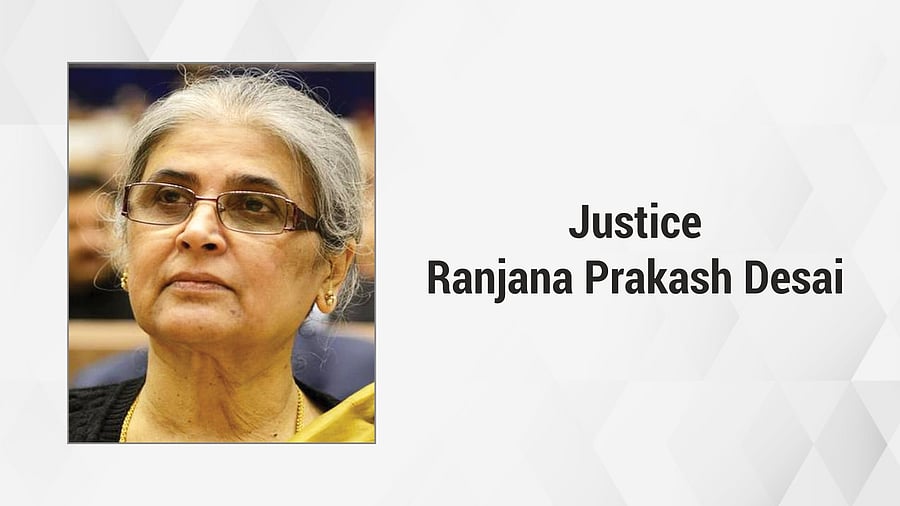
Justice Ranjana Prakash Desai to head Maharashtra’s committee to draft Uniform Civil Code
Abstract
Maharashtra has constituted a seven-member expert committee, led by retired Supreme Court Justice Ranjana Prakash Desai, to draft a Uniform Civil Code (UCC) for the State. The committee, tasked with submitting its report within six months, will examine the legal, administrative, and social implications of replacing diverse religion-based personal laws with a common set of civil rules governing matters such as marriage, divorce, inheritance, and succession. This move follows Uttarakhand's recent enactment of a UCC, a process also spearheaded by Justice Desai, signaling a growing momentum towards fulfilling the Directive Principle enshrined in Article 44 of the Indian Constitution.
Introduction
In a significant development for India's legal landscape, the Maharashtra government has announced the formation of a seven-member committee to draft a Uniform Civil Code (UCC) for the State. This high-profile panel will be chaired by retired Supreme Court Justice Ranjana Prakash Desai, whose prior experience in leading a similar initiative for Uttarakhand has been cited as a key reason for her appointment. The committee is mandated to submit its recommendations within six months, with the State government aiming to introduce a bill on the UCC during the upcoming winter session of the legislature.
The establishment of this committee underscores Maharashtra's commitment to addressing the long-standing constitutional directive for a UCC, which seeks to unify personal laws currently governed by various religious customs and traditions. The move is poised to have profound implications for family law, affecting all citizens of the state in matters of marriage, divorce, inheritance, and succession. The composition of the committee, including retired Bombay High Court judges, a former chief secretary, a former advocate general, and legal and social experts, reflects the multi-faceted approach required for such a complex legal reform.
This initiative by Maharashtra gains particular relevance in the wake of Uttarakhand becoming the first state in independent India to enact its own UCC. Justice Desai's leadership in both these endeavors highlights a concerted effort to translate the aspirational goal of Article 44 of the Constitution into tangible legislation, setting a precedent for other states and potentially influencing the national discourse on a Uniform Civil Code.
Background
The concept of a Uniform Civil Code is enshrined in Article 44 of the Constitution of India, which states that "The State shall endeavour to secure for the citizens a uniform civil code throughout the territory of India." This provision falls under Part IV, the Directive Principles of State Policy (DPSP), which, while fundamental in the governance of the country, are not enforceable by any court. Despite their non-justiciable nature, the DPSPs serve as guiding principles for the state in formulating policies and laws, reflecting the aspirational goals of the Constitution.
India's legal system currently operates with a diverse set of personal laws, where different religious communities are governed by their own distinct laws concerning family matters such as marriage, divorce, maintenance, adoption, and inheritance. For instance, Hindus are largely governed by codified laws like the Hindu Marriage Act, 1955, and the Hindu Succession Act, 1956, while Muslims adhere to uncodified Muslim Personal Law, and Christians are governed by the Indian Christian Marriage Act, 1872, and the Indian Succession Act, 1925. This plurality has historically led to debates regarding gender equality, social justice, and national integration, with calls for a UCC echoing from various quarters, including the judiciary. Goa remains the only Indian state to have a UCC, in the form of the Portuguese Civil Code, which has been in force since the 19th century.
The constitutional framers recognized the need for a uniform civil code but placed it under the DPSP due to the prevailing social and political climate at the time of independence. Over the decades, the judiciary has frequently highlighted the importance of Article 44, urging the state to take steps towards its implementation to foster equality and national unity.
Analysis
The constitutional mandate for a Uniform Civil Code, though placed under the Directive Principles of State Policy, has been a recurring theme in judicial pronouncements, underscoring its significance for gender justice and national integration. The Supreme Court of India has, on several occasions, expressed its regret over the lack of progress in implementing a UCC. A landmark case in this regard is *Mohd. Ahmed Khan v. Shah Bano Begum*, AIR 1985 SC 945, where the Court, while ruling on a Muslim woman's right to maintenance under Section 125 of the Code of Criminal Procedure, 1973, beyond the 'iddat' period, strongly advocated for a UCC to remove disparate loyalties to laws with conflicting ideologies.
Further reinforcing this stance, in *Sarla Mudgal v. Union of India*, AIR 1995 SC 1531, the Supreme Court addressed the issue of bigamy through conversion to Islam, holding that a Hindu marriage could not be dissolved by merely converting to another religion to solemnize a second marriage. Justice Kuldip Singh, in his judgment, remarked on the lack of justification for keeping the introduction of a UCC in abeyance when a significant majority of citizens were already under codified personal laws. Similarly, in *John Vallamattom v. Union of India*, AIR 2003 SC 2902, the Court struck down Section 118 of the Indian Succession Act, 1925, which imposed discriminatory restrictions on Christians bequeathing property for religious or charitable purposes, reiterating that there is no necessary connection between religion and personal law in a civilized society and emphasizing the need for a UCC to eliminate inequality.
The Maharashtra committee's work will undoubtedly draw heavily from the precedent set by the Uttarakhand Uniform Civil Code Act, 2024, which became the first UCC enacted in independent India. Justice Ranjana Prakash Desai, who chaired the expert committee for Uttarakhand, submitted a comprehensive four-volume report that formed the basis of the Act. The Uttarakhand UCC, which applies to all individuals residing in the state (excluding Scheduled Tribes), introduces uniform provisions for marriage and divorce, including a common minimum marriageable age, compulsory registration of marriages, and the prohibition of polygamy. It also mandates the registration of live-in relationships, grants legal recognition to children born from such relationships, and provides for maintenance for deserted partners. In matters of succession, it abolishes the coparcenary system and establishes uniform inheritance rights, ensuring gender equality.
The Maharashtra committee, with its six-month deadline, faces the intricate task of navigating the diverse social, cultural, and religious fabric of the state while adhering to constitutional principles of equality (Article 14) and non-discrimination (Article 15), without infringing upon the freedom of religion (Article 25). The committee's mandate to examine legal, administrative, and social implications suggests a nuanced approach, aiming to formulate a framework that is both progressive and acceptable to various stakeholders. The challenge lies in balancing the aspiration for uniformity with the constitutional commitment to pluralism and religious freedom, a tension that has historically characterized the UCC debate.
Conclusion
The formation of Maharashtra's UCC drafting committee, under the experienced leadership of Justice Ranjana Prakash Desai, marks a significant step towards legal reform in the state and potentially influences the broader national discourse on a Uniform Civil Code. Practitioners in family law, civil litigation, and constitutional law should closely monitor the committee's proceedings and its forthcoming report. The recommendations are expected to propose substantial changes to existing personal laws concerning marriage, divorce, inheritance, and succession, necessitating a thorough understanding of the new framework once enacted.
The legislative process following the committee's report, particularly the introduction of a bill in the winter session, will be crucial to observe. Attorneys should prepare for potential shifts in legal practice, including new registration requirements, altered grounds for divorce, and revised inheritance rules. The implementation of a UCC in Maharashtra, following Uttarakhand's lead, will undoubtedly spark further legal and social debates, and practitioners must be equipped to advise clients on the evolving legal landscape and any challenges that may arise from the harmonization of diverse personal laws.
How does this affect your business?
Get an AI analysis of this article grounded in your jurisdictions, practice areas, and any policy documents you've uploaded to Wansom.