
Kalonzo condemns police over their conduct during Saba Saba Day
Abstract
Wiper Patriotic Front Party Leader Kalonzo Musyoka recently condemned the National Police Service (NPS) for its conduct during the 36th Saba Saba Day, alleging the use of excessive force against citizens. This condemnation highlights persistent concerns regarding police accountability and adherence to constitutional and statutory provisions governing public order management in Kenya. The incident underscores the ongoing tension between the constitutional right to peaceful assembly and the state's responsibility to maintain order, particularly in light of recent judicial pronouncements that have affirmed citizens' rights and held the police accountable for unlawful force. This article examines the legal framework surrounding police use of force during protests and the mechanisms for accountability, offering insights for legal practitioners navigating this complex area.
Introduction
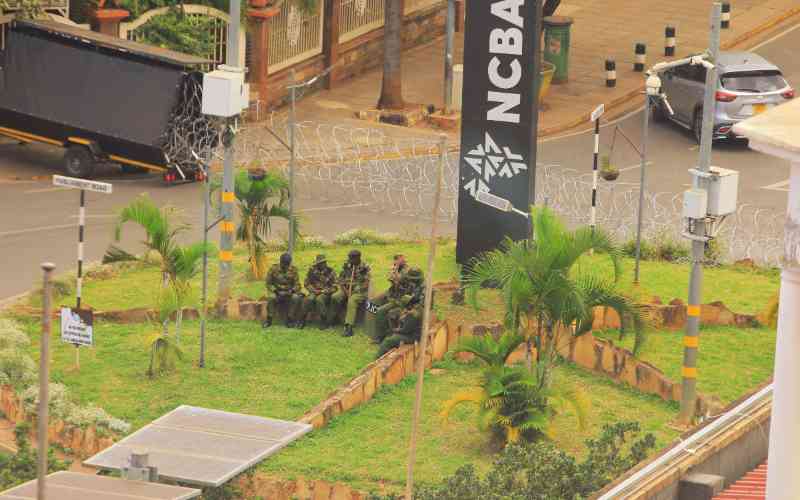
The 36th Saba Saba Day, observed on July 7, 2026, was once again marred by allegations of police brutality, drawing sharp condemnation from political leaders, including Wiper Patriotic Front Party Leader Kalonzo Musyoka. Musyoka accused the National Police Service (NPS) of deploying excessive force, turning 'guns and batons on the citizens it exists to protect.' This incident reignites critical discussions about the rule of law, human rights, and police accountability in Kenya, particularly concerning the management of public protests.
Saba Saba Day holds profound historical significance in Kenya, commemorating the pro-democracy protests of July 7, 1990, which were met with violent state repression but ultimately catalyzed the country's transition to multi-party democracy. The recurring nature of such condemnations, decades after the initial struggle for democratic space, underscores a persistent challenge in upholding fundamental freedoms. This article will delve into the legal framework governing police conduct during public assemblies, analyze recent judicial interventions, and discuss the implications for legal practitioners and the future of democratic space in Kenya.
Background
The right to peaceful assembly, demonstration, picketing, and presentation of petitions to public authorities is a fundamental right enshrined in Article 37 of the Constitution of Kenya, 2010. This right, however, is not absolute and may be limited by law to the extent that the limitation is reasonable and justifiable in an open and democratic society, as stipulated in Article 24 of the Constitution. The primary legislation governing public gatherings is the Public Order Act (Cap. 56), which requires organizers to notify the police between three and fourteen days in advance of an intended public assembly. While intended to facilitate public order, critics argue that this Act has, at times, been used to restrict legitimate protests.
The National Police Service (NPS) operates under the National Police Service Act, 2011, which outlines its mandate and regulates the use of force. The Act's Sixth Schedule provides conditions for the use of force, emphasizing that non-violent means should always be attempted first, and force should only be employed when such means are ineffective. Furthermore, any force used must be proportional to the objective, the seriousness of the offence, and the resistance encountered. Crucially, the Constitution, particularly Article 244(c), mandates the NPS to comply with constitutional standards of human rights and fundamental freedoms in performing its functions. To ensure accountability, the Independent Policing Oversight Authority (IPOA) was established under the Independent Policing Oversight Authority Act, 2011, to provide civilian oversight over the police, investigate misconduct, and recommend appropriate action.
Analysis
The condemnation by Kalonzo Musyoka brings into sharp focus the interpretation and application of the legal framework governing police conduct during public protests. While the National Police Service Act, 2011, and its Service Standing Orders provide detailed guidance on the use of force, including the principles of necessity and proportionality, their implementation often faces scrutiny. International human rights norms generally restrict the use of lethal force to situations where it is strictly unavoidable to protect life, a standard that the Kenyan Act, by permitting lethal force to protect property or prevent escapes, arguably falls short of.
Recent judicial pronouncements in Kenya have reinforced the constitutional limits on police power. A landmark judgment by the Kisumu High Court on March 25, 2026, ordered the state to pay Sh38.6 million to victims of police violence during the 2023 anti-government protests. Justice Alfred Mabeya found that officers used unlawful and excessive force, violating constitutional protections, including the right to life, dignity, and security. Significantly, the court invoked the principle of command responsibility, holding senior police leadership accountable for the actions of officers under their authority. This ruling sets a crucial precedent for police accountability.
Further, the Malindi High Court, in a ruling on June 28, 2024, explicitly barred the National Police Service from using water cannons, tear gas, live ammunition, and engaging in unnecessary arrests, abductions, detentions, harassment, intimidation, torture, or cruel and degrading treatment against peaceful protesters. These judicial decisions underscore that the right to protest, while not absolute, cannot be arbitrarily suppressed through disproportionate force. They also highlight the judiciary's role in safeguarding constitutional rights against state overreach.
Despite the existence of oversight bodies like IPOA, challenges persist in ensuring full police accountability. IPOA is mandated to investigate deaths and serious injuries resulting from police action and recommend prosecution, but it faces hurdles such as non-cooperation from the NPS and the Office of the Director of Public Prosecutions (ODPP). This often leads to delays in justice and perpetuates a perception of impunity, which undermines public trust in the police service. The ongoing legislative attempts to amend the Public Order Act with more restrictive provisions, such as the Public Order Amendment Bill, 2025, also raise concerns about potential infringements on the right to assembly.
The alleged conduct during the 36th Saba Saba Day, as condemned by Kalonzo Musyoka, therefore, represents a critical test of the NPS's commitment to constitutional policing and the effectiveness of accountability mechanisms. It necessitates a careful balancing act between maintaining public order and protecting fundamental human rights, a balance that recent court decisions have clearly tilted towards upholding citizen freedoms and holding state agents responsible for their actions.
Conclusion
The condemnation of police conduct during the 36th Saba Saba Day serves as a potent reminder of the enduring struggle for democratic freedoms and police accountability in Kenya. For legal practitioners, this incident and the accompanying judicial pronouncements offer vital insights. Attorneys must continue to advise clients on their constitutional right to peaceful assembly under Article 37 and the limitations on police use of force as stipulated in the National Police Service Act and reinforced by recent High Court rulings. The principle of command responsibility, as articulated in the Kisumu High Court judgment, provides a stronger basis for pursuing remedies against senior officers for the actions of their subordinates.
Practitioners should closely monitor investigations by IPOA into such incidents and be prepared to pursue civil remedies for victims of police brutality, drawing on the precedents set by recent compensation awards. Furthermore, vigilance is required regarding proposed legislative amendments, such as the Public Order Amendment Bill, 2025, which could potentially curtail fundamental rights. The ongoing dialogue between civil society, political leaders, and the judiciary is crucial in shaping a policing environment that respects human rights and upholds the rule of law, ensuring that the sacrifices of Saba Saba Day continue to inspire, rather than be overshadowed by, renewed repression.
Citations
- 1.Constitution of Kenya, 2010
- 2.Independent Policing Oversight Authority Act, No. 35 of 2011
- 3.National Police Service Act, No. 11A of 2011
- 4.Public Order Act, Chapter 56 of the Laws of Kenya
- 5.Kisumu High Court Judgment, Justice Alfred Mabeya, March 25, 2026 (referencing 2023 anti-government protests)
- 6.Malindi High Court Order, June 28, 2024 (referencing Anti-Finance Bill demonstrations)