
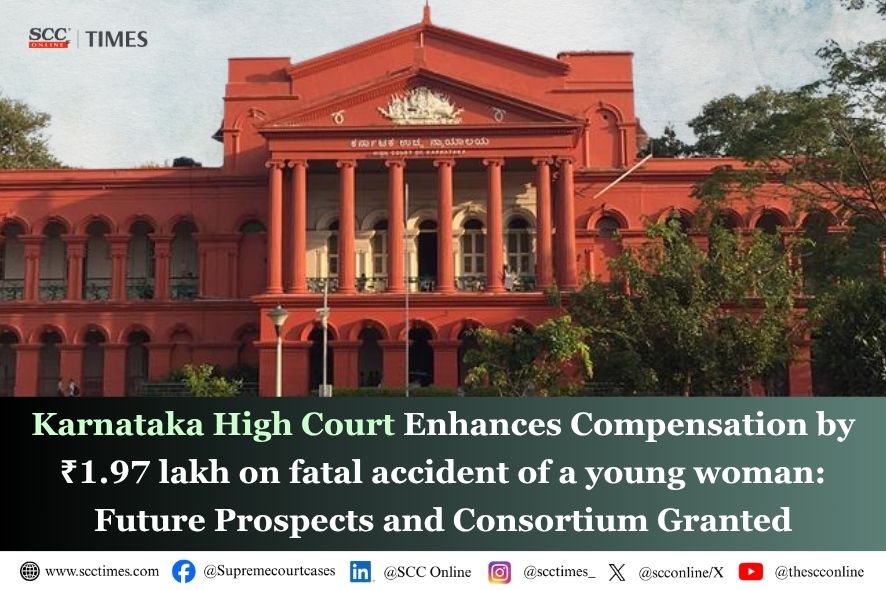
Karnataka High Court Boosts Motor Accident Compensation by ₹1.97 Lakh
Summary
- The Karnataka High Court has enhanced compensation in a fatal motor accident case by ₹1.97 lakh.
- The court's decision sets a new precedent for calculating income in such cases, which may impact future compensation claims.
- Lawyers should note that clients may need to provide updated salary certificates due to this development.
- The court's ruling emphasizes the importance of reliable evidence in determining income for compensation purposes.
What Happened
The court held that the salary certificate and pay slip, corroborated by the oral testimony of the dependants and co-workers, constitute reliable and corroborative proof of the income of the deceased and cannot be rejected merely on the ground that the author of such documents was not examined.
In a significant development, the Karnataka High Court has enhanced compensation in a fatal motor accident case by ₹1.97 lakh. The court's decision sets a new precedent for calculating income in such cases, which may have far-reaching implications for future compensation claims.
The case involved a young woman who met with an untimely demise in a road accident. Her family had claimed compensation under the Motor Vehicles Act, 1988. However, the insurance company disputed the claim, arguing that the salary certificate and pay slip submitted by the dependents were unreliable. The court, however, upheld the validity of these documents, stating that they were corroborated by oral testimony from co-workers and could not be rejected merely because the author was not examined.
Legal Context
The Motor Vehicles Act, 1988, provides for compensation to victims of motor accidents. The act requires insurance companies to pay a certain amount as compensation, which is calculated based on the income of the deceased. In this case, the court had to determine the income of the young woman who died in the accident.
The court's decision highlights the importance of reliable evidence in determining income for compensation purposes. It also underscores the need for insurance companies to carefully scrutinize documents submitted by claimants and their dependents. The court's ruling may have significant implications for future cases, particularly those involving fatal motor accidents.
Why It Matters
The Karnataka High Court's decision has set a new precedent for calculating income in fatal motor accident cases. This may impact future compensation claims, requiring clients to provide updated salary certificates. Lawyers should take note of this development and advise their clients accordingly.
Moreover, the court's ruling emphasizes the need for insurance companies to be more diligent in verifying documents submitted by claimants. This may lead to increased scrutiny of compensation claims and potentially higher payouts for victims' families. The decision also underscores the importance of reliable evidence in determining income for compensation purposes. It highlights the need for courts to carefully consider the testimony of dependents and co-workers when evaluating the validity of salary certificates and pay slips.
Practical Implications
Lawyers should note that the Karnataka High Court has set a new precedent for calculating income in fatal motor accident cases, which may impact future compensation claims and require clients to provide updated salary certificates.
Source
Source: Original reporting via SCC Times
How does this affect your business?
Get an AI analysis of this article grounded in your jurisdictions, practice areas, and any policy documents you've uploaded to Wansom.