
Kenya Airways seeks Ksh194B fresh capital injection to fund turnaround plan
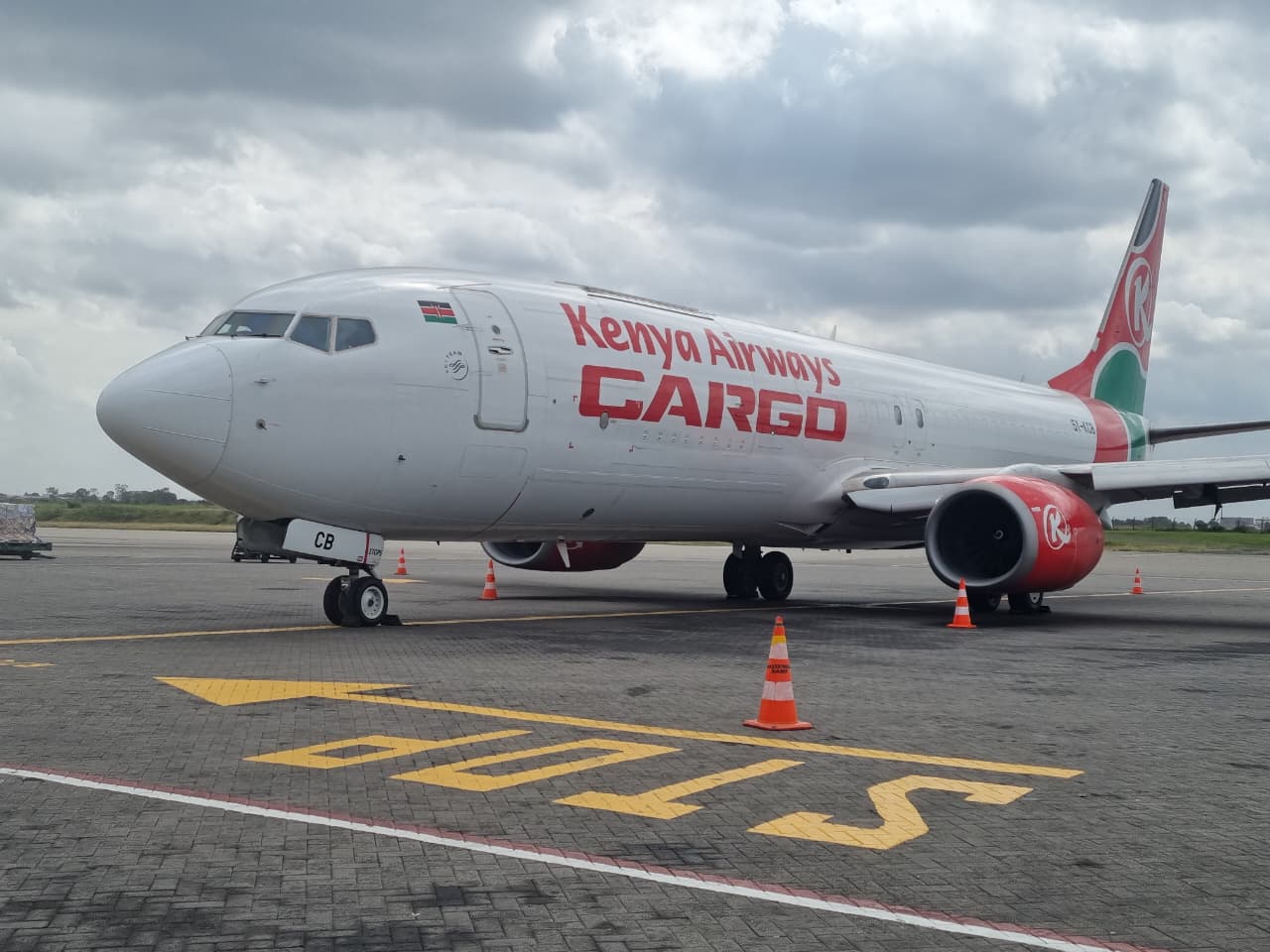
Abstract
Kenya Airways (KQ) is seeking a substantial KSh 194 billion (approximately USD 1.5 billion) fresh capital injection to fuel its ambitious turnaround strategy and fleet expansion, targeting 100 aircraft by 2035. This significant fundraising initiative, expected to conclude by the first quarter of 2027, will involve a mix of equity, debt, and potential strategic partnerships. The move highlights the complex interplay of corporate governance, public finance, and regulatory compliance under Kenya's Companies Act, 2015, and the Public Finance Management Act, 2012. Given the airline's history of state-backed rescues and the government's current majority, but not controlling, stake, the capital raise will necessitate careful navigation of shareholder interests, parliamentary oversight, and competition considerations, particularly in light of the new Privatization Act, 2025.
Introduction
Kenya Airways (KQ), the national flag carrier, has announced plans to secure a substantial KSh 194 billion (approximately USD 1.5 billion) in fresh capital. This significant financial injection is earmarked to fund an ambitious turnaround strategy, including a projected fleet expansion to 100 aircraft by 2035, and to restore the airline to long-term profitability. The capital raising programme, which the airline's board aims to complete by the first quarter of 2027, is expected to involve a diverse mix of funding options, including equity, debt, and engagement with strategic airline partners or financial investors through an open and transparent process.
This development is not merely a corporate finance exercise but a complex legal and regulatory undertaking with far-reaching implications for Kenya's public finances, corporate governance standards, and the broader aviation sector. As a public-private partnership with significant government ownership, KQ's capital restructuring will test the robustness of existing legal frameworks governing state-linked entities and capital markets. It underscores the ongoing challenges of balancing commercial viability with national strategic interests in a highly competitive global industry.
For legal practitioners, this initiative presents a multifaceted challenge, requiring expertise in corporate law, public finance, competition law, and potentially insolvency and privatization frameworks. The successful execution of this capital raise will depend on meticulous adherence to statutory requirements, effective stakeholder management, and a clear understanding of the regulatory landscape governing state-backed enterprises in Kenya.
Background
Kenya Airways has a long history of financial turbulence, necessitating several government interventions and restructuring efforts since its privatization in 1996. Initially wholly government-owned, the airline underwent privatization in 1996, becoming the first African flag carrier to do so. However, it has frequently required state support, including government guarantees for loans and debt-to-equity conversions.
The current ownership structure sees the National Treasury and Economic Planning holding a 48.9% stake, KQ Lenders Company 2017 Limited holding 36.3%, KLM Royal Dutch Airlines 7.76%, the Employee Share Ownership Scheme 2.44%, and other investors 4.6%. This structure, where the government is the largest single shareholder but does not hold a majority, has implications for corporate control and decision-making, particularly regarding significant capital restructuring. Previous government guarantees, such as the USD 750 million approved by Parliament in 2017, were crucial for the airline's financial repositioning.
The legal framework governing such a capital injection is primarily anchored in the Companies Act, 2015, which outlines procedures for increasing share capital, including board and shareholder resolutions, and filings with the Business Registration Service (BRS). Additionally, the Public Finance Management Act, 2012 (PFMA), is critical, as it regulates government investments, guarantees, and oversight of state corporations. Section 58 of the PFMA specifically stipulates conditions for government loan guarantees, requiring them to be for capital projects and for the borrower to demonstrate repayment capability. The recently enacted Privatization Act, 2025, further shapes the context, as Kenya Airways is listed among the priority state-owned enterprises targeted for divestiture, emphasizing transparency and parliamentary oversight in the sale of state assets.
Analysis
The proposed KSh 194 billion capital injection into Kenya Airways triggers several critical legal and regulatory considerations. Under the Companies Act, 2015, any increase in share capital requires a formal process, including review of the company's Articles of Association, convening a board meeting to approve the proposed increase, and passing a special resolution by shareholders. Subsequently, specific forms, such as Form CR19 (Notice of Increase in Nominal Share Capital), along with a certified copy of the special resolution, must be filed with the Business Registration Service (BRS) within 14 days, and stamp duty paid on the increased capital. Given the government's significant shareholding, the process will involve careful coordination between the airline's board and the National Treasury.
The Public Finance Management Act, 2012 (PFMA), plays a pivotal role, particularly if the capital injection involves further government guarantees or direct investment. The PFMA mandates parliamentary approval for government guarantees, and Section 58 explicitly limits guarantees to capital projects where the borrower is capable of repayment. Past instances have seen the government stepping in to service KQ's non-performing guaranteed loans, raising questions about adherence to these provisions. The National Treasury, through its Government Investment and Public Enterprises Department, exercises oversight over state corporations, requiring strategic plans, budgets, and financing proposals for review and approval.
Corporate governance implications are also significant. As a public-private partnership, the government's influence as a major shareholder (48.9%) is substantial, even if not a controlling majority. Any capital restructuring must balance the interests of all shareholders, including the consortium of local banks (KQ Lenders Company 2017 Ltd) and KLM. The issuance of an Information Memorandum (IM) signals a move towards attracting diverse investors, which will require robust disclosure and compliance with capital markets regulations.
Furthermore, the Competition Act, 2010, will be relevant, especially if the turnaround strategy involves strategic airline partnerships or mergers that could impact market competition. The Competition Authority of Kenya (CAK) has a mandate to ensure fair competition and consumer welfare in the aviation sector, and any agreements that could lead to restrictive trade practices, such as price fixing, would require an exemption from the CAK. Kenya Airways has previously sought such exemptions for joint ventures and is currently under investigation by the COMESA Competition Commission for alleged unconscionable conduct.
Finally, the recent enactment of the Privatization Act, 2025, signals the government's long-term intent to divest from state-owned enterprises, including Kenya Airways. This framework aims to streamline the sale of state assets with an emphasis on transparency and parliamentary oversight. While the current capital injection is for a turnaround, it sets the stage for potential future privatization, requiring legal professionals to consider the implications of such a trajectory on the airline's corporate structure and investor relations.
Conclusion
The proposed KSh 194 billion capital injection into Kenya Airways represents a critical juncture for the national carrier, aiming to secure its long-term viability and growth. For legal practitioners, this initiative underscores the intricate web of corporate, public finance, and regulatory laws that govern state-linked enterprises in Kenya. Advising on such a transaction demands a comprehensive understanding of the Companies Act, 2015, particularly concerning capital increases and shareholder rights, alongside the stringent requirements of the Public Finance Management Act, 2012, regarding government guarantees and investments.
Practitioners must also be attuned to the broader policy environment, including the implications of the Privatization Act, 2025, and the oversight role of the Competition Authority of Kenya. Navigating potential conflicts of interest, ensuring transparency in the capital raising process, and safeguarding the interests of all stakeholders—from the government and existing shareholders to potential new investors and the public—will be paramount. The success of KQ's turnaround plan, and by extension, the efficacy of Kenya's legal and regulatory frameworks for corporate rescues, will be closely watched as the airline proceeds with its ambitious fundraising efforts.
Citations
- 1.Airspace Times. (2026, April 10). Kenya Airways clarifies ownership structure amid media reports.
- 2.Capita Registrars. (2025, August 11). Procedure of increasing share capital of a company in Kenya.
- 3.Mondaq. Kenya Aviation Regulation Comparative Guide - All Chapters.
- 4.People Daily. (2026, April 08). KQ Clarifies Its Shareholding Structure After Reports Of Govt Acquiring Controlling Stake.
- 5.Wikipedia. Kenya Airways.
- 6.Manwa OH Advocates LLP. (2025, December 10). The Privatization Act, 2025: Kenya's Framework for State-Owned Enterprises.
- 7.People Daily. (2026, April 08). Kenya Airways denies claims of majority government control.
- 8.ch-aviation. (2026, April 10). Kenya Airways denies news reports of Treasury majority stake.
- 9.RSM Kenya. (2022, July 26). Reorganization of company's share capital.
- 10.Mjengo Hub. (2026, February 13). State to Offload Kenya Airways Stake in Major Privatization Push.
- 11.CAPA. (2023, March 22). Kenyan Cabinet approves Privatisation Bill, potentially allowing for sale of Kenya Airways.
- 12.PPIAF. Kenya Airways: A Case Study in Privatization.
- 13.Wacu Mureithi & Co. Advocates. Share Capital Reorganization in Kenya.
- 14.Competition Commission. International Liaison - Kenya.
- 15.African Antitrust & Competition Law. Airlines seek antitrust exemption: KQ-CAK application pending.
- 16.KIPPRA Repository. (2020, October 22). Sessional Paper No. 07 of 1989 on Kenya Government Guarantee of Loans to Kenya Airways Limited from Credit Lyonnais Bank Netherlands N.V.
- 17.Galbi Think!. Kenya Airways: A Case Study in Privatization.
- 18.Andersen in Kenya. Alteration and Consolidation of Share Capital in Limited Companies.
- 19.KIPPRA Repository. (2017, Sessional Paper No. 03 of 2017 on Government Guarantee of USD 750 Million (Equivalent to Kes 75.26 Billion) in Support of Restructuring of Kenya Airways.
- 20.Cytonn Report. (2023, August 13). Restructuring and Insolvency in Kenya.
- 21.Competition Authority of Kenya. (n.d.). The proposed acquisition of majority ownership and sole control over NAC Aviation 33 Limited (NAC 33) and NAC Aviation 34 Limited (NAC 34) by Azorra Aviation Holdings, LLC.
- 22.CR Advocates LLP. (2024, April 13). Raising Capital For Business in Kenya: A Strategic Guide.
- 23.World Bank. Public Finance Management Act 2012.
- 24.The National Treasury and Economic Planning. (n.d.). The National Treasury and Economic Planning for the Financial Year 2022/2023.
- 25.The Star. (2026, June 13). KQ eyes Sh194bn capital by March as grounded planes hit operations.
- 26.ZAWYA. (2025, August 18). Kenya defends role in $152mln loan payment cash.
- 27.Bowmans. (2018, January 18). Overview of Kenyan Insolvency Law.
- 28.Cytonn Investments. (2025, November 16). Review of Restructuring and Insolvency in Kenya.
- 29.ResearchGate. Implementation framework for turnaround strategies at Kenya Airways.
- 30.KBC Digital. (2026, June 12). Kenya Airways seeks Ksh194B fresh capital injection to fund turnaround plan.
- 31.International Budget Partnership. The Kenyan Public Finance Management Act 2012 FAQ (Frequently Asked Questions) For Citizens*.
- 32.African Liberty. (2017, June 17). Kenya parliament approves $750 million state guarantee for Kenya Airways debt.
- 33.YouTube. (2025, October 10). Why Kenya Airways is under investigation by COMESA Competition Commission.
- 34.Amazon S3. PUBLIC FINANCE MANAGEMENT ACT.
- 35.Standard Newspaper. (2026, June 15). KQ to revive grounded jets as it seeks Sh194b in turnaround funds.
- 36.CM Advocates LLP. Statutory Framework for Corporate Rescue on Insovency in Kenya.
- 37.Manifested Publishers. (2025, May 12). APFM-Public Sector Investment _Challenges affecting State Corporation in Kenya.
- 38.bne IntelliNews. (2026, June 01). Kenya Airways outlines recovery plan, seeks funding for regional expansion.
- 39.Simple Flying. (2024, April 16). Kenya Airways Gets New Government Support Despite Ongoing Losses.
- 40.ResearchGate. (2022, February 14). Turbulences associated with the implementation of turnaround strategies at Kenya Airways.
- 41.ResearchGate. Turnaround Strategies and Performance of Kenya Airways.
- 42.Kenya Judiciary Academy. (2026, February 02). Judicial Approaches to Insolvency under the Insolvency Act, 2015: From Corporate Rescue to Bankruptcy 2nd to 6th February 2026.
- 43.The Kenya Times. (2026, April 08). Kenya's Treasury Takes Majority Stake in Kenya Airways Amid Carrier's Financial Losses.
How does this affect your business?
Get an AI analysis of this article grounded in your jurisdictions, practice areas, and any policy documents you've uploaded to Wansom.