
Kenya, Finland sign pacts on education, climate and digital innovation
Abstract
Kenya and Finland have recently solidified their bilateral relations by signing three Memoranda of Understanding (MOUs) in the critical sectors of education, climate action, and digital innovation. These agreements, while generally non-binding, signify a strategic intent to deepen cooperation and lay the groundwork for more formal, legally enforceable instruments. For Kenyan legal practitioners, understanding the distinction between these MOUs and formal treaties, as well as the domestic legal framework for international agreements, is crucial. The pacts are expected to influence policy and regulatory developments in Kenya, particularly in areas such as technical and vocational training, carbon markets, environmental sustainability, and digital public services, necessitating close monitoring of their implementation and potential domestication.
Introduction
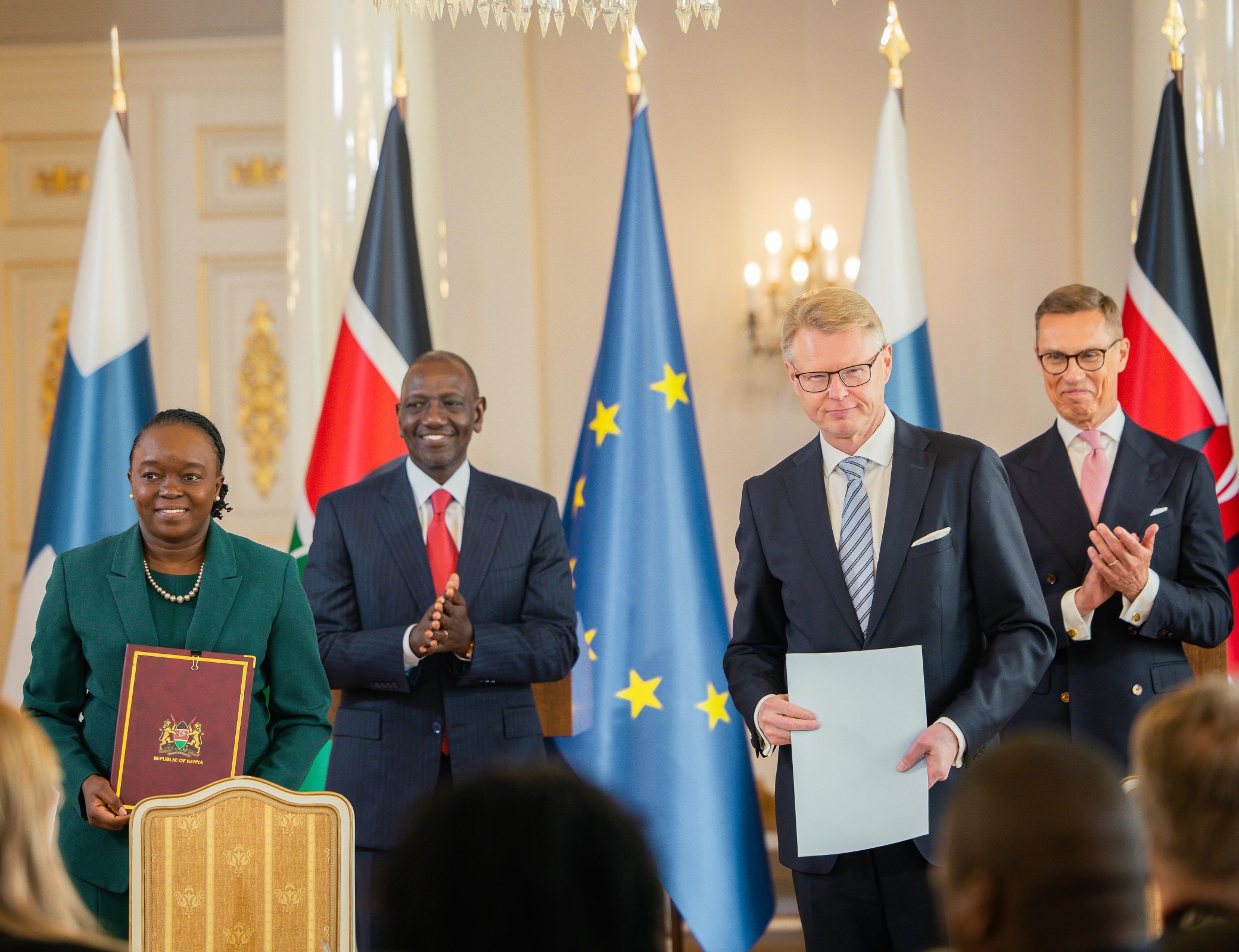
President William Ruto's recent state visit to Finland marked a significant stride in Kenya's international diplomacy, culminating in the signing of three Memoranda of Understanding (MOUs) with Finland. These pacts, focusing on education, climate action, and digital innovation, underscore a mutual commitment to fostering collaboration across strategic sectors. The agreements were witnessed by President Ruto and his Finnish counterpart, President Alexander Stubb, during a joint press conference in Helsinki.
While the immediate legal enforceability of MOUs differs from that of ratified treaties, these instruments are pivotal in shaping future policy directions and potential legislative reforms within Kenya. For legal professionals, these developments signal forthcoming opportunities and challenges, particularly concerning the domestication of international commitments and their impact on existing national laws and regulations. This article delves into the legal implications of these MOUs within the Kenyan context, examining their nature, the process for their potential transformation into binding law, and their anticipated influence on the respective sectors.
Background
Kenya's legal framework for engaging with international agreements is primarily governed by the Constitution of Kenya, 2010, and the Treaty Making and Ratification Act, 2012. Article 2(6) of the Constitution stipulates that any treaty or convention ratified by Kenya shall form part of the law of Kenya. This provision signifies a shift from a purely dualist approach to one that incorporates ratified treaties directly into domestic law, albeit 'under this Constitution,' implying constitutional supremacy.
The Treaty Making and Ratification Act, 2012, outlines the procedure for the initiation, negotiation, and ratification of treaties, emphasizing parliamentary scrutiny and public participation. However, the instruments signed with Finland are explicitly termed Memoranda of Understanding (MOUs). An MOU is generally understood as a formal but non-binding agreement outlining the intentions of parties to cooperate towards a common goal. While they lack the direct legal enforceability of treaties, MOUs serve as crucial preliminary steps, providing a framework for collaboration and often preceding more detailed, legally binding agreements. This distinction is vital for practitioners assessing the immediate legal weight and future trajectory of these newly signed pacts.
Analysis
The three MOUs signed between Kenya and Finland, covering education, climate action, and digital innovation, represent statements of intent rather than immediately binding international law. Unlike treaties, MOUs typically do not require parliamentary ratification to come into effect at the international level, nor do they automatically become part of Kenyan domestic law under Article 2(6) of the Constitution. Their legal significance lies in establishing a political commitment and a framework for future cooperation, which may eventually lead to the negotiation and ratification of formal treaties or the enactment of domestic legislation.
In the **education sector**, the MOU aims to expand cooperation in technical and vocational education and training (TVET), teacher development, and competency-based learning. Kenya has a robust education policy framework, including Vision 2030 and the National Education Sector Strategic Plan, which prioritize quality education and skills development. While the MOU itself won't directly alter Kenyan education law, it signals a governmental priority for reforms in these areas. Practitioners should anticipate potential legislative or policy changes to facilitate Finnish expertise and investment, such as amendments to the Education Act or new regulations on curriculum development, teacher training standards, or mutual recognition of qualifications.
The **climate action MOU** focuses on circular economy, bio-economy, environmental sustainability, climate resilience, and green growth. Kenya has a progressive Climate Change Act, 2016, which was amended in 2023 to provide a legal framework for carbon markets and mandates the development of National Climate Change Action Plans. This existing legislative foundation provides a strong basis for implementing the climate cooperation. The MOU could lead to specific bilateral projects, technology transfer agreements, or joint initiatives that align with Kenya's Nationally Determined Contributions (NDCs) under the Paris Agreement. Legal professionals should monitor the development of specific project agreements, which might require contractual arrangements or regulatory adjustments under the Climate Change Act, particularly concerning carbon trading and environmental impact assessments.
Regarding **digital innovation**, the agreement seeks to deepen cooperation in digital public services, secure connectivity, and innovation ecosystems. Kenya is recognized as a digital pioneer in East Africa, with a Digital Economy Blueprint and the Data Protection Act, 2019. This MOU could catalyze further development in areas like cybersecurity frameworks, data governance, and the expansion of digital infrastructure. While the Data Protection Act already regulates cross-border data flows, future agreements stemming from this MOU might necessitate specific protocols or standards for data exchange and digital service provision between the two nations, potentially influencing future amendments to data protection regulations or the development of new policies on digital trade and innovation. The non-binding nature of these MOUs means that their practical impact will largely depend on subsequent political will and the negotiation of more specific, legally binding instruments or the integration of their objectives into national policy and legislation.
Conclusion
The signing of these three Memoranda of Understanding between Kenya and Finland marks a strategic intent to bolster cooperation in vital sectors. While MOUs are generally non-binding expressions of mutual intent, they serve as critical precursors to more concrete legal and policy developments. For legal practitioners in Kenya, the immediate implication is the need to closely monitor the specific projects and initiatives that will emerge from these agreements.
Future developments may include the negotiation of formal bilateral treaties, which would then trigger the parliamentary ratification and domestication processes outlined in the Treaty Making and Ratification Act, 2012. Alternatively, the objectives of these MOUs could be integrated into existing national policies and legislation, leading to regulatory amendments or the introduction of new statutory instruments in education, climate change, and digital innovation. Practitioners should remain vigilant for these subsequent legal instruments, as they will define the enforceable obligations and opportunities arising from this enhanced bilateral partnership. The success of these pacts will ultimately be measured by their translation into tangible legal and economic outcomes within Kenya.
Citations
- 1.Constitution of Kenya, 2010
- 2.Treaty Making and Ratification Act, 2012
- 3.Climate Change Act, 2016
- 4.Data Protection Act, 2019
- 5.KBC Kenya. "Kenya, Finland sign pacts on education, climate and digital innovation." KBC Digital, June 10, 2026.
- 6.AC1B. "Kenya's Ruto and Finland's Stubb Unveil New Agreements During Helsinki Summit." YouTube, June 10, 2026.
- 7.The Star. "Kenya and Finland sign 3 MoUs on education, tech, climate." The Star, June 10, 2026.
- 8.Standard Newspaper. "Kenya, Finland deepen ties with three new cooperation deals." Standard Newspaper, June 10, 2026.
- 9.Africa News Agency. "Kenya : Cooperation agreements signed with Finland in education and digital." Africa News Agency, June 13, 2026.
- 10.KBC Kenya. "President Ruto is on a state visit to Finland for two days." YouTube, June 10, 2026.
- 11.Nenyon TV. "KENYA AND FINLAND SIGN 3 MOUS ON KEY SECTORS OF EDUCATION, TECHNOLOGY AND CLIMATE." YouTube, June 11, 2026.
- 12.Netsheria International. "Memorandum of Understanding | Legal Docs in Kenya." Netsheria International.
- 13.cooling kenya. "Exploring the Concept of a Memorandum of Understanding (MOU)." cooling kenya, September 6, 2021.
- 14.WKA Advocates. "MEMORANDUM OF UNDERSTANDING (MOU)." WKA Advocates, September 6, 2024.
- 15.Joint Learning Network. "MEMORANDUM OF UNDERSTANDING."
- 16.Adelante Group. "Memorandum of Understanding."
- 17.PolicyVault.Africa. "The Climate Change Act, 2016."
- 18.Climate & Clean Air Coalition. "Kenya | Climate & Clean Air Coalition."
- 19.Climate Action Tracker. "Kenya - Policies & action."
- 20.PolicyVault.Africa. "Climate Change Act."
- 21.Katiba Institute. "International law is an important idea in the Kenyan constitution."
- 22.African Human Rights Law Journal. "The 2010 Kenyan Constitution and the hierarchical place of international law in the Kenyan domestic legal system: A comparative perspective."
- 23.Cambridge University Press & Assessment. "A Jigsaw Puzzle or a Map? The Role of Treaties under Kenya's Constitution | Journal of African Law."
- 24.Parliament of Kenya. "Treaty Making and Ratification (Amendment) (No. 2) Bill, 2024."
- 25.Parliament of Kenya. "Treaty Making & Ratification (Amendment) Bill, 2018."
- 26.Unisa Press Journals. "The application of international law in Kenya under the 2010 Constitution: critical issues in the harmonisation of the legal system."
- 27.International Trade Administration. "Kenya - Digital Economy."
- 28.International Trade Administration. "Kenya - Education."
- 29.Right to Education Project. "RIGHT TO EDUCATION COUNTRY FACTSHEET KENYA."
- 30.UNESCO IICBA. "Kenya Global Partnership for Education (GPE) Compact."
- 31.Country Journeys. "Kenya: Investing in education for a better future."
- 32.International Digital Dialogues. "Kenya - International Digital Dialogues."
- 33.CIPIT. "Negotiating Digital Frontiers: The United States Kenya STIP and the Future of Cross-Border Data Flows."
- 34.Ministry of Foreign Affairs. "Treaties Ratified by the Republic of Kenya."
- 35.AC1B. "Kenya's Ruto and Finland's Stubb Unveil New Agreements During Helsinki Summit." YouTube, June 10, 2026.
- 36.DRM News. "LIVE: Kenyan President Ruto and Finnish President Stubb Hold Joint Press Conference." YouTube, June 10, 2026.
- 37.Standard Digital. "Kenya and Finland deepen ties in education, technology and climate action." Standard Digital, June 10, 2026.
How does this affect your business?
Get an AI analysis of this article grounded in your jurisdictions, practice areas, and any policy documents you've uploaded to Wansom.