
Kenya Gen Z Protest: Vocal Africa Alleges Six Activists Missing After Arrest
Abstract
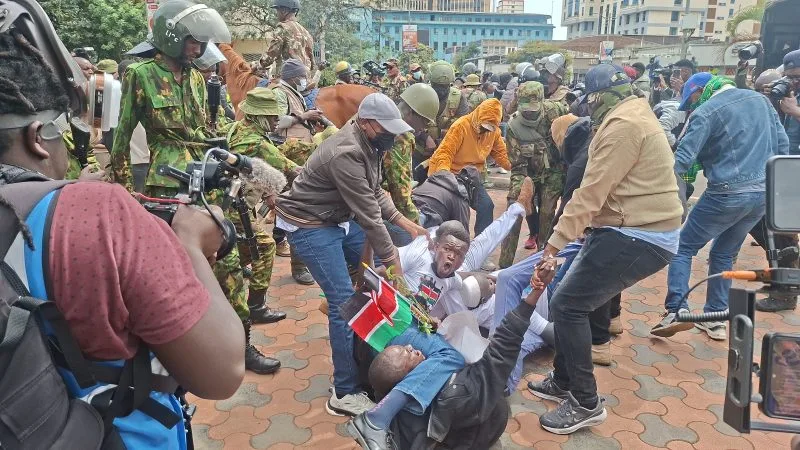
Human rights organisation Vocal Africa has raised alarm over the alleged disappearance of six activists following their arrest during recent Gen Z protests outside the Kenyan Parliament. This development highlights persistent concerns regarding arbitrary arrests, unlawful detention, and potential enforced disappearances in Kenya, particularly in the context of civic demonstrations. The incident underscores the critical importance of constitutional safeguards for arrested persons and the state's obligations under both domestic and international human rights law. Legal professionals are urged to remain vigilant and prepared to invoke remedies such as habeas corpus to protect fundamental freedoms and ensure state accountability.
Introduction
The recent claim by Vocal Africa that six activists have disappeared after being arrested during Gen Z anniversary protests outside Parliament in Kenya has sent ripples through the human rights community. While many arrested individuals were reportedly released, the unaccounted-for status of these six raises grave concerns about the rule of law and the protection of fundamental freedoms in the country. This incident is not isolated, but rather echoes a troubling pattern of alleged abductions and unlawful detentions linked to civic activism in Kenya.
These alleged disappearances directly challenge the constitutional guarantees afforded to every arrested person in Kenya and underscore the urgent need for transparency and accountability from state security agencies. The Gen Z protests, initially sparked by widespread discontent over proposed tax increases and broader governance issues, have become a significant platform for youth expression and demands for accountability. The response by authorities, particularly concerning the treatment of arrested individuals, is therefore under intense scrutiny, with legal and human rights implications extending far beyond the immediate circumstances of the arrests.
This article will delve into the legal framework governing arrests, detention, and the right to protest in Kenya, examining how the alleged disappearances contravene both national and international human rights standards. It will further explore the remedies available to legal practitioners and the broader implications for police accountability and the protection of civic space in Kenya.
Background
Kenya's legal landscape for arrests and detention is primarily anchored in the Constitution of Kenya, 2010, particularly Chapter Four, the Bill of Rights. Article 49 explicitly outlines the rights of arrested persons, including the right to be informed promptly of the reason for arrest, the right to remain silent, the right to communicate with an advocate, and the right to be brought before a court as soon as reasonably possible, but not later than twenty-four hours after being arrested. Furthermore, Article 51 guarantees that a person who is detained or held in custody retains all rights and fundamental freedoms in the Bill of Rights, and is entitled to petition for an order of habeas corpus.
The right to peaceful assembly, demonstration, picketing, and petitioning public authorities is enshrined in Article 37 of the Constitution. However, the exercise of this right has historically been regulated, and at times restricted, by the Public Order Act (Cap. 56). This colonial-era legislation, despite calls for its alignment with the 2010 Constitution, has often been criticised for imposing stringent notification requirements and granting broad powers to police, which have been used to suppress protests. The National Police Service Act also governs police conduct, requiring officers to operate strictly within the law and constitutional standards regarding human rights.
Kenya is also a signatory to key international human rights instruments, including the International Covenant on Civil and Political Rights (ICCPR) and the African Charter on Human and Peoples' Rights (Banjul Charter). These treaties impose obligations on the state to respect and protect rights such as liberty, security of person, and freedom from arbitrary detention and enforced disappearance. The Kenya National Commission on Human Rights (KNCHR), established under Article 59 of the Constitution, serves as an independent watchdog mandated to promote, protect, and monitor human rights in the country, including investigating violations and advising the government.
Analysis
The alleged disappearance of six activists following their arrest constitutes a grave violation of multiple fundamental rights enshrined in the Kenyan Constitution and international human rights law. An enforced disappearance occurs when a person is deprived of their liberty by state agents (or with state complicity), authorities refuse to acknowledge the detention, and the victim is placed outside the protection of the law. Such acts violate the rights to liberty, security of person, freedom from torture, and potentially the right to life, while also denying the right to a fair trial and access to legal remedies.
Specifically, the failure to account for the activists directly contravenes Article 49 of the Constitution, which mandates that arrested persons be informed of the reason for arrest, allowed communication with an advocate, and presented before a court within 24 hours. The denial of these rights effectively places individuals outside the protection of the law, a hallmark of enforced disappearance. While Kenya has signed the International Convention for the Protection of All Persons from Enforced Disappearance, it has yet to ratify it or enact specific domestic legislation criminalizing enforced disappearances, creating a significant legal gap that hinders investigation and prosecution.
In such circumstances, legal practitioners can urgently invoke the writ of habeas corpus, a fundamental remedy guaranteed under Article 51(2) of the Constitution. An application for habeas corpus, made to the High Court, compels the detaining authority to produce the individual in court and provide a lawful justification for their detention. This judicial mechanism is crucial in challenging unlawful detention and preventing individuals from being held incommunicado. Past cases in Kenya have demonstrated the judiciary's willingness to enforce these rights, quashing convictions or ordering releases where timely court appearances were violated.
The broader context reveals a persistent challenge of police accountability in Kenya. Despite the reforms introduced by the 2010 Constitution and the establishment of oversight bodies like the Independent Policing Oversight Authority (IPOA), allegations of excessive force, arbitrary arrests, and extrajudicial actions by security forces remain prevalent. The KNCHR documented 82 abductions or enforced disappearances linked to anti-government protests between June and December 2024, indicating a disturbing trend. This pattern suggests a "climate of impunity" that undermines public trust and the constitutional vision for policing.
Conclusion
The alleged disappearance of six activists following their arrest during the Gen Z protests serves as a stark reminder of the fragility of human rights in the face of state power and the critical role of legal professionals in upholding constitutionalism. For practitioners, the immediate priority is to act swiftly and strategically. This includes filing urgent applications for habeas corpus to compel the state to produce the missing individuals and account for their whereabouts. Thorough documentation of all facts surrounding the arrests and subsequent lack of information is paramount for any future legal action.
Legal professionals must also continue to engage with and support human rights organisations, such as Vocal Africa and the KNCHR, in their efforts to monitor state conduct and advocate for accountability. The incident highlights the urgent need for Kenya to ratify the International Convention for the Protection of All Persons from Enforced Disappearance and enact domestic legislation that explicitly criminalises this heinous act. What to watch for in the coming weeks includes the response of the Inspector General of Police, the judiciary's handling of any habeas corpus applications, and the broader political and legislative discourse around police reform and the right to protest. The legal community has a vital role to play in ensuring that the constitutional promise of human rights for all Kenyans is not merely a paper right, but a lived reality, demanding transparency, accountability, and justice for those whose rights are violated.
Citations
- 1.Constitution of Kenya, 2010
- 2.African Charter on Human and Peoples' Rights
- 3.International Covenant on Civil and Political Rights
- 4.Public Order Act (Cap. 56)
- 5.National Police Service Act
- 6.Criminal Procedure (Directions in the Nature of Habeas Corpus) Rules, 1948
How does this affect your business?
Get an AI analysis of this article grounded in your jurisdictions, practice areas, and any policy documents you've uploaded to Wansom.