
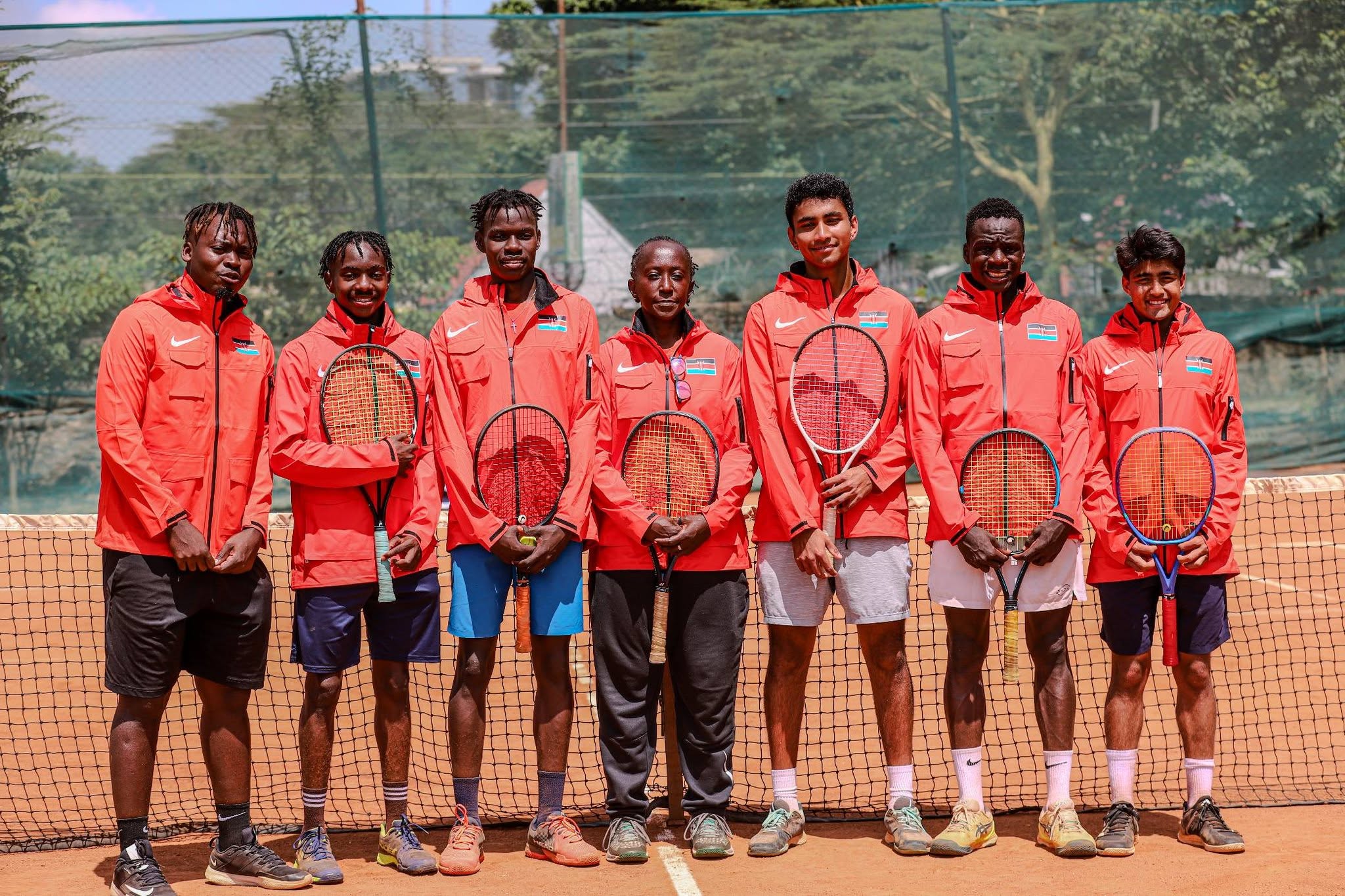
Kenya names formidable team ahead of Davis Cup tourney
Abstract
The recent announcement of Kenya's Davis Cup team, while a sporting event, highlights the critical legal framework governing sports in the country. This article examines the Sports Act, 2013, as the cornerstone of sports governance in Kenya, focusing on its provisions for the registration and regulation of sports organizations, athlete welfare, and dispute resolution. It delves into the pivotal role of the Sports Disputes Tribunal (SDT) in adjudicating conflicts, including those related to team selection and federation management. The article underscores the increasing demand for specialized legal advice in Kenya's evolving sports industry, driven by commercialization, professionalization, and regulatory oversight.
Introduction
The unveiling of Kenya's 7-player squad for the 2026 Davis Cup Africa Group 4 tournament by Tennis Kenya is a significant moment for national sports. This event, however, transcends mere athletic competition, serving as a timely reminder of the intricate legal and regulatory landscape that underpins sports administration and athlete representation in Kenya. For legal professionals, understanding this framework is crucial, as it governs everything from the formation and operation of sports federations to the resolution of disputes that inevitably arise in a competitive environment.
The selection of a national team, the governance of a sports federation like Tennis Kenya, and the rights of individual athletes are all subject to a robust legal regime designed to ensure fairness, transparency, and accountability. This article will explore the key legal instruments and institutions that shape Kenya's sports sector, with a particular focus on the Sports Act, 2013, and the indispensable role of the Sports Disputes Tribunal. The aim is to provide practitioners with insights into the legal considerations that permeate the world of Kenyan sports, moving beyond the headlines of sporting achievements to the foundational legal structures.
Background
The legal framework for sports in Kenya is primarily anchored in the Sports Act, 2013 (No. 25 of 2013). This Act was enacted to harness sports for development, encourage and promote drug-free sports, and provide for the establishment of sports institutions, facilities, administration, and management of sports in the country. Prior to this Act, sports organizations were often registered under the Societies Act, but the Sports Act mandated a fresh registration process for all sports clubs and federations to align with the new regulatory environment.
Key institutions established under the Sports Act include Sports Kenya, the National Sports Fund, the Kenya Academy of Sports, and crucially, the office of the Sports Registrar and the Sports Disputes Tribunal (SDT). The Sports Registrar is responsible for the registration and regulation of sports organizations and multi-sports bodies, as well as the licensing of professional sports and sportspersons. This office also arbitrates registration disputes between sports organizations. The Act also outlines matters to be provided for in the constitutions of sports organizations, ensuring a standardized approach to governance.
Analysis
The Sports Act, 2013, serves as the cornerstone of sports governance in Kenya, establishing a comprehensive regulatory architecture. It mandates that national sports organizations, such as Tennis Kenya, operate under constitutions that comply with the Act's provisions, promoting transparency and accountability. The Act's emphasis on good governance is particularly pertinent given historical challenges within Kenyan sports federations, which have often been marred by leadership wrangles, financial mismanagement, and opaque decision-making.
A critical component of this legal framework is the Sports Disputes Tribunal (SDT), established under Section 55 of the Sports Act, 2013. The SDT is a specialized quasi-judicial body designed to adjudicate conflicts within the Kenyan sports sector, offering a faster and more expert alternative to ordinary courts. Its jurisdiction, defined by Section 58 of the Act, is broad, encompassing appeals against decisions made by national sports organizations, disciplinary matters, eligibility and selection disputes, and governance or election challenges. This means that decisions regarding national team selections, such as the Davis Cup squad, could potentially be challenged before the SDT if procedural irregularities or unfairness are alleged.
Parties are generally required to exhaust internal dispute resolution mechanisms within their respective federations before approaching the SDT. However, the SDT's role is crucial in providing an independent forum for review. While the High Court retains judicial review jurisdiction, many disputes are first determined by the SDT. The Tribunal's composition, including advocates with sports law experience, ensures specialized expertise in handling complex sports-related issues. The SDT also has jurisdiction over anti-doping rule violations for national and lower-level athletes under Section 31 of the Anti-Doping Act.
The increasing commercialization and professionalization of sports in Kenya have amplified the demand for specialized legal advice across various domains, including commercial rights, employment law, and integrity enforcement. Recent partnerships, such as that between Tennis Kenya and the French Tennis Federation, highlight the growing international engagement and the need for robust legal agreements covering aspects like player development, coaching, and governance exchange. These collaborations further underscore the importance of understanding both domestic and international sports law principles.
Conclusion
The selection of Kenya's Davis Cup team, while a testament to athletic prowess, serves as a practical illustration of the extensive legal architecture governing sports in Kenya. For legal practitioners, this event highlights the ongoing relevance of the Sports Act, 2013, and the critical role of the Sports Disputes Tribunal in ensuring fair play, sound governance, and effective dispute resolution within the sports sector. The increasing complexity of sports, driven by commercial interests, athlete welfare concerns, and international collaborations, necessitates a deep understanding of this legal landscape.
Practitioners advising sports organizations, athletes, or commercial entities involved in sports must remain abreast of developments in sports law, including the evolving jurisprudence of the SDT and the implications of international partnerships. As Kenya continues to develop its sporting potential, the demand for specialized legal expertise in areas such as contract negotiation, intellectual property, anti-doping, and governance compliance will only grow. Legal professionals are therefore encouraged to engage proactively with this dynamic field, contributing to the integrity and sustainable growth of Kenyan sports.
Citations
- 1.Sports Act, 2013 (No. 25 of 2013)
- 2.Chambers and Partners, Sports Law 2026 - Kenya | Global Practice Guides (March 26, 2026)
- 3.Global Law Experts, Sports Disputes Tribunal Kenya (June 16, 2026)
- 4.Resolving the Jurisdiction Issues of the Sports Dispute Tribunal of Kenya (November 08, 2021)
- 5.Global Law Experts, Sports Disputes Tribunal Kenya | Global Law Experts (June 16, 2026)
- 6.Hannington Bulinda, ROLE, CHALLENGES AND OPPORTUNITIES IN THE KENYAN SPORTS ACT 2013 | European Journal of Physical Education and Sport Science
- 7.PolicyVault.Africa, The Sports Act, 2013
- 8.Muma & Kanjama Advocates, Jurisdictions of The Sports Disputes Tribunal (April 25, 2025)
- 9.Knowledge Hub, The Commissioner of Sports and Sports Registrar (November 15, 2021)
- 10.TripleOKLaw LLP, From the Field to the Courtroom: Kenya's Sports Law in Chambers Global Practice Guides 2026 (April 17, 2026)
- 11.Beyond The CHAN Glam Lies a Governance Imperative Behind Kenya's Sporting Promise (August 22, 2025)
- 12.Registration of Sports Clubs In Kenya - YouTube (September 26, 2023)
- 13.C.F OTIENO & Co. ADVOCATES, SPORTS ACT
- 14.federations in Kenya. Reviewed Journal International of Business Management, 5 (1), 447 – 459. https://doi.org/10.61426/busine (October 01, 2024)
- 15.UoN Digital Repository, Application of governance principles by sports federations in Kenya
- 16.Govt demands better governance in sports federations - YouTube (September 10, 2025)
- 17.USIU-AFRICA Digital Repository, Determinants of Implementation of Corporate Governance Practices in Sports: A Study of Selected Sports Federations in Kenya
- 18.PolicyVault.Africa, The Sports Registrar Regulations
- 19.State Department for Sports, Background Information
- 20.Elevolt, Public Service Commission hiring Deputy Sports Registrar in Nairobi, Kenya
- 21.KBC Kenya, Tennis Kenya, FTF seal landmark partnership to open international pathways (March 19, 2026)
- 22.PuraVida Sports, Game, set, match! Tennis Kenya sign landmark partnership deal with French Tennis Federation (May 31, 2026)
- 23.KBC Kenya, Tennis Kenya opens new pathway for young stars through France partnership (May 29, 2026)
How does this affect your business?
Get an AI analysis of this article grounded in your jurisdictions, practice areas, and any policy documents you've uploaded to Wansom.