
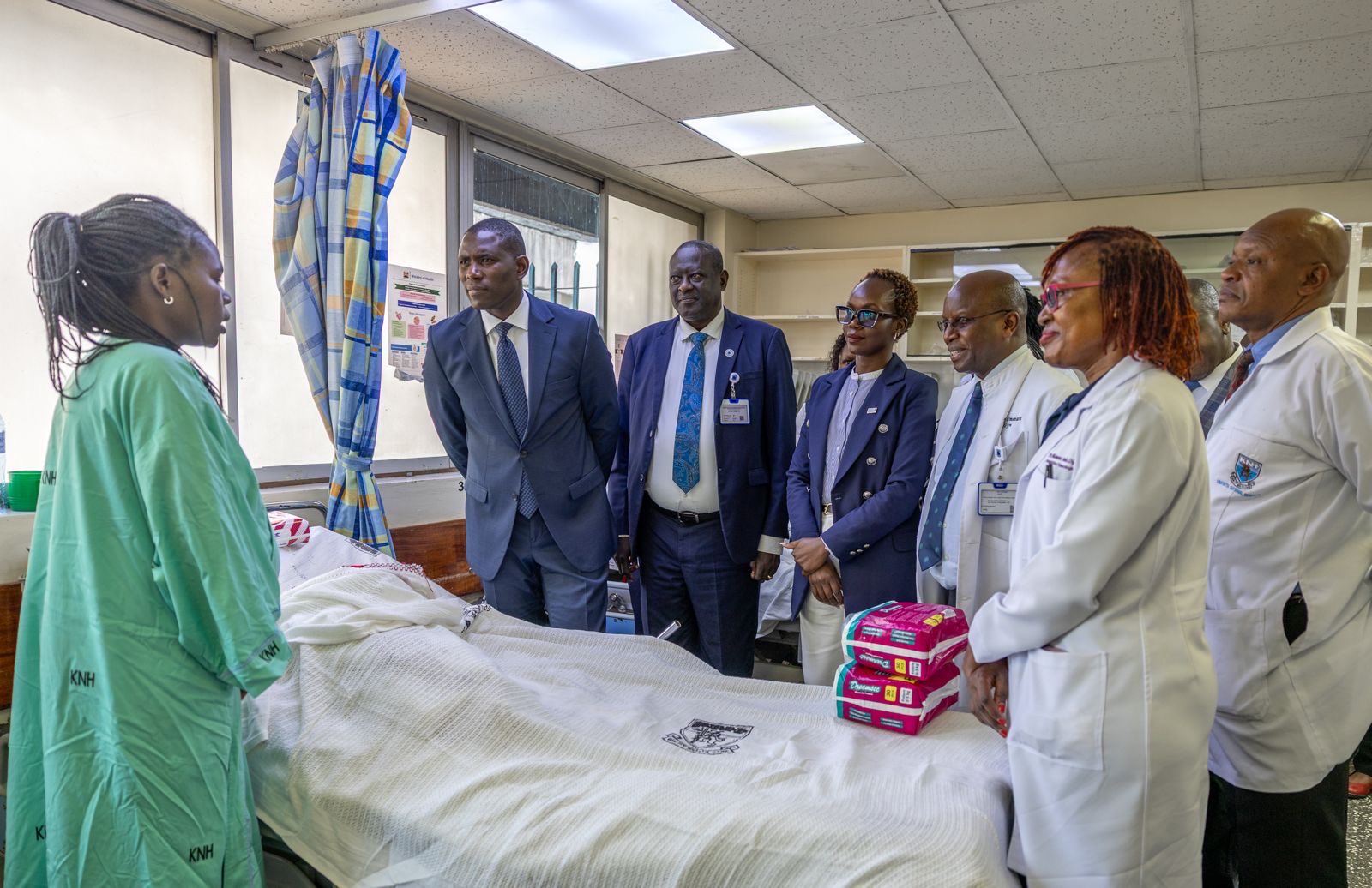
Kenya receives equipment for Maternal, Women’s Health Services
Abstract
Kenya's recent acquisition and distribution of 108 electric obstetric theatre beds to 45 health facilities across 11 priority counties marks a significant step towards fulfilling the constitutional right to health, particularly for maternal and women's health services. This development underscores the government's ongoing commitment to enhancing healthcare infrastructure and service delivery, aligning with national policies like Universal Health Coverage (UHC) and international human rights obligations. For legal professionals, this initiative highlights the evolving landscape of health rights enforcement, accountability for service provision by both national and county governments, and the potential for litigation arising from disparities in access or quality of care. It reinforces the legal imperative to ensure equitable, accessible, and high-quality maternal healthcare across the nation.
Introduction
The recent announcement regarding Kenya's receipt and planned distribution of 108 electric obstetric theatre beds to 45 health facilities across 11 priority counties represents a tangible advancement in the nation's commitment to maternal and women's health services. This initiative, while seemingly a logistical and infrastructural upgrade, carries profound legal implications for the realization of the right to health enshrined in the Constitution of Kenya, 2010. The provision of such critical equipment directly addresses long-standing challenges in healthcare access and quality, particularly in rural and underserved areas, where maternal mortality rates remain a significant concern.
For practising attorneys and legal professionals, this development is not merely a news item but a critical indicator of the state's progressive efforts to operationalize constitutional mandates and international obligations. It signals a renewed focus on strengthening the healthcare system, which in turn impacts the scope of legal duties of care, potential liabilities for healthcare providers and institutions, and the avenues for redress available to citizens. This article will delve into the legal framework underpinning maternal and women's health in Kenya, analyze the significance of this equipment donation within that framework, and discuss the implications for legal practice and the ongoing pursuit of health justice.
Background
The right to health in Kenya is a fundamental human right, explicitly guaranteed under Article 43(1)(a) of the Constitution of Kenya, 2010, which states that every person has the right to the highest attainable standard of health, including reproductive health care. This constitutional provision forms the bedrock of all health-related legislation and policy in the country. Further elaborating on this right, the Health Act, 2017, establishes a unified health system and outlines specific reproductive health rights, including access to appropriate healthcare services for safe pregnancy, childbirth, and the postpartum period.
The governance of health services in Kenya operates under a devolved system, as stipulated by the Constitution's Fourth Schedule. This framework assigns essential health service delivery to the 47 county governments, while the national government retains crucial roles in health policy formulation, capacity building, technical assistance to counties, and the management of national referral health facilities. This dual responsibility necessitates close collaboration and coordination between the two levels of government to ensure effective service delivery. Complementing these legal frameworks are national policies such as the Kenya Vision 2030, the Universal Health Coverage (UHC) policy (2020-2030), and the National Reproductive Health Policy (2022-2032), all of which aim to enhance the health status of Kenyans, with a particular emphasis on maternal and reproductive health.
Kenya is also a signatory to several international and regional human rights instruments that reinforce its obligations regarding women's health. Key among these are the Protocol to the African Charter on Human and Peoples' Rights on the Rights of Women in Africa (the Maputo Protocol) and the Convention on the Elimination of All Forms of Discrimination against Women (CEDAW). These instruments obligate the state to take all appropriate measures to ensure the right to health for women, including sexual and reproductive health, and to eliminate discrimination in healthcare provision.
Analysis
The distribution of 108 electric obstetric theatre beds directly supports the state's constitutional and statutory obligations to provide accessible and quality healthcare services. These beds are vital for improving the infrastructure of health facilities, particularly in the 11 priority counties, thereby enhancing the capacity for safe deliveries and emergency obstetric care. This aligns with the Health Act, 2017, which mandates access to appropriate healthcare services for safe pregnancy and childbirth. The investment in such equipment is a practical step towards reducing maternal morbidity and mortality rates, which have historically been high in Kenya.
From a legal perspective, this initiative has significant implications for accountability. The *Josephine Oundo Ongwen v. the Attorney General and 4 Others* (also known as the Josephine Majani cases) serves as a landmark precedent, where both national and county governments were held liable for violations of a woman's right to respectful maternal health care, dignity, and freedom from cruel, inhuman, and degrading treatment. The Court of Appeal's decision in February 2024 affirmed the High Court's ruling, emphasizing the obligation of health systems to respect women's sexual and reproductive health rights and to implement policies for respectful maternal care. The provision of modern equipment, while not a panacea, is a crucial component in creating an environment where such rights can be upheld, reducing instances of neglect and improving the quality of care.
Furthermore, the allocation of these resources to specific priority counties highlights the interplay between national policy and devolved health functions. While county governments are primarily responsible for health service delivery, the national government's role in policy, capacity building, and resource mobilization remains critical. The recent enactment of the Primary Health Care Act, 2023, the Social Health Insurance Act, 2023, and the Facility Improvement Financing Act, 2023, further strengthens the legal and financial frameworks for UHC, aiming to reduce disparities and ensure equitable access to essential services. These legislative reforms, coupled with equipment donations, are intended to create a more robust and accountable health system.
However, the mere provision of equipment does not automatically guarantee the full realization of health rights. Challenges persist, including the need for adequate human resources, proper maintenance of equipment, and consistent supply chains. Legal practitioners must remain vigilant in monitoring the equitable distribution and effective utilization of these resources. The *Federation of Women Lawyers (FIDA Kenya) v Attorney General & Another* case, concerning guidelines for safe abortion, demonstrates the judiciary's role in safeguarding reproductive health rights against arbitrary administrative actions. This underscores the ongoing need for legal advocacy to ensure that policy intentions translate into tangible improvements in healthcare access and quality, particularly for vulnerable populations.
Conclusion
The strategic distribution of electric obstetric theatre beds across Kenya is a commendable step towards strengthening maternal and women's health services, directly supporting the constitutional right to health and the broader Universal Health Coverage agenda. This initiative, underpinned by robust national legislation and international human rights commitments, provides a stronger foundation for ensuring safe and dignified childbirth experiences for Kenyan women. However, the legal and practical challenges of equitable access, quality assurance, and sustainable resource management remain paramount.
For legal practitioners, this development signals an opportune moment to engage more deeply with health law, public interest litigation, and policy advocacy. Attorneys should monitor the implementation of these initiatives at the county level, assess their impact on health outcomes, and be prepared to address issues of accountability, medical negligence, or discrimination that may arise. The ongoing evolution of Kenya's health legal framework, including recent acts like the Maternal, Newborn and Child Health Bill, 2023, necessitates continuous vigilance and proactive engagement to ensure that the promise of the right to health is fully realized for all Kenyans.
Citations
- 1.Constitution of Kenya, 2010, Article 43(1)(a)
- 2.Health Act, 2017, Act No. 21 of 2017
- 3.Protocol to the African Charter on Human and Peoples' Rights on the Rights of Women in Africa (Maputo Protocol)
- 4.Convention on the Elimination of All Forms of Discrimination against Women (CEDAW)
- 5.Josephine Oundo Ongwen v. the Attorney General and 4 Others (Bungoma High Court Petition No. 5 of 2014)
- 6.County Government of Bungoma & 2 Others v. Josephine Oundo Ongwen (a.k.a. Josephine Majani) & 2 Others (Kenya Civil Appeal No. 61 of 2018)
- 7.Federation of Women Lawyers (FIDA Kenya) v Attorney General & Another, Constitutional Petition 266 of 2015
- 8.National Reproductive Health Policy 2022-2032, Ministry of Health, Government of Kenya, July 2022
- 9.Kenya Universal Health Coverage Policy 2020-2030
- 10.Primary Health Care Act, 2023
- 11.Social Health Insurance Act, 2023
- 12.Facility Improvement Financing Act, 2023
- 13.Digital Health Act, 2023
- 14.The Maternal, Newborn and Child Health Bill, 2023
How does this affect your business?
Get an AI analysis of this article grounded in your jurisdictions, practice areas, and any policy documents you've uploaded to Wansom.