
Kenya's NTSA to Implement Reflectors and Telematics in School Buses
Abstract
The National Transport and Safety Authority (NTSA) in Kenya has introduced new directives under the Traffic (School Transport) Rules, 2026, mandating reflectorised stop-sign arms and telematics systems for school buses. While these safety enhancements are aimed at bolstering child safety on roads, the NTSA has clarified that the enforcement timelines for these specific provisions (Rules 13 and 14) are yet to be announced. However, school transport vehicles remain subject to mandatory annual inspections to ensure roadworthiness, with law enforcement officers directed to verify inspection stickers via the NTSA Mobile App. This article delves into the legal framework, the specifics of the new requirements, and the implications for legal practitioners and school transport operators in Kenya.
Introduction
The National Transport and Safety Authority (NTSA) in Kenya has recently underscored its commitment to enhancing road safety for schoolchildren by introducing comprehensive regulations. Central to these efforts are the Traffic (School Transport) Rules, 2026, which stipulate new mandatory requirements for school transport vehicles, including the installation of reflectorised stop-sign arms and advanced telematics systems. These measures reflect a proactive approach by the Authority to mitigate risks associated with school transportation and ensure the well-being of learners.
While the overarching goal is to standardize safety protocols, the NTSA has issued a crucial clarification: the enforcement of Rules 13 (reflectorised red stop mechanical signal arms) and 14 (telematic systems) of the Traffic (School Transport) Rules, 2026, has not yet commenced, and specific implementation timelines will be communicated in due course. This deferment, however, does not negate the immediate requirement for school transport vehicles to undergo mandatory annual inspections and maintain valid roadworthiness certificates, verifiable through the NTSA Mobile App. This article provides a detailed examination of these new regulations, their statutory underpinnings, and the practical implications for legal professionals advising clients in the transport and education sectors.
The introduction of these rules marks a significant shift towards a more regulated school transport environment, moving from loosely managed arrangements into a fully regulated category under the Traffic Act. For legal practitioners, understanding the nuances of these regulations, the phased implementation, and the potential for legal challenges is paramount. This analysis will equip attorneys with the necessary insights to guide school owners, transport operators, and other stakeholders through the evolving regulatory landscape.
Background
The regulatory framework governing road transport in Kenya is primarily established by the National Transport and Safety Authority Act, 2012 (No. 33 of 2012), which created the NTSA and vested it with broad powers to register, license, and inspect motor vehicles, as well as to formulate and enforce road safety regulations. This Act operates in conjunction with the Traffic Act, Cap 403, which provides the foundational legislation for traffic management and road safety offences in Kenya. The NTSA's mandate under these Acts includes the continuous inspection of school transport vehicles to ensure compliance with safety standards and the setting of vehicle fitness standards.
Historically, concerns over child safety in school transport have prompted various interventions. The Traffic (Amendment) Act, 2017, for instance, mandated that all school buses be painted yellow and clearly labelled with the institution's name. The recently introduced Traffic (School Transport) Rules, 2026, build upon this foundation, aiming to create a more comprehensive regulatory framework. These rules introduce stringent requirements, including annual vehicle inspections, mandatory seat belts designed for children, specific colour codes, and the display of 'SCHOOL BUS' markings. The Authority's power to issue such regulations stems from its statutory functions to enhance road safety and enforce compliance.
Prior to the latest clarifications, the NTSA had indicated that annual inspections for vehicles older than four years from their date of manufacture would commence from July 1, 2026, a directive that also encompasses school transport vehicles. The Authority has emphasized that operating a school vehicle without valid licensing or a valid inspection certificate constitutes an offence, with penalties including fines of up to KSh 20,000, imprisonment for up to six months, or both, and potential suspension or revocation of licences.
Analysis
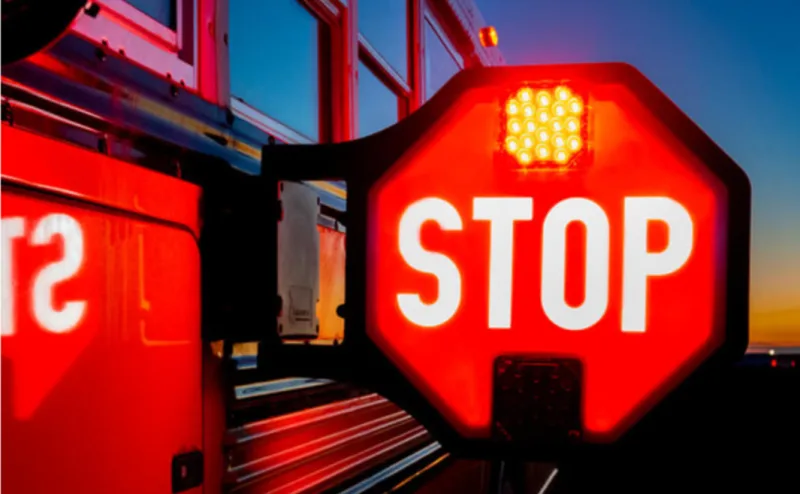
The core of the NTSA's recent directives for school transport lies in Rules 13 and 14 of the Traffic (School Transport) Rules, 2026. Rule 13 mandates the installation of reflectorised red stop mechanical signal arms, particularly for vehicles over 30 feet, to alert other motorists when children are boarding or alighting. This mechanism requires other motorists to stop until the arm retracts and flashing lights cease, with non-compliance potentially leading to a six-month driving licence suspension. Rule 14 introduces passenger-facing telematics systems with cameras, approved by the Kenya Bureau of Standards (KEBS), designed for real-time monitoring of vehicle location, speed, and operational behaviour.
Crucially, while these rules are gazetted, the NTSA has explicitly stated that the enforcement of Rules 13 and 14 is currently deferred, with timelines to be communicated later. This deferment suggests a recognition of the practical challenges associated with immediate implementation, including the cost of retrofitting existing vehicles and the need for public awareness campaigns. This phased approach is a critical consideration for practitioners, as it provides a window for compliance preparation without immediate punitive measures for these specific requirements.
However, it is imperative to distinguish this deferment from other ongoing obligations. School transport vehicles are still subject to mandatory annual inspections at NTSA centres, irrespective of their age, to ensure overall roadworthiness. Law enforcement officers are empowered to verify the validity of inspection stickers using the NTSA Mobile App, and operating a vehicle without a valid inspection certificate carries significant penalties. This highlights a dual enforcement regime: immediate compliance with general roadworthiness and inspection requirements, while specific new technological mandates await further NTSA guidance.
Concerns have been raised regarding the practicality and public participation surrounding these new regulations. The Senate, for instance, has criticised the NTSA for allegedly bypassing parliamentary approval processes and for adopting foreign transport systems, such as the mechanical stop arms, without adequate adaptation to local road conditions and public awareness. Such legislative scrutiny and public debate underscore potential avenues for legal challenges or further amendments to the rules, which practitioners should monitor closely. The argument that these regulations could create 'rent-seeking opportunities' and impose punitive, impractical costs on operators is a significant point of contention.
Comparative analysis reveals that while stop-sign arms are common in countries like the United States, their effectiveness is highly dependent on driver education and enforcement infrastructure, which may differ in the Kenyan context. The NTSA's decision to defer enforcement, therefore, might be a strategic move to address these implementation gaps and stakeholder concerns before full rollout. The NTSA (Operations of Commercial Vehicles) Regulations, 2026, also include telematics requirements for commercial vehicles, indicating a broader regulatory trend towards technology-driven road safety monitoring across different transport sectors.
Conclusion
The NTSA's introduction of reflectorised stop-sign arms and telematics systems for school buses under the Traffic (School Transport) Rules, 2026, represents a significant step towards enhancing child safety on Kenyan roads. While the Authority has deferred the enforcement of these specific technological mandates, the underlying commitment to stricter safety standards is clear. Legal practitioners must advise school owners and transport operators to remain vigilant for forthcoming NTSA announcements regarding the implementation timelines for Rules 13 and 14.
In the interim, immediate compliance with existing roadworthiness requirements and mandatory annual vehicle inspections remains non-negotiable. The NTSA Mobile App serves as a critical tool for law enforcement to verify inspection stickers, and non-compliance with general inspection rules carries substantial penalties. Practitioners should also monitor the ongoing legislative debates and public consultations, particularly those raised by the Senate, as these may influence the eventual shape and enforcement of the new regulations. Proactive engagement with NTSA guidelines and continuous monitoring of official communications will be essential for ensuring clients navigate this evolving regulatory landscape effectively and avoid potential liabilities.
How does this affect your business?
Get an AI analysis of this article grounded in your jurisdictions, practice areas, and any policy documents you've uploaded to Wansom.