
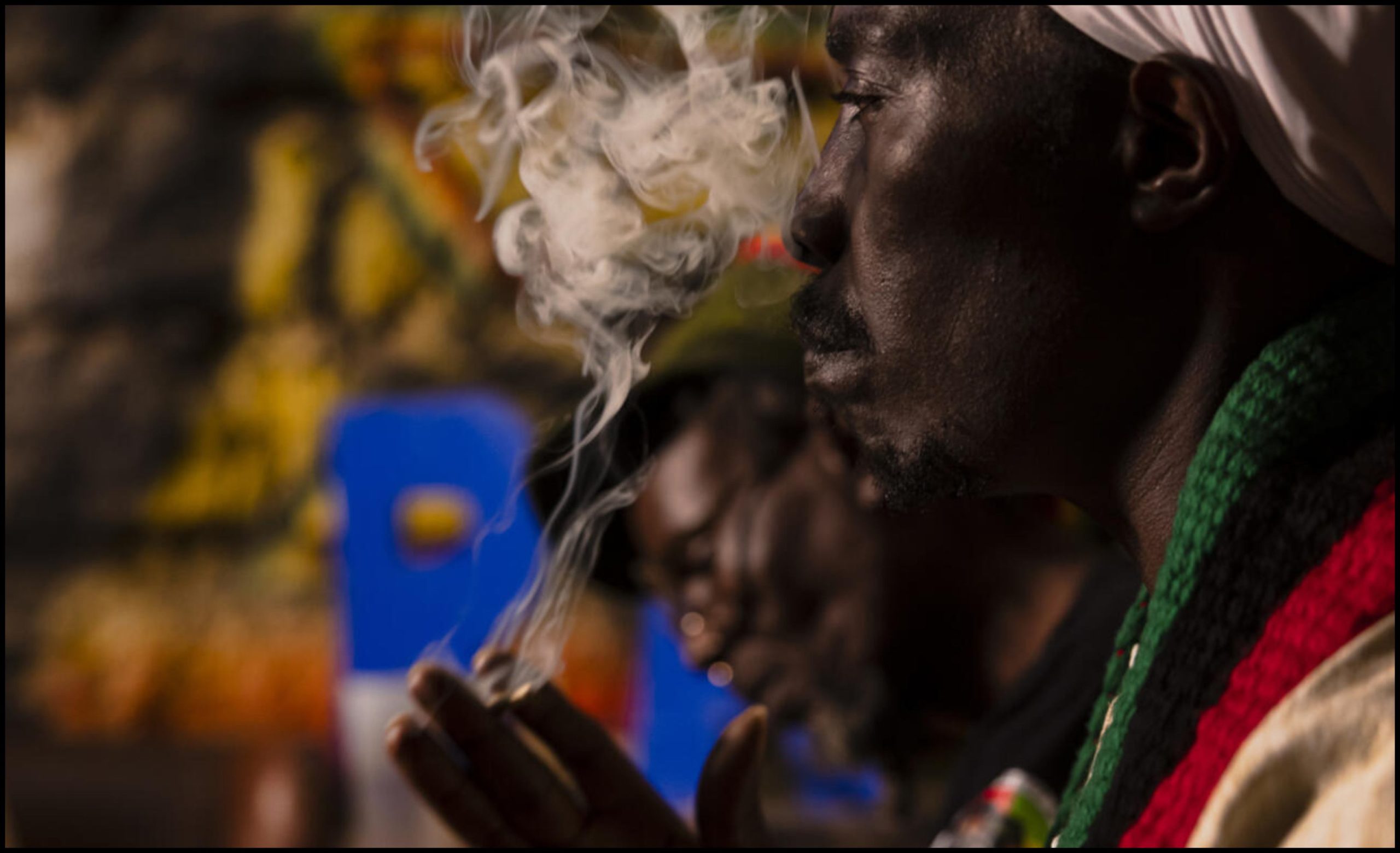
Kenyan Rastafarians hope to smoke cannabis legally
Abstract
The Rastafari Society of Kenya is currently engaged in a landmark legal battle before the High Court, seeking to decriminalize the use of cannabis for religious purposes. Arguing that cannabis, or 'bhang', is a sacred sacrament central to their worship and meditation, the community contends that the current prohibition under the Narcotic Drugs and Psychotropic Substances (Control) Act, 1994, infringes upon their constitutional right to freedom of conscience, religion, belief, and opinion as enshrined in Article 32 of the Constitution of Kenya, 2010. This case highlights the tension between established drug control legislation and fundamental human rights, with the High Court's decision, expected on July 15, 2026, poised to have significant implications for religious freedom and drug policy in Kenya.
Introduction
Kenya's legal landscape is currently witnessing a pivotal challenge to its long-standing drug prohibition laws, as the Rastafari community seeks judicial recognition for the religious use of cannabis. This development, widely reported, underscores a growing global discourse on the intersection of religious freedom and drug policy. For Rastafarians, cannabis, often referred to as the 'holy herb', is not merely a substance but a sacrament integral to their spiritual practices, facilitating meditation, enlightenment, and connection with their deity, Jah.
The petition before the High Court by the Rastafari Society of Kenya is more than a plea for decriminalization; it is a profound assertion of constitutional rights against a backdrop of historical marginalization and criminalization. The outcome of this case will not only determine the legal status of cannabis for a specific religious group but could also set a precedent for how Kenya balances public health concerns with the fundamental rights of its diverse citizenry. This article delves into the legal arguments presented, the relevant statutory and constitutional frameworks, and the potential implications for legal practitioners and the future of human rights jurisprudence in Kenya.
Background
The legal framework governing narcotics in Kenya is primarily the Narcotic Drugs and Psychotropic Substances (Control) Act, 1994 (Cap. 245). This Act broadly criminalizes the possession, use, cultivation, and trafficking of cannabis, locally known as 'bhang', imposing severe penalties including substantial fines and lengthy imprisonment, ranging from up to ten years for personal consumption to life imprisonment for trafficking. While a theoretical medical or scientific exception exists, there is no practical legal route for its use or dispensation in the country.
Conversely, the Constitution of Kenya, 2010, provides robust protections for fundamental rights and freedoms. Central to the Rastafarians' petition is Article 32, which guarantees every person the right to freedom of conscience, religion, thought, belief, and opinion. This right explicitly includes the freedom to manifest any religion or belief through worship, practice, teaching, or observance, either individually or in community with others, in public or in private. However, these rights are not absolute. Article 24 of the Constitution stipulates that a right or fundamental freedom in the Bill of Rights may only be limited by law, and then only to the extent that the limitation is reasonable and justifiable in an open and democratic society. The State bears the burden of demonstrating that such limitations meet this stringent test.
Analysis
The Rastafari Society of Kenya's legal challenge hinges on the argument that the blanket prohibition of cannabis under the Narcotic Drugs and Psychotropic Substances (Control) Act, 1994, constitutes an unreasonable and unjustifiable limitation on their constitutional right to religious freedom. They assert that cannabis is a 'holy herb' essential for their spiritual practices, including meditation and 'reasoning' sessions, and its prohibition forces them to choose between their faith and compliance with the law. Their lawyers have highlighted that the use is strictly for spiritual purposes by adults over 18, with internal guidelines governing its practice, distinguishing it from recreational use.
The State, in its submissions, has countered by emphasizing public health and safety concerns, arguing that any relaxation of drug laws could lead to increased crime and social harm. Government lawyers have cited scientific and forensic studies linking marijuana abuse to mental health complications, addiction risks, and impaired judgment. They have also questioned the practicality of implementing a religious exemption, particularly regarding defining permissible quantities and monitoring usage, without undermining the broader drug control framework.
This legal conundrum draws parallels with the South African Constitutional Court case of *Prince v President, Cape Law Society, and Others* (2002 (2) SA 794). In *Prince*, a Rastafarian sought an exemption to use cannabis for religious purposes. While the South African court acknowledged that the prohibition infringed upon Mr. Prince's religious freedom, the majority ultimately found the limitation justifiable under the general limitation clause of the South African Constitution. The court cited concerns about the illicit drug trade and the administrative difficulties of creating a religious exemption without opening floodgates for abuse. Mr. Prince's subsequent appeals to the African Commission on Human and Peoples' Rights and the UN Human Rights Committee were also unsuccessful.
Kenyan courts will need to carefully consider the proportionality test under Article 24 of its own Constitution. This requires evaluating the nature of the right, the importance of the purpose of the limitation, the nature and extent of the limitation, and whether there are less restrictive means to achieve the purpose. The Rastafarians' argument that their use is private and spiritual, coupled with proposed internal regulatory mechanisms, attempts to address some of the concerns raised in *Prince*. The High Court's decision will therefore involve a delicate balancing act between protecting religious freedom and upholding public order and health. The ongoing nature of the case, with judgment reserved until July 15, 2026, underscores its complexity and far-reaching legislative implications.
Conclusion
The High Court's forthcoming judgment in the Rastafarian cannabis case is a critical juncture for Kenyan jurisprudence, particularly in the areas of constitutional law, human rights, and drug policy. For legal practitioners, this case presents a significant opportunity to observe the practical application of Article 24's limitation clause in balancing individual religious freedoms against broader societal interests. A ruling in favour of the Rastafarians could necessitate legislative amendments to the Narcotic Drugs and Psychotropic Substances (Control) Act, 1994, to incorporate religious exemptions, potentially paving the way for similar claims from other communities or for broader discussions on cannabis decriminalization for medicinal or industrial purposes.
Conversely, a ruling upholding the current prohibition would reinforce the State's stance on drug control but would likely intensify calls for legislative reform and potentially lead to further appeals. Practitioners in criminal defense, constitutional law, and human rights must closely monitor this development, as the outcome will undoubtedly shape future legal arguments concerning religious practices, personal autonomy, and the evolving landscape of drug legislation in Kenya and potentially across Africa. The case serves as a powerful reminder of the judiciary's role in interpreting and safeguarding constitutional rights in a dynamic society.
Citations
- 1.Constitution of Kenya, 2010, Article 24
- 2.Constitution of Kenya, 2010, Article 32
- 3.Narcotic Drugs and Psychotropic Substances (Control) Act, 1994, Cap. 245
- 4.Prince v President, Cape Law Society, and Others, 2002 (2) SA 794 (CC)
- 5.Prince v South Africa, (2004) AHRLR 105 (ACHPR 2004)