
Kibera Law Courts Defers Plea for Utumishi Girls Students in Murder Case
Abstract
Eight female students from Utumishi Girls Academy facing murder charges have had their plea deferred by a Kenyan court, which ordered them to undergo a mental assessment. This development highlights the critical intersection of juvenile justice, mental health considerations, and criminal procedure in Kenya. The court's directive, mandating evaluation by a child psychiatrist at Mathari National Hospital, underscores the legal requirement to ascertain an accused person's fitness to plead, particularly when minors are involved in serious offences. This procedural step is crucial for upholding the constitutional right to a fair trial and ensuring that the best interests of the child are paramount throughout the judicial process.
Introduction
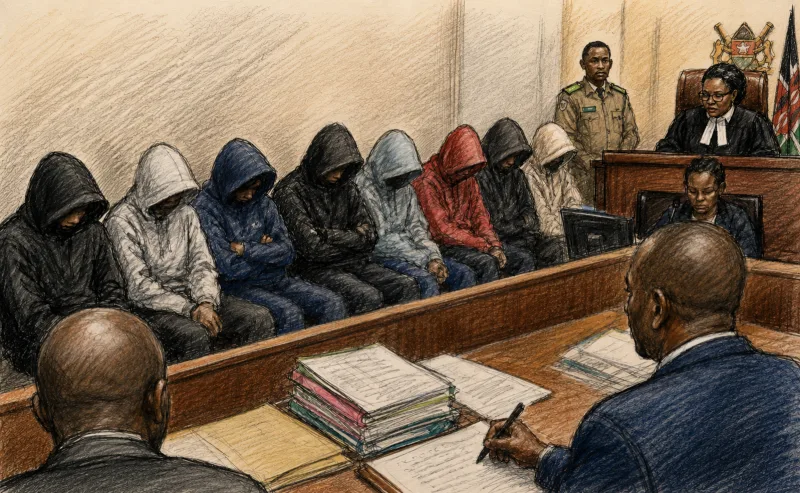
In a significant development within Kenya's criminal justice system, eight students from Utumishi Girls Academy, accused in a murder case, have had their plea-taking deferred by the court. The Kibera Law Courts directed that the minors undergo a comprehensive mental assessment by a child psychiatrist at Mathari National Hospital before they can formally enter a plea. This decision, made during the first mention of the case, emphasizes the judiciary's commitment to procedural fairness and the protection of vulnerable accused persons, particularly children, in serious criminal matters.
This article delves into the legal framework underpinning such mental assessments in Kenya, exploring the relevant provisions of the Criminal Procedure Code, the Children Act, and the Constitution. It examines the rationale behind deferring pleas for mental evaluation, the implications for juvenile offenders, and the broader context of mental health in criminal proceedings. For legal practitioners, this case serves as a crucial reminder of the intricate balance between prosecuting serious crimes and safeguarding the rights and welfare of child accused persons.
Background
The legal landscape governing criminal proceedings in Kenya, especially concerning mental health and juvenile offenders, is shaped by several key statutes. The Penal Code, Chapter 63 of the Laws of Kenya, defines murder under Section 203 as the unlawful killing of another person with malice aforethought, with Section 204 prescribing the punishment for murder. Historically, this carried a mandatory death sentence, but the Supreme Court's decision in *Francis Karioko Muruatetu & another v. Republic* [2017] eKLR declared the mandatory nature of the death penalty unconstitutional, granting courts discretion in sentencing.
The Criminal Procedure Code (CPC), Chapter 75 of the Laws of Kenya, provides the procedural framework for criminal trials. Sections 162, 163, and 164 of the CPC are particularly relevant, outlining the procedure where a question arises as to the accused person's soundness of mind or fitness to plead. Section 162, for instance, allows a court to inquire into the soundness of mind of an accused person if it appears they are of unsound mind and consequently incapable of making their defence. Furthermore, Section 280 of the CPC addresses situations where an accused stands mute or cannot answer directly to the information, allowing the court to determine their soundness of mind before proceeding.
For minors, the Children Act, 2022, plays a paramount role. It emphasizes the best interests of the child as a primary consideration in all matters concerning them, as enshrined in Article 53 of the Constitution of Kenya, 2010. The Act sets the minimum age of criminal responsibility at twelve years and introduces a rebuttable presumption that a child under the age of fourteen lacks the capacity to distinguish between right and wrong. The Children Act also guarantees a child's right to a fair trial, including legal representation and the presence of a parent or guardian, and promotes child-friendly justice processes.
Analysis
The deferral of plea for the Utumishi Girls students underscores the judiciary's adherence to fundamental principles of criminal justice, particularly the right to a fair trial under Article 50 of the Constitution of Kenya, 2010. A crucial aspect of a fair trial is ensuring that an accused person is mentally fit to understand the charges against them, instruct their legal representative, and participate meaningfully in their defence. The order for a mental assessment, specifically by a child psychiatrist, acknowledges the unique vulnerabilities and developmental stages of juvenile offenders.
While the Criminal Procedure Code provides for mental assessments, Kenyan courts have affirmed that such assessments, though often discretionary, are an integral part of ensuring a fair trial, particularly in serious cases. In *Republic v. Syuki* (Criminal Case E011 of 2022) [2023] KEHC 25303 (KLR), the High Court emphasized the importance of conducting psychiatric assessments early in the trial process to evaluate an accused's fitness to plead. Similarly, in *Republic v. Usuya Mongolo Lewis* [2021] eKLR, the court noted that mental assessment serves to determine whether the accused is mentally fit to understand the charges and stand trial.
The outcome of a mental assessment can significantly alter the course of proceedings. If an accused is found unfit to stand trial due to mental illness, the court may order their detention in a mental hospital or other place of custody, as per Section 162 of the CPC. The Mental Health Act, though undergoing reforms, also provides a framework for the care and treatment of individuals with mental health conditions. For minors, the Children Act further mandates that their best interests guide all decisions, potentially leading to alternative dispositions focused on rehabilitation and welfare rather than punitive measures, even in murder cases.
Furthermore, the defence of insanity, governed by the M'Naghten rules as applied through the Penal Code, can be raised at trial if the accused was insane at the time of committing the act, lacking the criminal intent (mens rea). However, the current "guilty but insane" verdict in Kenya has been subject to critique, with calls for a shift to "not guilty by reason of insanity" to better reflect diminished culpability and ensure appropriate treatment rather than incarceration. The court's decision to order an assessment by a child psychiatrist specifically highlights the recognition that mental health issues in children require specialized expertise and a nuanced approach, aligning with the progressive shift towards a more humane and rights-based approach to mental health in the justice system.
Conclusion
The deferral of plea for the Utumishi Girls students for mental assessment is a testament to the evolving jurisprudence in Kenya, which increasingly prioritizes human rights and mental health considerations within the criminal justice system, especially for child offenders. For legal practitioners, this case underscores the imperative of thoroughly investigating and presenting mental health issues at the earliest stages of criminal proceedings, particularly when representing minors. The expertise of child psychiatrists is crucial in such evaluations, providing courts with the necessary information to make informed decisions regarding fitness to plead and potential defences.
Practitioners should remain vigilant regarding the ongoing reforms in mental health legislation and their impact on criminal law. The emphasis on the best interests of the child, as enshrined in the Children Act, demands a holistic approach that considers rehabilitation and welfare alongside accountability. The outcome of the mental assessments for the Utumishi Girls students will be closely watched, as it will not only determine the future course of this high-profile case but also potentially set precedents for how similar cases involving minors and mental health are handled in Kenya's courts.
Citations
- 1.Penal Code, Cap 63, Laws of Kenya, Sections 203, 204
- 2.Criminal Procedure Code, Cap 75, Laws of Kenya, Sections 162, 163, 164, 280
- 3.Children Act, 2022, No. 29 of 2022
- 4.Constitution of Kenya, 2010, Articles 27, 28, 43, 48, 50, 53
- 5.Francis Karioko Muruatetu & another v. Republic [2017] eKLR
- 6.Wakesho v. Republic [2021] KECA 223 (KLR)
- 7.Republic v. Syuki (Criminal Case E011 of 2022) [2023] KEHC 25303 (KLR)
- 8.Republic v. Usuya Mongolo Lewis [2021] eKLR
How does this affect your business?
Get an AI analysis of this article grounded in your jurisdictions, practice areas, and any policy documents you've uploaded to Wansom.