
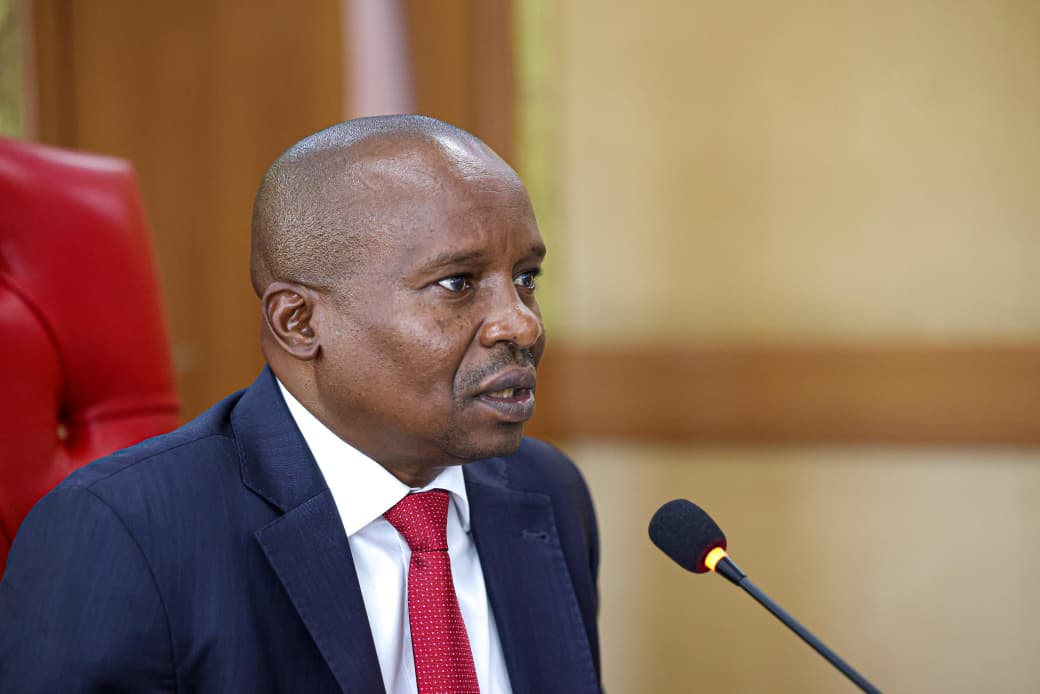
Kindiki says Govt ready to respond to Ebola, warns against disease politicization
Abstract
Deputy President Kithure Kindiki's recent statement underscores the Kenyan government's readiness to respond to potential Ebola outbreaks, emphasizing adequate resource allocation for surveillance, isolation, and treatment. The statement also cautioned against the politicization of public health measures, a recurring challenge in Kenya's disease control efforts. This article examines the legal framework underpinning Kenya's public health emergency response, primarily drawing from the Public Health Act (Cap 242) and the Health Act, 2017, alongside the recently enacted National Disaster Risk Management Act, 2023. It delves into the legal powers and duties of the state in disease control and the implications of political interference on the efficacy and legitimacy of public health interventions, highlighting the critical role of legal professionals in ensuring adherence to the rule of law and safeguarding public trust during health crises.
Introduction
Kenya's Deputy President, Kithure Kindiki, recently affirmed the government's robust preparedness to address any reported case of the Ebola virus, stressing the allocation of substantial resources for comprehensive preventive measures. These measures include enhanced surveillance at all entry points, and the establishment of isolation and treatment facilities. Crucially, the Deputy President also issued a stern warning against the politicization of these vital public health initiatives, a sentiment that resonates deeply within the legal and public health sectors given past experiences with disease outbreaks.
This declaration comes amidst ongoing regional concerns regarding Ebola outbreaks and underscores the imperative for a coherent, legally sound, and unified national response. For legal professionals, the statement highlights the intricate interplay between public health policy, statutory mandates, and constitutional rights. The article will explore the foundational legal instruments governing disease control in Kenya, analyze the scope of governmental powers in public health emergencies, and critically examine the legal ramifications of politicizing health interventions, offering insights into the practitioner's role in upholding public health integrity.
The thesis of this article is that while Kenya possesses a comprehensive legal framework for public health emergency response, the effectiveness of these measures is significantly contingent upon transparent implementation, inter-governmental coordination, and the avoidance of political interference, which can undermine public trust and compliance.
Background
Kenya's public health landscape is primarily governed by the Public Health Act (Cap 242) and the more recent Health Act, 2017 (No. 21 of 2017). The Public Health Act, a foundational statute, grants extensive powers to the Minister responsible for health to make rules for the prevention, control, and suppression of infectious diseases, including provisions for mandatory vaccinations, isolation, and quarantine. It also outlines the functions of health authorities and officers in disease surveillance and control. Complementing this, the Health Act, 2017, aims to unify the health system, coordinating the inter-relationship between national and county government health systems, and regulating healthcare services and providers.
In addition to these core health statutes, the recently enacted National Disaster Risk Management Act, 2023, provides a comprehensive legal and institutional framework for disaster preparedness, prevention, response, mitigation, and recovery, which explicitly includes public health emergencies. This Act establishes the National Disaster Risk Management Authority and County Disaster Risk Management Committees, enhancing coordination across both levels of government. The Ministry of Health (MoH) plays a central role, mandated to develop health policies, laws, and administrative procedures, and has established various initiatives like the Integrated Disease Surveillance and Response (IDSR) strategy to facilitate early detection and rapid response to diseases of public health concern.
These legislative and policy instruments collectively form the backbone of Kenya's health security architecture, designed to anticipate, detect, and respond to health threats in a timely and coordinated manner. The framework empowers the government to implement measures such as screening at points of entry, contact tracing, strengthening laboratory capacity, and establishing isolation and treatment facilities, as highlighted by the Cabinet Secretary for Health.
Analysis
The government's readiness to respond to Ebola is firmly rooted in the legal powers conferred by the Public Health Act (Cap 242). Specifically, Section 36 empowers the Minister to make rules for the prevention of disease, encompassing a broad range of measures including the removal of infected persons, disinfection of premises, and control of articles likely to spread infection. Furthermore, Section 68 provides for the surveillance or isolation of persons exposed to infection, granting port health officers the authority to require individuals to remain on board vessels or be removed to a place of isolation. Non-compliance with such lawful requirements constitutes an offence, underscoring the legal enforceability of public health directives.
The warning against the politicization of preventive measures is particularly pertinent in Kenya. Past experiences, such as the debate surrounding proposed Ebola quarantine facilities, have demonstrated how public health interventions can become entangled in political discourse, leading to legal challenges based on constitutional questions of public participation, transparency, health risk, and national sovereignty. The Health Cabinet Secretary, Aden Duale, has previously emphasized that any international health agreements must strictly comply with Kenyan law and public health regulations, asserting that Kenya's sovereignty and public health safeguards cannot be bypassed. Politicization can erode public trust, hinder effective implementation, and create resistance to crucial measures, ultimately compromising national health security.
Balancing public health imperatives with constitutional rights, such as the right to the highest attainable standard of health (Article 43(1)(a) of the Constitution of Kenya, 2010) and freedom of movement, is a delicate act for the state. While Kenya's legal framework does not explicitly use the term "state of emergency" for public health crises, the Preservation of Public Security Act (Cap 57) and the Public Health Act allow for extraordinary powers to be invoked. These powers, when exercised, must adhere to constitutional safeguards, including respect for human rights, fair treatment, and non-discrimination, as well as democratic principles of public information and participation. The National Disaster Risk Management Act, 2023, further solidifies the framework for coordinated response, emphasizing a shift from reactive to proactive risk reduction and preparedness across national and county governments.
Inter-governmental coordination is a critical aspect, with the Health Act, 2017, establishing mechanisms for collaboration between national and county governments in health matters. The Ministry of Health, in conjunction with county governments, is responsible for developing and implementing policies, strengthening surveillance systems, and ensuring the progressive realization of health rights. The recent launch of Kenya's Second National Action Plan for Health Security 2026–2030 and the Kenya National Public Health Institute Strategic Plan (2023–2027) further underscore the commitment to a unified, evidence-based approach to health security, prioritizing real-time data, emergency preparedness, and risk communication.
Conclusion
The Kenyan government's declared readiness to respond to Ebola, coupled with the warning against politicization, highlights the ongoing challenges and legal complexities inherent in public health emergency management. For legal practitioners, this scenario underscores the critical importance of understanding the robust, albeit sometimes contested, legal framework governing disease control in Kenya. Adherence to the Public Health Act (Cap 242), the Health Act, 2017, and the National Disaster Risk Management Act, 2023, is paramount for ensuring that public health measures are not only effective but also legally sound and constitutionally compliant.
Practitioners must be prepared to advise clients on their rights and obligations during public health emergencies, navigate potential challenges to government directives, and advocate for transparency and accountability in the implementation of health policies. The call to avoid politicization serves as a reminder that public health is a collective responsibility, demanding a unified, evidence-based approach free from undue political influence. Moving forward, legal professionals should closely monitor the implementation of the new disaster management laws, potential judicial interpretations of emergency health powers, and the ongoing efforts by the Ministry of Health to strengthen national health security, ensuring that Kenya's response to future health threats remains anchored in law and public trust.
Citations
- 1.Constitution of Kenya, 2010
- 2.Health Act, 2017 (No. 21 of 2017)
- 3.National Disaster Risk Management Act, 2023
- 4.Preservation of Public Security Act (Cap 57)
- 5.Public Health Act (Cap 242)
- 6.Duale Assures Public as Kenya Strengthens Ebola Preparedness. Ministry of Health, 12 June 2026.
- 7.Kenya launches 5-year health security plan to strengthen health emergency readiness. WHO, 27 March 2026.
- 8.Kenya pivots to prevention-led health security as new national frameworks launched. Ministry of Health, 31 March 2026.
- 9.Kindiki says Govt ready to respond to Ebola, warns against disease politicization. KBC Kenya, 17 June 2026.
- 10.Ministry of Health Kenya. CDC Project: Protecting Public Health.
- 11.National Infection Prevention and Control Policy for Health Care Services in Kenya. Ministry of Health, 2021.
- 12.Public Health Act (Cap. 242). ECOLEX.
- 13.Section 36 of Public Health Act CAP 242: Rules for prevention of disease. sheriaplex.com.
- 14.Section 68 of Public Health Act CAP 242: Surveillance or isolation of persons who have been exposed to infection. sheriaplex.com.
- 15.The Health Act, 2017. PolicyVault.Africa.
- 16.The National Disaster Risk Management Bill, 2023. Parliament of Kenya.
- 17.Advance Warning and Response Systems in Kenya: A Scoping Review. PMC.
- 18.Ebola and politics of trust in healthcare system. Standard Newspaper, 14 June 2026.
- 19.How National Disaster Risk Management law will address gaps amid school fire outbreaks. The Eastleigh Voice, 29 May 2026.
- 20.Kenya: CS Duale Insists Foreign Health Agreements Must Follow Kenyan Law Amid Ebola Reports. allAfrica.com, 28 May 2026.
- 21.Kenya's Ebola case and the politics of contagion. Mail & Guardian, 9 June 2026.
- 22.Politics–evidence conflict in national health policy making in Africa: a scoping review. PMC.
- 23.Public Health Act – Kenya Institute of Planners.
- 24.Public Health Act | AMP EID.
- 25.Public Health Act. InfoTradeKenya.
- 26.Standard Case Definitions for Priority Diseases in Kenya. Ministry of Health.
- 27.The Health Act, 2017. judy.legal.
- 28.Do we need a state of emergency and what does it mean? Katiba Institute, 9 May 2020.
- 29.Kenya - Centre for Human Rights - University of Pretoria.
- 30.National Disaster Risk Management Act. United Nations Network on Migration.
- 31.Public Health Emergency. Amref Health Africa in Kenya.
- 32.U.S. Demands to Access Africans' Data Raise Privacy, Sovereignty Concerns. ProPublica, 17 June 2026.
How does this affect your business?
Get an AI analysis of this article grounded in your jurisdictions, practice areas, and any policy documents you've uploaded to Wansom.