
Kithure Kindiki — KE Legal Update
Abstract
The recent arrest of 355 individuals during anniversary protests in Kenya, with charges including vandalism and robbery, highlights the critical interplay between constitutional rights and public order legislation. This development underscores the legal challenges faced by both protesters and law enforcement, particularly concerning the right to peaceful assembly enshrined in Article 37 of the Constitution of Kenya. For legal practitioners, this situation necessitates a thorough understanding of the Public Order Act, the Penal Code provisions on property offences and robbery, and the fundamental rights of arrested persons under Article 49 of the Constitution. The article will delve into the legal framework governing protests, the specific criminal charges, and the procedural safeguards available to those apprehended, offering insights for attorneys navigating these complex cases.
Introduction
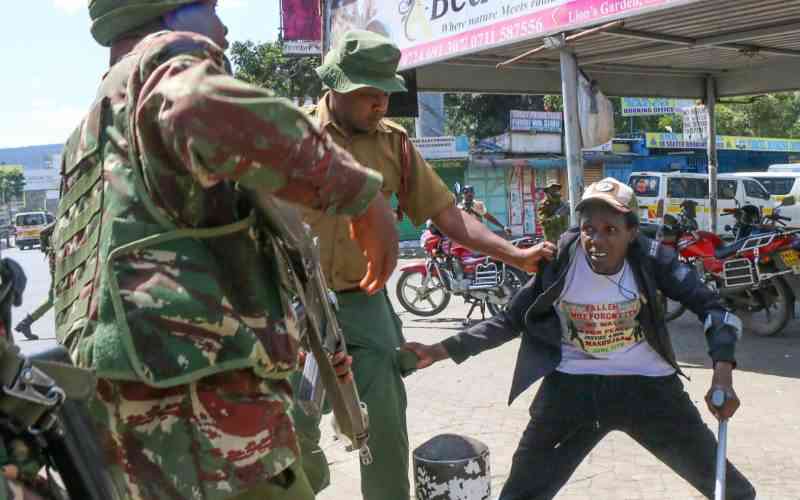
The recent apprehension of 355 individuals during nationwide anniversary protests in Kenya has brought into sharp focus the delicate balance between the constitutional right to peaceful assembly and the state's prerogative to maintain public order. Interior Cabinet Secretary Kithure Kindiki's announcement that suspects will face charges of vandalism and robbery signals a robust legal response from the government, setting the stage for significant legal battles. This incident is not merely a matter of public security; it represents a critical juncture for the interpretation and application of fundamental rights in a democratic society.
For practising attorneys and legal professionals, these arrests present a complex array of legal considerations. The cases will test the boundaries of freedom of expression and assembly, the extent of police powers, and the due process rights of the accused. Understanding the specific statutory provisions, relevant case law, and procedural safeguards is paramount for effectively representing clients caught in the crossfire of public demonstrations and state enforcement. This article aims to provide a comprehensive overview of the legal landscape surrounding these events, offering guidance on the key legal issues at play.
Background
The legal framework governing public gatherings in Kenya is primarily anchored in the Constitution of Kenya, 2010, and the Public Order Act (Cap 56). Article 37 of the Constitution unequivocally grants every person the right, peaceably and unarmed, to assemble, demonstrate, picket, and present petitions to public authorities. However, this right is not absolute and is subject to limitations that are reasonable and justifiable in an open and democratic society based on human dignity, equality, and freedom, as stipulated in Article 24 of the Constitution.
The Public Order Act (Cap 56) serves as the primary legislative instrument for regulating public meetings and processions. It mandates that any person intending to convene a public assembly must notify the regulating officer (police) between three and fourteen days before the proposed date of the event. A public assembly held without such notification is deemed an unlawful assembly. This Act has historically been a point of contention, with critics arguing that its provisions, particularly those granting broad discretion to the police, can infringe upon constitutional rights. Notably, the High Court in *Okoiti Omtatah Okoiti v. Attorney General* declared several sections of the Act unconstitutional for imposing unjustifiable restrictions on the right to assemble.
Beyond public order, the charges of vandalism and robbery fall under the Penal Code (Cap 63). "Vandalism" is not a standalone offence but is typically prosecuted as malicious damage to property under Section 339 of the Penal Code, which criminalises the wilful and unlawful destruction or damage of any property. Robbery is defined in Section 295 of the Penal Code as stealing anything, and, at or immediately before or immediately after the time of stealing it, using or threatening to use actual violence to any person or property in order to obtain or retain the thing stolen. The severity of penalties for these offences varies, with simple robbery carrying a sentence of up to fourteen years imprisonment under Section 296(1), and aggravated robbery (involving weapons, multiple offenders, or personal violence) potentially leading to a death sentence under Section 296(2).
Analysis
The arrests during the recent protests necessitate a careful analysis of the interplay between the constitutional right to protest and the criminal charges levelled against the demonstrators. While Article 37 guarantees the right to peaceful and unarmed assembly, the state often invokes the Public Order Act to manage or disperse gatherings, particularly if they are deemed to have turned violent or lack proper notification. The *Coalition for Reform and Democracy (CORD) v. Inspector General of Police* case affirmed the police's duty to facilitate peaceful assemblies, not suppress them, setting a crucial precedent for judicial oversight of police conduct during protests.
The charges of vandalism, typically prosecuted as malicious damage to property under Section 339 of the Penal Code, require proof of wilful and unlawful destruction or damage. Defence attorneys will scrutinise the evidence to ascertain whether individual intent to damage property can be established beyond a reasonable doubt, or if the damage was incidental to a larger, otherwise lawful, assembly. The prosecution's ability to demonstrate malicious intent and the extent of the damage will be critical. Similarly, charges of robbery under Section 295 and 296 of the Penal Code demand proof of theft coupled with the use or threat of actual violence. Establishing direct involvement in such acts, especially within a large crowd, presents significant evidentiary challenges for the prosecution.
Crucially, the rights of arrested persons under Article 49 of the Constitution must be rigorously upheld. These rights include being informed promptly of the reason for arrest, the right to remain silent, the right to communicate with and have an advocate, and the right to be brought before a court as soon as reasonably possible, and in any event, not later than twenty-four hours after being arrested. For capital offences, this period can be extended to fourteen days. Furthermore, arrested persons have the right to be released on bond or bail on reasonable conditions, unless there are compelling reasons not to be released. Defence counsel will be instrumental in ensuring these procedural safeguards are respected, challenging any breaches that could lead to the exclusion of evidence or even the quashing of charges.
The role of the Office of the Director of Public Prosecutions (ODPP), established under Article 157 of the Constitution, is to institute and undertake criminal proceedings independently. The ODPP's decision to proceed with charges of vandalism and robbery, rather than lesser public order offences, indicates a serious approach to the alleged conduct during the protests. Practitioners should be prepared to engage with the ODPP on the sufficiency of evidence, the appropriateness of the charges, and potential alternative dispute resolution mechanisms, where applicable. The *Ngunjiri Wambugu v Inspector General of Police and others* case, which suggested holding organisers liable for protest-related damage, highlights a contentious area where individual culpability versus collective responsibility will be heavily debated.
Conclusion
The mass arrests and subsequent charges arising from the recent protests underscore the ongoing tension between fundamental rights and state power in Kenya. For legal practitioners, these cases offer a critical opportunity to defend constitutional freedoms and ensure adherence to due process. Defence attorneys must be prepared to challenge the legality of arrests, scrutinise the evidence supporting charges of vandalism and robbery, and vigorously advocate for the bail rights of their clients.
Looking ahead, the outcomes of these cases will undoubtedly shape the future landscape of public assembly and protest in Kenya. Practitioners should closely monitor judicial interpretations of the Public Order Act in light of constitutional guarantees, as well as the evidentiary standards applied to property-related offences committed during demonstrations. Upholding the rule of law in these politically charged circumstances is paramount, requiring diligence, expertise, and an unwavering commitment to justice from all legal professionals involved.
Citations
- 1.Constitution of Kenya, 2010, Article 24
- 2.Constitution of Kenya, 2010, Article 37
- 3.Constitution of Kenya, 2010, Article 49
- 4.Constitution of Kenya, 2010, Article 157
- 5.Penal Code (Cap 63), Section 295
- 6.Penal Code (Cap 63), Section 296
- 7.Penal Code (Cap 63), Section 339
- 8.Public Order Act (Cap 56)
- 9.Coalition for Reform and Democracy (CORD) v. Inspector General of Police (2016) eKLR
- 10.Ngunjiri Wambugu v Inspector General of Police and others (2019) eKLR
- 11.Okoiti Omtatah Okoiti v. Attorney General (2014) eKLR
How does this affect your business?
Get an AI analysis of this article grounded in your jurisdictions, practice areas, and any policy documents you've uploaded to Wansom.