
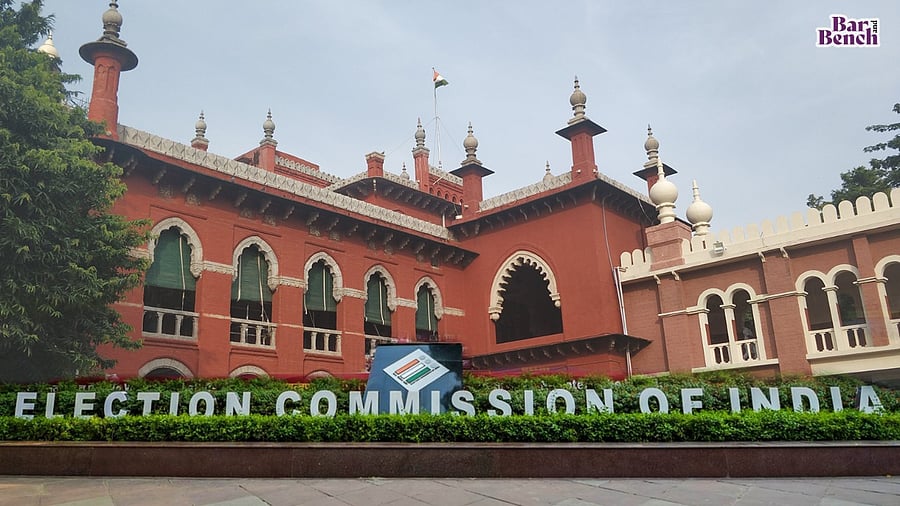
Madras HC halts ECI from notifying bypolls to five Tamil Nadu Assembly seats
Abstract
The Madras High Court has issued an interim order temporarily restraining the Election Commission of India (ECI) from notifying bye-elections for five Tamil Nadu Assembly constituencies. The decision in *K Venkatachalapathy v. Election Commission of India and Others* stems from the existence of pending election petitions challenging the results of the May 2026 Assembly elections in these constituencies. The Court observed that a legislator’s resignation may not automatically create a vacancy for a by-election if an election petition, which could potentially declare another candidate as duly elected, is still sub judice. This ruling highlights a critical interplay between the ECI's mandate to fill vacancies and the judiciary's role in adjudicating electoral disputes, particularly where the validity of the original election is under scrutiny.
Introduction
In a significant development impacting India's electoral landscape, the Madras High Court recently issued an interim injunction against the Election Commission of India (ECI), halting the notification of bye-elections for five Tamil Nadu Assembly constituencies. The order, passed in the case of *K Venkatachalapathy v. Election Commission of India and Others*, addresses a nuanced legal question: whether a vacancy created by a legislator's resignation can be filled through a by-election when the original election itself is subject to challenge via a pending election petition. This judicial intervention underscores the complex interplay between the ECI's constitutional mandate to conduct elections and the High Courts' jurisdiction to adjudicate electoral disputes.
The constituencies of Tiruchirappalli East, Perundurai, Ambasamudram, Viralimalai, and Karur are at the heart of this dispute, where elected candidates resigned shortly after the May 2026 Assembly elections. The petitioner, a registered voter, contended that proceeding with by-elections while election petitions challenging the initial poll results are pending would be premature and potentially undermine the integrity of the electoral process. The Madras High Court's interim restraint, effective until July 31, 2026, signals a cautious approach, prioritizing the resolution of fundamental challenges to election validity over the immediate filling of vacancies.
This article will delve into the statutory and doctrinal context governing elections and election disputes in India, analyze the Madras High Court's reasoning in light of existing jurisprudence, and explore the broader implications for electoral administration and the resolution of post-election controversies. The decision brings to the fore the delicate balance required between ensuring timely representation and upholding the purity of the electoral mandate.
Background
The conduct of elections in India is primarily governed by the Constitution of India and the Representation of the People Act, 1951 (RPA, 1951). Article 324 of the Constitution vests the superintendence, direction, and control of the preparation of electoral rolls and the conduct of all elections to Parliament and State Legislatures in the Election Commission of India (ECI), an autonomous constitutional authority. This broad mandate empowers the ECI to ensure free, fair, and credible elections.
Vacancies in legislative bodies can arise due to various reasons, including death, resignation, disqualification, or expulsion of a sitting member. Section 151A of the RPA, 1951, mandates the ECI to fill casual vacancies in the Houses of Parliament and State Legislatures through bye-elections within six months from the date of occurrence of the vacancy, provided the remainder of the term is one year or more. This provision aims to ensure continuous representation for constituencies.
However, the validity of an election can be challenged through an election petition, which is the exclusive judicial remedy for inquiring into the validity of election results. Part VI (Sections 80-122) of the RPA, 1951, outlines the procedure for adjudicating election disputes. An election petition must be filed in the High Court of the concerned state within 45 days from the date of the declaration of results. Crucially, Section 84 of the RPA, 1951, allows a petitioner to claim not only that the election of the returned candidate is void but also that they themselves or any other candidate has been duly elected. This aspect is central to the Madras High Court's recent decision, as it implies that the outcome of an election petition can fundamentally alter who is deemed to have won the original election, rather than merely creating a fresh vacancy.
Analysis
The Madras High Court's interim order in *K Venkatachalapathy v. Election Commission of India and Others* directly confronts the tension between the ECI's statutory duty to hold by-elections and the High Court's constitutional role in resolving election disputes. The Court's primary concern was the existence of pending election petitions challenging the very legitimacy of the original election results in the five constituencies. The core legal question is whether a legislator's resignation, which typically triggers a by-election under Section 151A of the RPA, 1951, can be considered a 'vacancy' in the conventional sense when the validity of the preceding election is still under judicial review, especially when the election petition seeks a declaration that another candidate was duly elected.
This judicial stance finds support in previous Supreme Court pronouncements. In *Election Commission of India v. Telangana Rashtra Samiti (2010)*, the Supreme Court effectively recognized a 'third judicially recognised exception' to Section 151A of the RPA, 1951. This exception dictates that where an election petition challenging the previous election is pending, the seat cannot be treated as immediately available for a by-election, and the ECI must await the outcome of the petition before proceeding. The rationale behind this principle is to uphold the integrity of the electoral process and ensure that the true mandate, as determined by the election petition, is respected. To hold a by-election while the original election's validity is sub judice would be to potentially conduct a fresh election for a seat that might ultimately be declared to have been won by a different candidate in the first instance.
The implications of this interpretation are significant. While Section 86(7) of the RPA, 1951, suggests that election petitions should be disposed of within six months, in practice, these timelines are often not met, leading to prolonged litigation. This delay can result in constituencies remaining unrepresented for extended periods, raising concerns about the democratic right to representation. However, the Madras High Court's decision, by prioritizing the resolution of election petitions, emphasizes that the purity of the electoral process and the correct determination of the original mandate take precedence over the mere expediency of filling a vacant seat. The Court's order also implicitly reinforces the principle that the ECI's powers, though extensive under Article 324, are not unbridled and are subject to judicial review, particularly when fundamental questions of electoral validity are raised.
It is important to distinguish this scenario from resignations aimed at circumventing disqualification proceedings under the Tenth Schedule of the Constitution. While the issue of MLAs resigning to avoid disqualification has been a subject of judicial scrutiny, with courts holding that resignation does not necessarily vaporize the taint of defection, the present case focuses on the challenge to the election itself, rather than the subsequent conduct of the elected member. The Madras High Court's interim order serves as a reminder that the judicial process for challenging elections is a critical safeguard against electoral impropriety and must be allowed to run its course before fresh electoral steps are taken.
Conclusion
The Madras High Court's interim order in *K Venkatachalapathy v. Election Commission of India and Others* represents a crucial assertion of judicial oversight in electoral matters, particularly where the foundational validity of an election is under challenge. By temporarily restraining the ECI from notifying by-elections in five Tamil Nadu constituencies, the Court has underscored the paramount importance of resolving pending election petitions, especially those seeking a declaration that another candidate was duly elected, before proceeding to fill vacancies arising from resignations.
For legal practitioners, this decision highlights the intricate legal landscape governing elections in India. It serves as a reminder that the ECI's broad powers under Article 324 of the Constitution and Section 151A of the RPA, 1951, are not absolute and must be exercised in harmony with the High Courts' jurisdiction over election petitions under Part VI of the RPA, 1951. Attorneys advising clients on electoral matters, particularly concerning vacancies and by-elections, must meticulously consider the status of any pending election challenges. The final outcome of this case, and the Supreme Court's ongoing interpretation of Section 151A, will be critical in further defining the balance between timely representation and the integrity of the electoral process.
Citations
- 1.Constitution of India, Article 324
- 2.Constitution of India, Article 329(b)
- 3.K Venkatachalapathy v. Election Commission of India and Others (Madras High Court)
- 4.Election Commission of India v. Telangana Rashtra Samiti (2010) (Supreme Court of India)
- 5.Representation of the People Act, 1951, Section 84
- 6.Representation of the People Act, 1951, Section 86(7)
- 7.Representation of the People Act, 1951, Section 151A
- 8.Representation of the People Act, 1951, Part VI
How does this affect your business?
Get an AI analysis of this article grounded in your jurisdictions, practice areas, and any policy documents you've uploaded to Wansom.