
Navy discovers illegal crude oil storage hub, recovers 20,500 litres in Rivers
Abstract
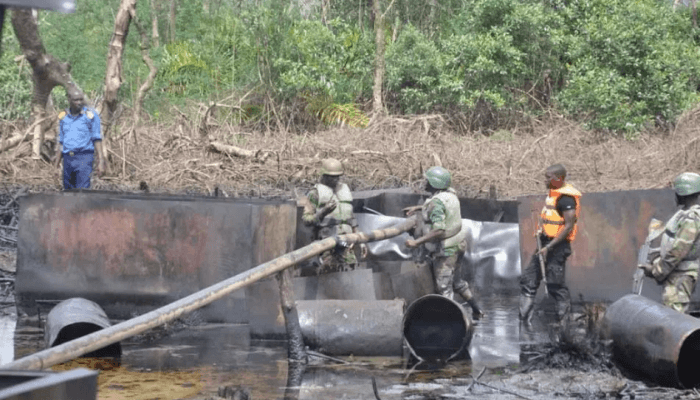
The Nigerian Navy recently uncovered an illegal crude oil storage hub in the Bethel Community axis of Rivers State, recovering approximately 20,500 litres of suspected stolen crude oil stored in concealed dugout pits. This operation, conducted under the ongoing Operation DELTA SENTINEL, highlights the persistent challenge of crude oil theft and illegal bunkering in Nigeria's oil-rich Niger Delta region. The incident underscores the critical role of security agencies in combating economic sabotage and protecting national assets, while also bringing to the fore the complex legal framework governing petroleum resources, environmental protection, and asset forfeiture in Nigeria. For legal practitioners, this development reinforces the need for a robust understanding of the Petroleum Industry Act (PIA) 2021, the Money Laundering (Prevention and Prohibition) Act, 2022, and the Proceeds of Crime (Recovery and Management) Act, 2022, as well as the challenges in prosecuting such crimes.
Introduction
The discovery by the Nigerian Navy of an illegal crude oil storage facility in Rivers State, leading to the recovery of 20,500 litres of suspected stolen crude, serves as a stark reminder of the pervasive issue of oil theft and illegal bunkering plaguing Nigeria's economy. This intelligence-led operation, part of the broader Operation DELTA SENTINEL, unearthed a sophisticated network of concealed dugout pits designed to support illicit refining and distribution activities. The incident is not isolated but rather indicative of a deeply entrenched criminal enterprise that poses significant threats to national revenue, environmental integrity, and regional stability.
For legal professionals, this development necessitates a closer examination of the multifaceted legal and regulatory landscape governing Nigeria's petroleum sector. The ongoing efforts by the Nigerian Navy and other security agencies to dismantle these illegal operations have significant implications for criminal prosecution, asset forfeiture, and environmental liability. This article will delve into the statutory and doctrinal context of crude oil theft, analyze the legal challenges and enforcement mechanisms, and discuss the practical implications for legal practitioners navigating this complex area of law.
Background
The legal ownership and control of all petroleum resources in Nigeria, whether onshore or offshore, are exclusively vested in the Federal Government of Nigeria, as enshrined in the 1999 Constitution of the Federal Republic of Nigeria (as amended) and the Petroleum Act, Cap P10 LFN 2004. The Petroleum Act, which has largely been repealed by the Petroleum Industry Act (PIA) 2021, historically made it an offence to explore, win, or work petroleum without a requisite licence or to deal in petroleum products without appropriate authorization. Penalties under the old regime included fines and imprisonment, alongside the forfeiture of the petroleum products involved.
The enactment of the Petroleum Industry Act (PIA) 2021 marked a significant overhaul of the legal and regulatory framework governing the Nigerian oil and gas industry. The PIA aims to promote transparency, enhance environmental protection, and foster host community development, while also introducing new institutions like the Nigerian Upstream Petroleum Regulatory Commission (NUPRC) and the Nigerian Midstream and Downstream Petroleum Regulatory Authority (NMDPRA) to regulate the sector. Beyond the petroleum-specific legislation, illegal crude oil bunkering and theft are also predicate offences under the Money Laundering (Prevention and Prohibition) Act, 2022, and subject to asset recovery provisions under the Proceeds of Crime (Recovery and Management) Act, 2022. Furthermore, Section 1(17) of the Miscellaneous Offences Act prescribes life imprisonment for illegal dealing in petroleum products without a licence.
Analysis
The recent discovery by the Nigerian Navy in Rivers State exemplifies the ongoing battle against crude oil theft, which is recognized as a sophisticated, large-scale criminal enterprise involving various actors. The act of siphoning crude oil from pipelines, storing it in concealed facilities, and potentially refining it illegally constitutes multiple offences, including crude oil theft, illegal bunkering, pipeline vandalism, and economic sabotage. The Nigerian Navy, through operations like DELTA SENTINEL, plays a crucial role in maritime security, actively combating these crimes and protecting critical oil and gas infrastructure.
Prosecution of these offences typically involves collaboration between the Navy, which makes initial arrests and seizures, and other law enforcement agencies such as the Economic and Financial Crimes Commission (EFCC). The EFCC has been vocal about the challenges in prosecuting oil theft cases, including delays in regular courts, and has advocated for the establishment of special courts to expedite trials. This call for specialized judicial mechanisms underscores the complexity and volume of these cases, which often involve intricate financial trails and international dimensions.
Asset forfeiture is a critical component of the legal response to oil theft. Nigerian courts have increasingly issued orders for the interim and final forfeiture of vessels, equipment, and proceeds linked to illegal bunkering activities to the Federal Government. These forfeiture proceedings, often initiated by agencies like the Inspector General of Police's Special Task Force on Petroleum and Illegal Bunkering, aim to strip criminals of their ill-gotten gains, aligning with the Proceeds of Crime (Recovery and Management) Act, 2022. However, concerns have been raised regarding the effectiveness of penalties, with past instances of lenient sentences through questionable plea bargains, which judges have criticized as not serving the public interest.
Beyond economic losses, crude oil theft and illegal refining inflict severe environmental damage on the Niger Delta region, leading to oil spills, land contamination, and harm to livelihoods. While Nigeria has environmental laws such as the National Oil Spill Detection and Response Agency (Establishment) Act 2006 and the Environmental Impact Assessment Act, enforcement remains a significant challenge due to regulatory gaps and inadequate penalties. The PIA 2021 attempts to address some of these issues, including provisions for host communities, but its implementation still faces hurdles.
Conclusion
The Nigerian Navy's recent interdiction in Rivers State is a testament to the ongoing, concerted efforts to curb crude oil theft and illegal bunkering, which continue to be a significant drain on Nigeria's economy and a source of profound environmental degradation. For legal practitioners, this incident highlights the dynamic and evolving legal landscape surrounding petroleum resources in Nigeria. A thorough understanding of the Petroleum Industry Act 2021, the Money Laundering (Prevention and Prohibition) Act 2022, and the Proceeds of Crime (Recovery and Management) Act 2022 is paramount, particularly concerning offences, penalties, and asset forfeiture mechanisms.
Practitioners should anticipate continued vigilance from security agencies and a heightened focus on intelligence-led operations. The push for specialized courts to handle oil theft cases, as advocated by the EFCC, could significantly impact the speed and efficacy of prosecutions. Lawyers advising clients in the oil and gas sector, or those involved in environmental law and criminal defence, must stay abreast of these developments and the potential for stricter enforcement and more robust asset recovery measures. The fight against oil theft is a national priority, and the legal community plays a crucial role in ensuring accountability and upholding the rule of law in this vital sector.
Citations
- 1.1999 Constitution of the Federal Republic of Nigeria (as amended)
- 2.Money Laundering (Prevention and Prohibition) Act, 2022
- 3.Miscellaneous Offences Act
- 4.National Oil Spill Detection and Response Agency (Establishment) Act 2006
- 5.Petroleum Act, Cap P10 LFN 2004
- 6.Petroleum Industry Act 2021
- 7.Proceeds of Crime (Recovery and Management) Act, 2022
How does this affect your business?
Get an AI analysis of this article grounded in your jurisdictions, practice areas, and any policy documents you've uploaded to Wansom.