
NTSA Implements Traffic (Motor Vehicle Inspection) Rules 2026 in Kenya
Abstract
The National Transport and Safety Authority (NTSA) in Kenya has implemented new regulations, the Traffic (Motor Vehicle Inspection) Rules, 2026, effective July 1, 2026, mandating annual vehicle inspections for all motor vehicles older than four years from their date of manufacture. This directive extends to privately owned, government, public service, and commercial vehicles, aiming to enhance road safety and ensure vehicle roadworthiness. While booking for inspections is now active via the eCitizen platform, the NTSA has clarified that immediate roadside enforcement for private vehicles will be phased in, with further communication on timelines. The new rules introduce a fee structure and penalties for non-compliance, but their implementation faces a legal challenge from the Law Society of Kenya, citing concerns over public participation and logistical readiness.
Introduction
Effective July 1, 2026, a significant shift in Kenya's road safety regulatory landscape commenced with the operationalisation of the Traffic (Motor Vehicle Inspection) Rules, 2026. These new regulations, spearheaded by the National Transport and Safety Authority (NTSA), introduce mandatory annual inspection tests for all motor vehicles exceeding four years from their date of manufacture, irrespective of whether they are privately or government-owned. This marks a pivotal moment in Kenya's efforts to curb road accidents and ensure the mechanical integrity of vehicles operating on its roads.
The directive, which also encompasses Public Service Vehicles (PSVs), school vehicles, locally assembled vehicles, and those involved in accidents or structural modifications, aims to systematically determine the roadworthiness of the country's burgeoning vehicle fleet. While the booking system for these inspections is now active through the NTSA service portal on the eCitizen platform, the Authority has issued clarifications regarding the immediate enforcement for private vehicles, indicating a phased implementation approach. This article delves into the legal framework underpinning these new rules, their practical implications for vehicle owners and legal practitioners, and the ongoing challenges to their implementation.
Background
The National Transport and Safety Authority (NTSA) derives its mandate from the National Transport and Safety Authority Act, 2012 (No. 33 of 2012), which empowers it with responsibilities including the registration, licensing, inspection, and certification of motor vehicles and motorcycles. This foundational Act, read in conjunction with the Traffic Act (Cap 403), provides the legislative basis for the Authority to enact regulations aimed at promoting road safety. Specifically, Section 55 of the Traffic Act (Cap 403) is cited as the primary legal provision enabling the NTSA to conduct motor vehicle inspections.
Historically, mandatory vehicle inspections in Kenya primarily targeted Public Service Vehicles (PSVs) and commercial vehicles, with private vehicles largely exempt from regular checks unless involved in an accident or undergoing a change of ownership. This selective approach often left a significant portion of the vehicle population unassessed for roadworthiness, contributing to concerns about mechanical failures as a factor in road accidents. The new Traffic (Motor Vehicle Inspection) Rules, 2026, published as Kenya Gazette Legal Notice No. 13 of 2026, represent a comprehensive expansion of this inspection regime, bringing private vehicles into the fold to address broader road safety and environmental objectives.
Analysis
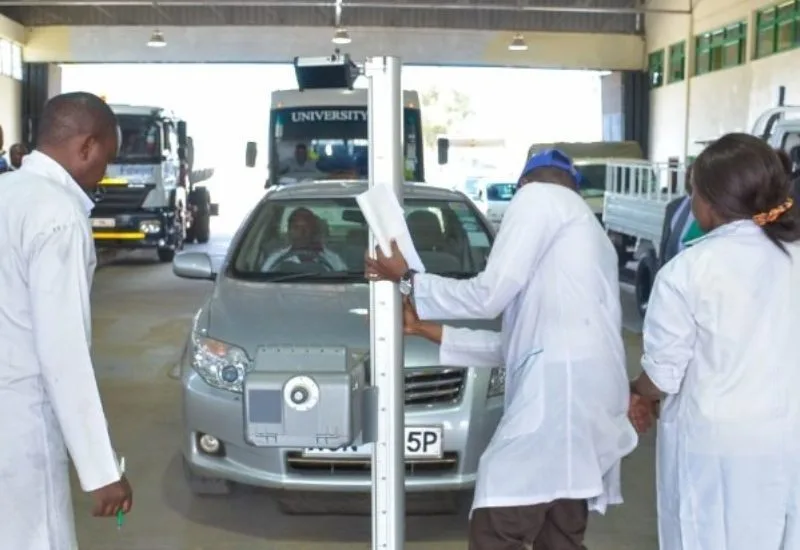
The Traffic (Motor Vehicle Inspection) Rules, 2026, stipulate that all motor vehicles older than four years from their date of manufacture must undergo an annual inspection. This requirement extends to government-owned vehicles, school buses, and vehicles that have undergone significant structural or mechanical modifications. Exemptions are provided for specific categories such as agricultural tractors, golf carts, motorised pedal cycles, and all-terrain vehicles. The inspection process, which must be booked online via the NTSA service portal on the eCitizen platform, involves a thorough check of various components, including brakes, tyres, lights, chassis, emissions, and safety equipment, against Kenya Standard 1515 or other applicable standards.
Financially, vehicle owners are required to pay a booking fee to NTSA and a separate inspection fee to the inspection centre. For instance, vehicles with an engine capacity below 3,000cc attract a KSh 1,000 booking fee and up to KSh 1,000 inspection fee, while motorcycles and three-wheelers incur lower charges. Successful inspections result in the issuance of an inspection sticker and report, which must be displayed on the vehicle. Failure to pass an inspection necessitates repairs, with a free re-inspection permitted within 14 days at the same centre. Operating a vehicle without a valid inspection sticker constitutes an offence under the Traffic Act, carrying penalties of up to KSh 20,000 in fines, imprisonment for up to six months, or both.
Despite the July 1, 2026, commencement date for booking inspections, the NTSA has issued a crucial clarification: immediate roadside enforcement of mandatory inspections for private motor vehicles will not commence. This phased approach acknowledges the logistical challenges of implementing such a wide-ranging directive, including the need to operationalise more private vehicle inspection centres to augment the existing NTSA facilities. This interim period allows for greater public awareness and the scaling up of inspection infrastructure.
However, the legality and implementation of these rules have been challenged. The Law Society of Kenya (LSK) has filed a petition in the High Court, seeking to suspend the regulations. The LSK argues that the rules were enacted without adequate public participation, a fundamental constitutional requirement under Article 10 of the Constitution of Kenya. Furthermore, the petition highlights concerns about the NTSA's readiness, citing a lack of comprehensive lists of inspection centres, operational guidelines, and booking systems, which could expose motorists to penalties without sufficient means to comply. This legal challenge underscores the tension between the government's objective of enhancing road safety and the procedural requirements for enacting legislation, particularly concerning public engagement and administrative capacity.
Conclusion
The NTSA's new Traffic (Motor Vehicle Inspection) Rules, 2026, represent a significant regulatory overhaul aimed at improving road safety standards in Kenya by ensuring the mechanical fitness of a broader spectrum of vehicles. While the requirement for annual inspections for vehicles older than four years is now in effect, the NTSA's decision to defer immediate roadside enforcement for private vehicles provides a crucial window for both the Authority to bolster its infrastructure and for motorists to familiarise themselves with the new compliance requirements.
For legal practitioners, this development presents several implications. Advising clients on the booking procedures, fee structures, and potential penalties for non-compliance will be paramount. Furthermore, monitoring the progress of the LSK's petition challenging the regulations will be critical, as its outcome could significantly alter the implementation landscape. Practitioners should also anticipate potential disputes arising from failed inspections, re-inspection requirements, and the interpretation of 'roadworthiness' standards. As the NTSA works towards full enforcement, vigilance regarding updated guidelines, the licensing of private inspection centres, and the resolution of the ongoing legal challenge will be essential for all stakeholders in Kenya's transport sector.
Citations
- 1.National Transport and Safety Authority Act, 2012 (No. 33 of 2012)
- 2.Traffic Act (Cap 403)
- 3.Traffic (Motor Vehicle Inspection) Rules, 2026 (Kenya Gazette Legal Notice No. 13 of 2026)
How does this affect your business?
Get an AI analysis of this article grounded in your jurisdictions, practice areas, and any policy documents you've uploaded to Wansom.