
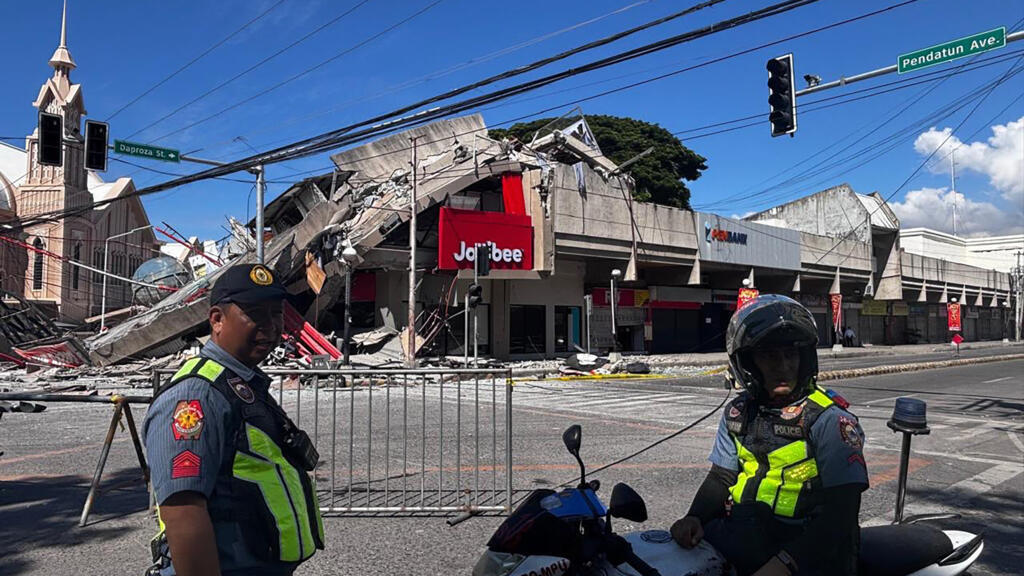
Philippines verifying reports of at least five deaths after magnitude 7.8 quake
Abstract
A recent magnitude 7.8 earthquake in the Philippines, with reports of fatalities, serves as a critical reminder for legal professionals in Ghana to assess and strengthen the nation's legal and regulatory frameworks concerning disaster preparedness, response, and recovery. This article examines Ghana's existing disaster management legislation, building codes, and insurance laws, highlighting their provisions and identifying areas where proactive legal counsel is vital. It underscores the importance of robust legal frameworks in mitigating risks, ensuring effective post-disaster rehabilitation, and fostering corporate resilience in the face of natural calamities, drawing parallels to the challenges posed by significant seismic events globally.
Introduction
The recent reports of a powerful magnitude 7.8 earthquake in the southern Philippines, leading to at least five reported deaths in General Santos, underscore the devastating impact natural disasters can have on communities and infrastructure. While geographically distant, such events serve as a potent reminder for nations globally, including Ghana, to critically evaluate the robustness of their own legal and regulatory frameworks designed to manage and mitigate the consequences of natural calamities. The scale of destruction and human cost in the Philippines highlights the urgent need for comprehensive legal preparedness, not merely reactive measures.
For legal practitioners in Ghana, this development necessitates a focused review of domestic legislation governing disaster management, building standards, and insurance. The ability of a nation to respond effectively to a major disaster, protect its citizens, and facilitate rapid recovery is intrinsically linked to the clarity, enforceability, and adequacy of its laws. This article will explore Ghana's existing legal architecture for disaster resilience, examining its strengths and identifying areas where legal professionals can provide crucial guidance to both public and private sector clients in enhancing preparedness and ensuring compliance.
Background
Ghana has established a legal and institutional framework to address natural disasters and emergencies, primarily through the National Disaster Management Organisation (NADMO). Initially established by the National Disaster Management Organisation Act, 1996 (Act 517), its mandate was further solidified and updated by the National Disaster Management Organisation Act, 2016 (Act 927). NADMO is tasked with a broad range of responsibilities, including preparing national disaster plans for prevention and mitigation, monitoring and updating these plans, ensuring public awareness and warning systems, and coordinating relief, rehabilitation, and reconstruction efforts. The organisation operates at national, regional, and district levels, reflecting a decentralized approach to disaster management. The Act also provides for the establishment of a National Disaster Management Fund to support these activities.
Complementing the disaster management framework are Ghana's building codes and insurance laws. The Ghana Building Code (GS 1207:2018) represents the latest comprehensive regulatory framework for construction standards, incorporating seismic design guidelines adapted from international standards. Earlier seismic design regulations were introduced in 1990 and subsequently updated in 2006 and 2010. On the financial protection front, the Insurance Act, 2021 (Act 1061) repealed its 2006 predecessor, modernizing the regulatory environment for the insurance market and aiming to increase insurance penetration. The National Insurance Commission (NIC) is the primary regulator, guided by international insurance standards and sound management principles. These legislative instruments collectively form the bedrock of Ghana's approach to managing disaster risks.
Analysis
While Ghana possesses a foundational legal framework for disaster management, the Philippine earthquake serves as a stark reminder of the critical need for rigorous implementation and continuous review. The National Disaster Management Organisation Act, 2016 (Act 927) clearly outlines NADMO's functions, from prevention to rehabilitation. However, challenges persist, particularly regarding the coordination among legally mandated institutions and the effective implementation of plans. Legal practitioners must advise public and private entities on their specific obligations under this Act, including contributing to disaster preparedness plans and cooperating with NADMO during emergencies. The recently approved Disaster Management and Risk Finance Strategy Framework and Implementation Plan (2025-2030) signals a shift towards proactive, pre-arranged financial instruments, which will require legal expertise in structuring and implementing these mechanisms.
In the realm of building safety, despite the existence of the Ghana Building Code (GS 1207:2018) which includes seismic design guidelines, enforcement remains a significant concern. Reports indicate that seismic provisions are not uniformly compulsory nationwide, leading to inconsistencies in application and weak enforcement. This gap creates considerable legal exposure for developers, contractors, and property owners. Attorneys advising clients in the construction sector must emphasize strict adherence to the most current building codes, particularly seismic standards, to mitigate liability risks arising from structural failures during seismic events. The absence of mandatory seismic audits and insufficient penalties for non-compliance further highlight the need for robust contractual provisions and due diligence in construction projects.
The Insurance Act, 2021 (Act 1061) offers a modernized framework for risk transfer, which is crucial in disaster recovery. Non-life insurance, encompassing property and business interruption coverage, is vital for protecting assets and livelihoods against natural disasters such as floods, fires, and storms. Legal professionals should guide clients in understanding their insurance policies, ensuring adequate coverage for disaster-related losses, and navigating claims processes. Furthermore, Ghana's foray into parametric insurance solutions for flood and drought risks, including the purchase of a sovereign parametric drought insurance policy in 2024 and the development of sub-sovereign flood insurance for Greater Accra, presents new legal complexities. These innovative instruments require careful legal structuring to ensure triggers are clear, payouts are timely, and funds are disbursed effectively to affected parties.
Finally, the broader concept of corporate governance and business resilience takes on heightened importance in the context of natural disasters. While Ghanaian managers generally acknowledge the need for crisis preparation, indigenous firms often lag in investing sufficient resources compared to those with foreign ownership. Legal counsel is essential in developing comprehensive business continuity plans (BCPs) that address disaster scenarios, including legal compliance, contractual obligations, supply chain resilience, and data recovery. Good corporate governance practices, as outlined in the Companies Act, are critical for ensuring transparency, accountability, and the protection of stakeholder interests during and after a crisis. The Philippine experience underscores that a reactive stance is insufficient; proactive legal strategies are paramount for sustained business operations and economic stability.
Conclusion
The recent earthquake in the Philippines serves as a compelling global case study, urging Ghanaian legal practitioners to proactively engage with and strengthen the nation's disaster resilience framework. It highlights that while Ghana has foundational laws like the National Disaster Management Organisation Act, 2016 (Act 927), the Insurance Act, 2021 (Act 1061), and building codes, their effective implementation and continuous adaptation are paramount.
For legal professionals, this translates into a critical mandate: to advise clients on meticulous compliance with building regulations, advocate for robust insurance coverage that explicitly addresses natural disaster risks, and assist in developing comprehensive, legally sound business continuity and disaster recovery plans. Furthermore, practitioners should monitor the evolution of Ghana's disaster risk financing strategies, including parametric insurance, to ensure clients are prepared for both the legal and financial implications of future events. Proactive legal counsel is not merely about compliance; it is about building a more resilient Ghana, capable of withstanding and recovering from the inevitable challenges posed by natural hazards.
Citations
- 1.National Disaster Management Organisation Act, 1996 (Act 517)
- 2.National Disaster Management Organisation Act, 2016 (Act 927)
- 3.Insurance Act, 2021 (Act 1061)
- 4.Ghana Building Code (GS 1207:2018)
How does this affect your business?
Get an AI analysis of this article grounded in your jurisdictions, practice areas, and any policy documents you've uploaded to Wansom.