
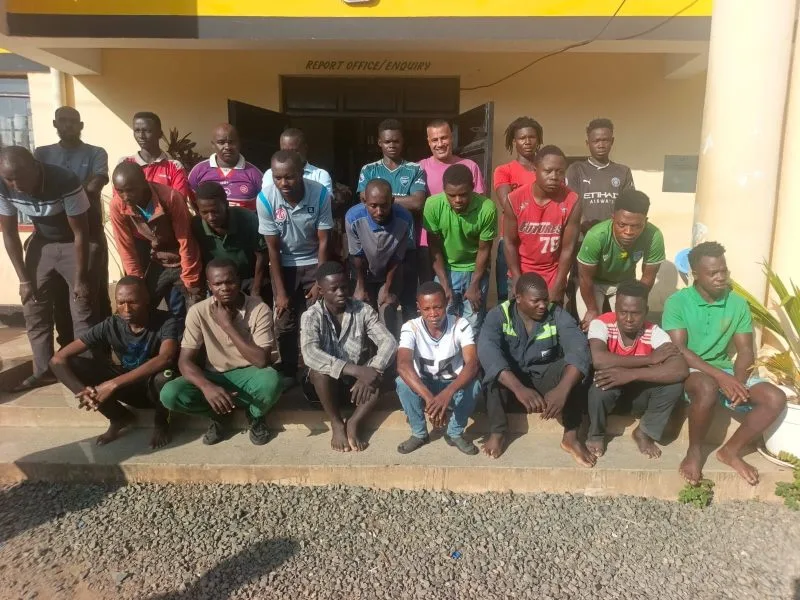
Police Arrest 25 Foreign Nationals in Kisumu Crackdown on Human Smuggling
Abstract
Kenyan authorities recently apprehended 25 foreign nationals in Kisumu during a crackdown targeting human smuggling networks. This incident underscores Kenya's persistent challenge with irregular migration and transnational organized crime, highlighting the intricate legal framework governing immigration and cross-border criminal activities. The arrests bring into focus the distinction between human smuggling, which involves consensual movement across borders for a fee, and human trafficking, characterized by exploitation. Legal professionals must navigate the nuances of the Kenya Citizenship and Immigration Act, 2011, and the Prevention of Organised Crimes Act, 2010, while also considering Kenya's international obligations under the UN Protocol against the Smuggling of Migrants by Land, Sea and Air. This event serves as a critical reminder of the complexities involved in prosecuting facilitators and protecting vulnerable migrants.
Introduction
The recent apprehension of 25 foreign nationals in Kisumu, as reported by Capital FM Kenya, marks a significant enforcement action by Kenyan police against suspected human smuggling operations. The individuals, comprising Ugandans, Burundians, Congolese, Rwandans, and an Egyptian, were reportedly arrested in connection with illicit cross-border movements. This incident is not isolated but reflects a broader pattern of irregular migration and the activities of organized criminal groups exploiting porous borders in East Africa. For legal practitioners, this crackdown necessitates a deeper understanding of the multifaceted legal landscape governing immigration, national security, and transnational crime in Kenya.
This article aims to dissect the legal implications arising from such arrests, focusing on the statutory provisions under which both the alleged smugglers and the foreign nationals might be charged. It will explore the critical distinction between human smuggling and human trafficking under Kenyan law, a differentiation often blurred in public discourse but crucial for legal defence and prosecution. Furthermore, it will examine the challenges inherent in enforcing these laws and the broader context of Kenya's international commitments to combatting organized crime and protecting migrants.
Background
Kenya's legal framework for addressing human smuggling and irregular migration is primarily anchored in two key statutes: the Kenya Citizenship and Immigration Act, No. 12 of 2011, and the Prevention of Organised Crimes Act, No. 6 of 2010. The Immigration Act, 2011, provides for the regulation of entry, residence, and exit of foreign nationals, defining 'prohibited immigrants' to include persons engaged in human smuggling or those whose presence in Kenya is unlawful under any written law. Offences under this Act include unlawful entry or presence, and facilitating such, with penalties ranging from fines to imprisonment and deportation.
Complementing this, the Prevention of Organised Crimes Act, 2010, targets the criminal networks that facilitate such illicit movements. This Act defines an 'organised criminal group' as a structured assembly of three or more persons existing over time to commit serious crimes for financial or material benefit, which would encompass human smuggling operations. Kenya is also a signatory to the United Nations Protocol against the Smuggling of Migrants by Land, Sea and Air, supplementing the United Nations Convention against Transnational Organized Crime (often referred to as the Palermo Protocol). This international instrument obliges state parties to criminalize migrant smuggling and promote cooperation to prevent and combat it, while also emphasizing the protection of smuggled migrants. It is crucial to distinguish human smuggling, which is characterized by the consensual agreement between a migrant and a smuggler for illegal border crossing, from human trafficking, which involves exploitation, coercion, or deception, and is addressed by the Counter-Trafficking in Persons Act, No. 8 of 2010.
Analysis
In the Kisumu crackdown, the 25 foreign nationals are likely to face charges under the Kenya Citizenship and Immigration Act, 2011, for being unlawfully present in Kenya. Section 53(1)(j) of the Act criminalizes unlawfully entering or being unlawfully present in Kenya. Penalties for such offences can include fines, imprisonment, and ultimately, deportation. For those suspected of facilitating their entry, charges could be brought under Section 53(1)(k) for harbouring persons known or reasonably believed to have committed an offence under the Act, or more broadly, under the Prevention of Organised Crimes Act, 2010, if their actions are linked to an organized criminal group.
The distinction between human smuggling and human trafficking is paramount for legal analysis. While the excerpt refers to "human smuggling," it is important for law enforcement and legal counsel to assess whether any elements of exploitation, coercion, or deception, as defined in the Counter-Trafficking in Persons Act, 2010, are present. If so, the case could transition from smuggling to trafficking, carrying significantly more severe penalties and triggering victim protection protocols. However, reports indicate that law enforcement officials sometimes struggle to differentiate between these two distinct crimes, potentially leading to misclassification of cases or inadequate evidence collection.
Prosecuting human smuggling cases often presents significant challenges. These include gathering sufficient evidence to prove the intent of financial or material benefit on the part of the facilitators, which is a key element of the offence under the Smuggling Protocol. Furthermore, the transnational nature of these crimes necessitates robust international cooperation, as mandated by the Smuggling Protocol, to trace networks and gather evidence across borders. The arrested foreign nationals, while potentially having committed immigration offences, should also be screened for indicators of vulnerability, as they may be victims of exploitation, even if the initial intent was consensual smuggling.
The Prevention of Organised Crimes Act, 2010, provides a framework for addressing the broader criminal enterprise, allowing for the prosecution of those who lead, support, or fund organized criminal groups involved in smuggling. This Act also includes provisions for asset forfeiture, aiming to dismantle the financial incentives driving such illicit activities. However, successful prosecutions under this Act, particularly for complex transnational crimes, require strong investigative capacity and inter-agency coordination, which remain areas of ongoing development in Kenya.
Conclusion
The Kisumu crackdown serves as a stark reminder of the persistent challenges Kenya faces in managing irregular migration and combating human smuggling. For legal practitioners, these cases demand a meticulous approach, requiring a deep understanding of both the Kenya Citizenship and Immigration Act, 2011, and the Prevention of Organised Crimes Act, 2010. It is imperative to carefully distinguish between human smuggling and human trafficking, as the legal ramifications and available protections for individuals differ significantly. Defence counsel must ensure that foreign nationals, while potentially facing immigration charges, are not inadvertently treated as criminals if they are, in fact, victims of trafficking or vulnerable individuals caught in complex smuggling operations.
Looking ahead, the effective implementation of Kenya's existing legislative framework, coupled with enhanced training for law enforcement on the nuances of these crimes, will be crucial. Practitioners should remain vigilant for developments in case law and policy that clarify the application of these statutes. Furthermore, advocating for due process and the protection of human rights for all individuals involved, irrespective of their immigration status, remains a cornerstone of legal practice in this evolving area. The ongoing fight against human smuggling requires a concerted effort from all stakeholders, including the legal fraternity, to ensure justice and uphold the rule of law.
Citations
- 1.Counter-Trafficking in Persons Act, No. 8 of 2010
- 2.Kenya Citizenship and Immigration Act, No. 12 of 2011
- 3.Prevention of Organised Crimes Act, No. 6 of 2010
- 4.Protocol against the Smuggling of Migrants by Land, Sea and Air, supplementing the United Nations Convention against Transnational Organized Crime
- 5.United Nations Convention against Transnational Organized Crime
How does this affect your business?
Get an AI analysis of this article grounded in your jurisdictions, practice areas, and any policy documents you've uploaded to Wansom.