
Remains of Namibian Robben Island prisoners to be repatriated
Abstract
A Namibian delegation is currently in South Africa to facilitate the exhumation and repatriation of the remains of two former Robben Island prisoners, Simon Petrus Nilenge and Festus Nehale, buried in Cape Town. This mission, part of broader bilateral cooperation, aims to bring home liberation-era figures, with 84 other Namibian remains identified for future repatriation. The initiative underscores a commitment to historical justice, national healing, and the restoration of dignity to those who sacrificed for Namibia's independence. It navigates complex legal frameworks in both countries, particularly South Africa's National Policy on the Repatriation and Restitution of Human Remains and Heritage Objects, and aligns with international human rights principles concerning dignified burial and cultural rights.
Introduction
The Namibian government has embarked on a significant five-day mission to South Africa, focusing on the exhumation and repatriation of the remains of two former Robben Island political prisoners, Simon Petrus Nilenge and Festus Nehale. These individuals, who died in exile, were buried in Cape Town decades ago, and their return marks a pivotal moment in Namibia’s ongoing efforts to honour its liberation struggle heroes. The delegation, comprising representatives from traditional authorities, former Robben Island prisoners, family members, and various government ministries, is engaging with South African officials to address the intricate legal, cultural, technical, and logistical arrangements necessary for this sensitive process.
This mission is not an isolated event but forms part of a larger initiative to repatriate the remains of 84 other Namibians identified at various burial sites in South Africa. The repatriation of these remains is deeply symbolic, representing a commitment to historical justice, national healing, and the restoration of dignity to those who made the ultimate sacrifice for Namibia's independence. For legal practitioners, this development highlights the complex interplay of domestic and international law, human rights, and diplomatic relations in addressing historical grievances and facilitating restorative justice.
The article will delve into the legal frameworks governing exhumation and repatriation in both South Africa and Namibia, examine the role of bilateral cooperation, and discuss the broader human rights implications of such initiatives. It will also consider the practical and ethical considerations that legal professionals must navigate in similar cross-border repatriation efforts.
Background
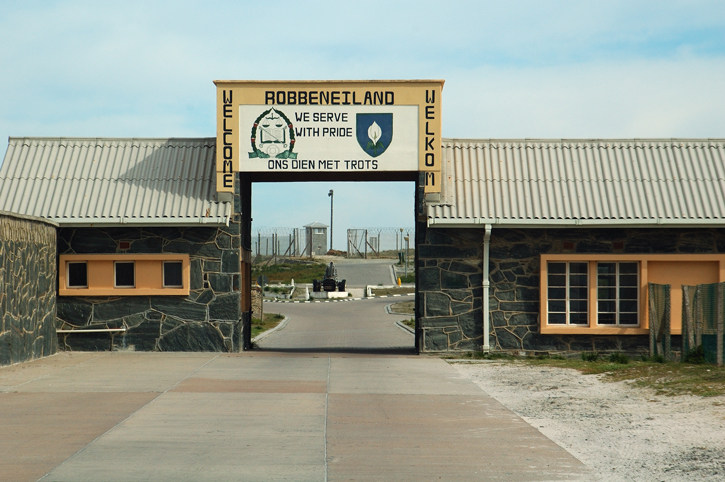
The historical context of Robben Island, a notorious political prison during South Africa’s apartheid era, imbues the current repatriation efforts with profound significance. Many liberation fighters from across Southern Africa, including Namibia, were incarcerated and subsequently buried in South Africa, often far from their ancestral lands and families. Addressing these historical injustices necessitates robust legal and policy frameworks in both the host and claimant states.
In South Africa, the exhumation and repatriation of human remains are governed by several key pieces of legislation. The National Health Act, 2003 (Act No. 61 of 2003), and its Regulations Relating to the Management of Human Remains (R363 of May 2013), provide the primary regulatory framework for the handling, exhumation, and reburial of human remains. Additionally, the National Heritage Resources Act 25 of 1999 (NHRA) plays a crucial role, particularly for graves older than 60 years or those deemed to be of cultural significance, such as those of conflict victims. Section 36(3) of the NHRA explicitly prohibits the destruction, damage, alteration, exhumation, or removal of such graves without a permit issued by the South African Heritage Resources Agency (SAHRA) or a provincial heritage resources authority. Exhumations of these graves often require the supervision of an accredited archaeologist and a public participation process. Furthermore, the Inquests Act 58 of 1959 allows for the disinterment of bodies with written permission from a magistrate or attorney-general for examination purposes, particularly in cases of unnatural death.
Namibia's legal landscape also provides a framework for managing human remains. The Namibia Burial Place Ordinance, 1966 (Ordinance No. 27 of 1966), prohibits the disturbance of graves without the Administrator's permission and outlines regulations for exhumation and removal of bodies. The Public and Environmental Health Act and related regulations also govern exhumations, especially concerning infectious diseases. Notably, exhumation in Namibia generally requires a court order. The National Heritage Act, 2004 (Act No. 27 of 2004), mandates the Namibian Heritage Council (NHC) to protect and conserve the country's natural and cultural heritage, including the recovery and repatriation of movable national heritage. While Namibia has engaged in previous repatriations, often through Memoranda of Understanding, it is also in the process of developing a comprehensive National Policy on the Repatriation and Restitution of Human Remains and Heritage Objects. Underlying these domestic laws are international human rights principles, particularly Article 5 of the African Charter on Human and Peoples' Rights, which affirms the right to dignity inherent in every human being, and Article 17, which guarantees the right to participate in cultural life. These principles provide a crucial ethical and legal foundation for the dignified repatriation of human remains.
Analysis
The current mission to repatriate the remains of Namibian Robben Island prisoners exemplifies the complex legal and diplomatic coordination required for cross-border historical redress. South Africa's National Policy on the Repatriation and Restitution of Human Remains and Heritage Objects, approved in 2021, provides a structured and comprehensive framework for such initiatives. This policy is particularly relevant as it specifically addresses the return of human remains acquired through colonial exploitation and apartheid practices, including those of liberation struggle figures. It aims to replace ad hoc repatriations with a more inclusive, state-led process, fostering national healing and remembrance.
The policy's emphasis on a "country-to-country" approach is critical for the current mission, as it facilitates structured engagement between the Namibian delegation and South African authorities. The involvement of multiple South African government departments, including the Department of Sport, Arts and Culture, the Department of Justice and Constitutional Development, and the Department of Defence and Military Veterans, alongside SAHRA, ensures a coordinated effort in navigating the various legal and logistical requirements for exhumation and export. This multi-agency approach is essential for obtaining the necessary permits for exhumation, which, as noted, involve provincial government, health departments, local councils, and heritage authorities in South Africa.
On the Namibian side, while a comprehensive national policy on repatriation is still under development, the existing legal framework, including the Burial Place Ordinance and the Public and Environmental Health Act, provides for the management of human remains. The general requirement for a court order for exhumation in Namibia underscores the judicial oversight in such sensitive matters. The ongoing bilateral cooperation and diplomatic efforts are crucial in bridging any gaps between the two countries' legal frameworks and ensuring a smooth transfer of the remains. The fact that the remains will be temporarily housed at the National Museum of Namibia before a state reburial ceremony further highlights the cultural and national significance of this undertaking.
Beyond the procedural aspects, this repatriation is deeply rooted in human rights principles. The African Charter on Human and Peoples' Rights, to which both Namibia and South Africa are signatories, enshrines the right to dignity (Article 5) and the right to participate in cultural life (Article 17). Repatriating the remains of political prisoners allows their families and nation to accord them a dignified reburial in accordance with their cultural traditions, thereby affirming their personhood and contributing to the healing process from past injustices. This aligns with the broader understanding of repatriation as a form of restorative justice, acknowledging historical wrongs and facilitating reconciliation.
Conclusion
The repatriation of the remains of Simon Petrus Nilenge and Festus Nehale represents a profound act of restorative justice and a significant milestone in the ongoing process of national healing for Namibia. This mission, facilitated by robust bilateral cooperation between Namibia and South Africa, sets a crucial precedent for the return of the 84 other identified Namibian liberation struggle figures. For legal practitioners, this case underscores the increasing importance of understanding and navigating complex cross-jurisdictional legal frameworks, particularly in matters involving human rights, heritage, and post-conflict reconciliation.
Looking ahead, the successful execution of this repatriation will likely galvanize further efforts to bring home other fallen heroes, not only for Namibia but potentially for other African nations whose citizens perished in exile during liberation struggles. Practitioners should anticipate a continued focus on developing harmonized legal and policy instruments for repatriation across the continent, ensuring that the dignity of the deceased and the cultural rights of their communities are upheld. The ongoing development of Namibia's National Policy on the Repatriation and Restitution of Human Remains and Heritage Objects will be a key area to watch, as it will further solidify the legal pathways for such future initiatives and contribute to a more comprehensive approach to heritage and human remains management in the region.
Citations
- 1.National Heritage Act, 2004 (Act No. 27 of 2004) (Namibia)
- 2.National Heritage Resources Act 25 of 1999 (South Africa)
- 3.The law and an ancestral request for exhumation - SciELO SA
- 4.policy on exhumations and reburials of human remains - Ba-Phalaborwa Municipality
- 5.Procedures | JCPZ - Johannesburg City Parks
- 6.Management 0f Human Remains - The South African Cemeteries Association
- 7.Namibia Burial Place Ordinance, 1966 - Africa Commons
- 8.Families can approach courts to exhume and re-bury bodies of COVID-19 victims - nbc
- 9.Exhumations
- 10.South African Inquest Act 58 OF 1959 - Missing Persons Global Response - ICRC
- 11.The Preservation and Conservation of Anthropological Heritage at the National Museum of Namibia - UNAM Digital Collections
- 12.Namibia Death - Cosmos Legal
- 13.Requirements and Process for the Issuance of Permits to Import and Export Human Remains - National Department of Health
- 14.National Heritage Resources Act [No. 25 of 1999] - South African Government
- 15.Namibia launches mission to repatriate remains of liberation-era figures from South Africa
- 16.Need for national policy on exhumation and reburial : case studies - Sabinet African Journals
- 17.Government unveils landmark restitution policy - IFACCA
- 18.ROBBEN ISLAND REMAINS OF NAMIBIANS TO RETURN HOME - nbc - YouTube
- 19.National Policy on the Repatriation and Restitution of Human Remains and
- 20.EXILE REPATRIATION | SAHRA 2025 - South African Heritage Resources Agency
- 21.The Value of Cultural heritage and Museums in Namibia
- 22.African [Banjul] Charter on Human and Peoples' Rights, adopted June 27, 1981, OAU Doc. CAB/LEG/67/3 rev. 5, 21 I.L.M. 58 (1982), entered into force Oct. 21, 1986
- 23.African Charter on Humans and People's Rights, 1981
- 24.Inquests Act - South African Government
- 25.MEIYSAC consults on heritage repatriation policy in Kavango West - NAMPA
- 26.8058 - GOVERNMENT GAZETTE REPUBLIC OF NAMIBIA
- 27.8593 - GOVERNMENT GAZETTE REPUBLIC OF NAMIBIA
- 28.Remains of Namibian Robben Island prisoners to be repatriated
- 29.Law Made Simple: Inquests
- 30.The role of human dignity in the jurisprudence of the African Commission on Human and Peoples' Rights
- 31.Microsoft Word - African Charter on Human and Peoples Rights.doc - National Security Archive
- 32.NATIONAL HERITAGE COUNCIL OF NAMIBIA
- 33.in the magistrate court of south africa - Ahmed Timol
- 34.South Africa - Open Restitution Africa
- 35.Liberation Heritage : NHC
- 36.Statement on the Return of Khoi and San Ancestral Human Remains and the Repatriation of those who died in Exile | Department Sport, Arts and Culture
How does this affect your business?
Get an AI analysis of this article grounded in your jurisdictions, practice areas, and any policy documents you've uploaded to Wansom.