
Rwanda, South Africa Extradition Deal Set to Bring Genocide Fugitives to Justice
Abstract
The recent diplomatic rapprochement between Rwanda and South Africa signals a significant shift in their bilateral relations, with profound implications for individuals accused of participating in the 1994 Rwandan Genocide against the Tutsi who have sought refuge in South Africa. For years, strained diplomatic ties hindered effective legal cooperation, allowing some fugitives to evade justice. This new chapter is expected to facilitate enhanced mutual legal assistance and extradition processes, leveraging South Africa's Extradition Act 67 of 1962 and international obligations. While constitutional safeguards in South Africa will continue to ensure due process, the renewed political will is likely to accelerate the apprehension and transfer of alleged genocidaires, marking a critical step towards accountability for victims and survivors.
Introduction
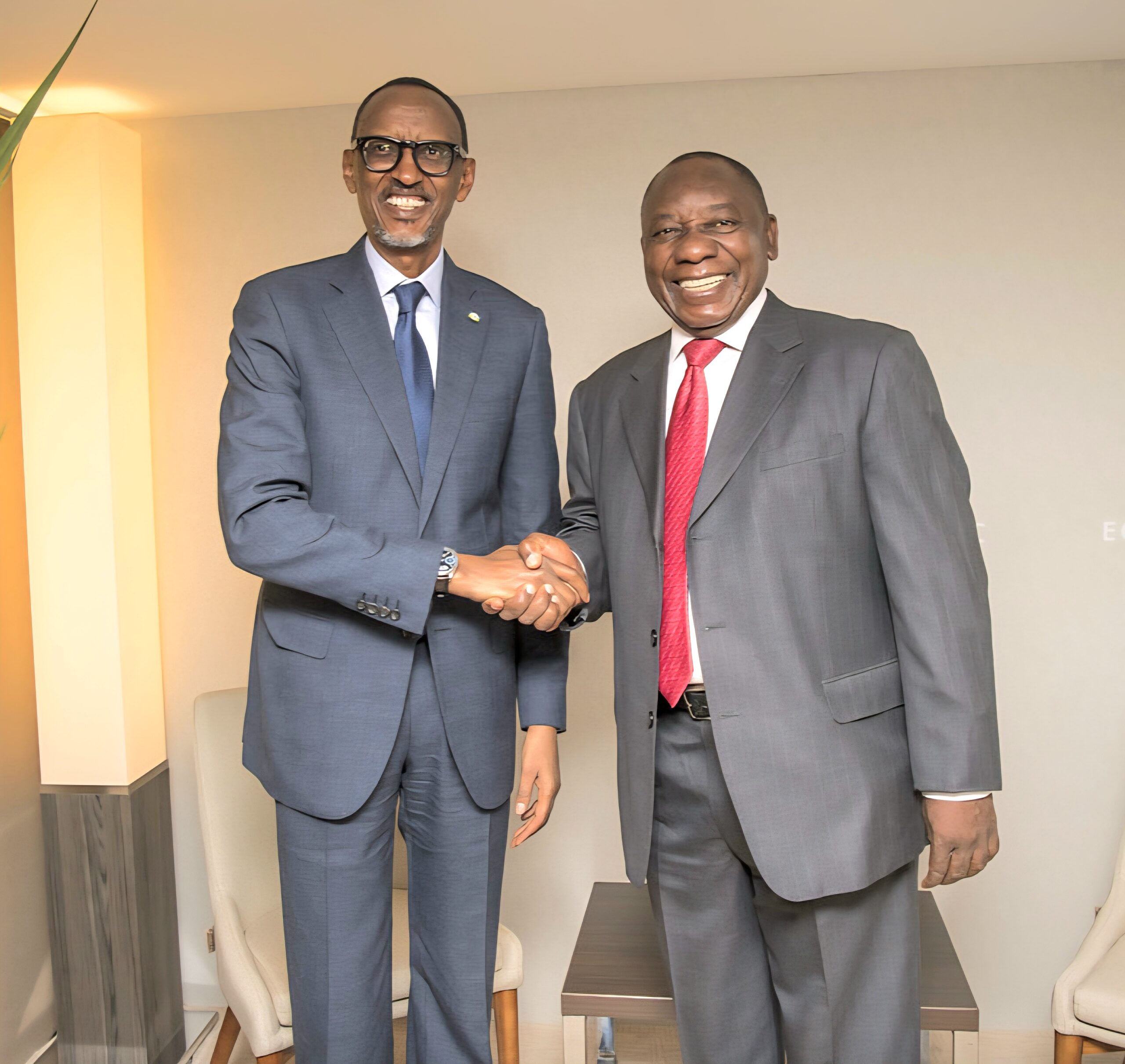
The diplomatic landscape between Rwanda and South Africa has entered a new phase, characterized by a notable rapprochement after years of political tensions and limited cooperation. This thawing of relations, as reported by KT Press Rwanda, is not merely a political formality but carries substantial legal ramifications, particularly for individuals accused of involvement in the 1994 Genocide against the Tutsi who have found sanctuary in South Africa. The previous period of strained relations often translated into obstacles for justice, with Rwanda frequently expressing concerns that its fugitives benefited from the diplomatic friction.
This article examines the legal implications of this renewed partnership, focusing on how it is poised to reshape the future of genocide fugitives in South Africa. It will delve into the existing legal frameworks for extradition and mutual legal assistance, analyze the historical challenges posed by diplomatic discord, and explore how the current political will is likely to enhance cooperation, thereby increasing the pressure on those who have long evaded accountability for grave international crimes.
Background
The 1994 Genocide against the Tutsi in Rwanda resulted in the systematic killing of over 800,000 people within approximately 100 days. In its aftermath, the international community established the International Criminal Tribunal for Rwanda (ICTR) to prosecute those responsible for genocide and other serious violations of international humanitarian law. Upon the closure of the ICTR, its residual functions, including the tracking and prosecution of remaining fugitives, were transferred to the International Residual Mechanism for Criminal Tribunals (IRMCT). Rwanda also established its own legal framework, including the Organic Law No. 08/1996, to prosecute genocide-related crimes in national courts.
South Africa, as a state committed to constitutionalism and the rule of law, has a well-established legal framework governing extradition, primarily enshrined in the Extradition Act 67 of 1962. This Act allows for the surrender of accused or convicted persons to a requesting state, contingent on the existence of an extradition agreement or, in its absence, the President's consent. Key principles such as dual criminality (the offense being a crime in both states) and the protection of constitutional rights, including the right to a fair trial and safeguards against torture or inhuman treatment, are central to South African extradition proceedings. Historically, the absence of a bilateral extradition treaty between Rwanda and South Africa presented a significant hurdle, often necessitating ad-hoc arrangements or leading to delays and non-cooperation in past requests.
Analysis
The years of political tensions between Rwanda and South Africa demonstrably impeded effective legal cooperation, creating an environment where South Africa was, at times, perceived as a 'safe haven' for alleged genocidaires. This diplomatic friction meant that even when Rwandan authorities or the IRMCT issued international arrest warrants, the process of apprehension and extradition was often protracted or stalled. For instance, in 2019, it was noted that there was no extradition treaty between Rwanda and South Africa, impacting cases involving Rwandan suspects.
However, the recent diplomatic rapprochement signals a clear shift in this dynamic. Evidence of improving cooperation emerged even before the full normalization of relations, notably with the arrest of Fulgence Kayishema in May 2023 in Paarl, Western Cape. Kayishema, a high-profile fugitive indicted by the ICTR for genocide, was apprehended through a joint operation involving the IRMCT and South African authorities after more than two decades on the run. While Kayishema faces local charges related to fraud and immigration offenses in South Africa, his eventual extradition to Rwanda to face the genocide indictment is anticipated, though proceedings have yet to commence. This case exemplifies the potential for enhanced cooperation, even as legal complexities and domestic processes continue to play out.
The 'new page' in relations is expected to facilitate more streamlined legal assistance. While South Africa's Extradition Act 67 of 1962 allows for extradition even without a specific treaty if the President consents, a formal bilateral extradition treaty or a robust mutual legal assistance agreement would significantly expedite future requests. Such agreements would solidify the commitment to cooperation, reducing reliance on ad-hoc political decisions and providing clearer legal pathways. The IRMCT, which relies heavily on the cooperation of national governments to arrest fugitives, will undoubtedly benefit from this improved relationship. While the IRMCT has successfully accounted for all fugitives indicted by the former ICTR, national authorities in Rwanda continue to seek over 1,000 other individuals for their roles in the genocide, making South African cooperation crucial.
Despite the increased political will, South African courts will continue to uphold constitutional safeguards. Any extradition request must still satisfy the requirements of the Extradition Act, including dual criminality and assurances of a fair trial. South Africa's Constitution provides robust protection against extradition where there is a real risk of torture, inhuman treatment, or a violation of fundamental human rights. These human rights considerations, along with potential asylum claims, will remain critical factors in judicial review, ensuring that justice is pursued within the bounds of international human rights law and South African constitutional principles. The case of General Faustin Kayumba Nyamwasa, who was granted asylum in South Africa and faced an extradition request from Rwanda, highlights the complexities involved when asylum status intersects with extradition proceedings.
Conclusion
The diplomatic rapprochement between Rwanda and South Africa marks a pivotal moment for international criminal justice, particularly concerning the pursuit of genocide fugitives. For legal practitioners, this shift signals an environment where extradition requests from Rwanda are likely to receive more favorable and expedited consideration from South African authorities. The historical impediments posed by strained relations are diminishing, paving the way for more robust implementation of South Africa's Extradition Act and potentially new bilateral instruments.
Practitioners representing individuals facing such requests must be acutely aware of the enhanced political will for cooperation, while simultaneously leveraging South Africa's strong constitutional protections and international human rights obligations. The focus will remain on ensuring due process, fair trial guarantees, and adherence to the principle of non-refoulement. As this new chapter unfolds, the legal community should anticipate an increase in extradition proceedings and mutual legal assistance requests, underscoring a collective commitment to accountability for the gravest crimes and reinforcing the principle that justice, though delayed, should not be denied.
Citations
- 1.Extradition Act 67 of 1962
- 2.Organic Law No. 08/1996 of 1996 on the Organization of Prosecutions for Offenses constituting the Crime of Genocide or Crimes Against Humanity committed since 1 October 1990
- 3.UN Security Council Resolution 955 (1994)
- 4.UN Security Council Resolution 1966 (2010)
- 5.SAnews, 'Rwandan fugitive wanted for genocide nabbed in SA' (May 25, 2023)
- 6.Courthouse News, 'One of Rwanda's most wanted genocide suspects arrested in South Africa after 22 years on run' (May 25, 2023)
- 7.The Guardian, 'Rwandan ex-police chief arrested in South Africa over 1994 genocide' (May 25, 2023)
- 8.UN News, 'Arrest of top Rwandan genocide fugitive shows 'justice will be done'' (May 25, 2023)
- 9.KT Press Rwanda, 'Genocide Fugitives Face Uncertain Future as Rwanda and South Africa Turn a New Page' (June 25, 2026)
- 10.Al Jazeera, 'Rwandan genocide suspect faces more charges in South Africa' (June 09, 2023)
- 11.The Great Lakes Eye, 'SA drags its feet transferring genocide suspect — the case of Fulgence Kayishema' (December 18, 2024)
- 12.Southern Africa Litigation Centre, 'Justice dept mulls Rwanda general's extradition' (June 23, 2010)
- 13.ISS Africa, 'Are Rwanda and South Africa irreconcilable?' (January 25, 2019)
- 14.UNITED NATIONS | International Residual Mechanism for Criminal Tribunals, 'Searching for the Fugitives'
- 15.UN International Residual Mechanism for Criminal Tribunals | Legal Information Institute
- 16.Wikipedia, 'International Residual Mechanism for Criminal Tribunals'
- 17.ReliefWeb, 'Mechanism Concluding Tasks of Criminal Tribunals for Rwanda, Former Yugoslavia 'Steadily Advancing on Path of Completion', President Tells Security Council' (June 11, 2024)
- 18.Human Rights Watch, 'Rwanda: Justice After Genocide—20 Years On' (March 28, 2014)
- 19.Washington and Lee University School of Law Scholarly Commons, 'Post-Genocide Justice in Rwanda'
- 20.Nuremberg Academy, 'Changing Patterns of Acceptance. International Criminal Justice after the Rwandan Genocide'
- 21.Cosmos Legal, 'South Africa Extradition Of Convicted And Detained Persons' (January 17, 2026)
- 22.SAFLII, 'A South African perspective on mutual legal assistance and extradition in a globalized world' [2012] PER 24
- 23.UNODC, 'INTERVENTION BY THE REPUBLIC OF SOUTH AFRICA ON THE OCCASION OF THE 15TH SESSION OF THE WORKING GROUP ON INTERNATIONAL COOPERA' (June 05, 2024)
- 24.Department of Justice and Constitutional Development, 'Extradition Act 67 of 1962'
- 25.UWCScholar, 'UNIVERSITY OF THE WESTERN CAPE FACULTY OF LAW RESEARCH PAPER'
- 26.Department of Justice and Constitutional Development, 'Extradition and Mutual Legal Assistance in Criminal Matters Treaties'
- 27.Rwanda: slowly, the justice net is closing on the last genocide fugitives (June 06, 2023)
How does this affect your business?
Get an AI analysis of this article grounded in your jurisdictions, practice areas, and any policy documents you've uploaded to Wansom.