
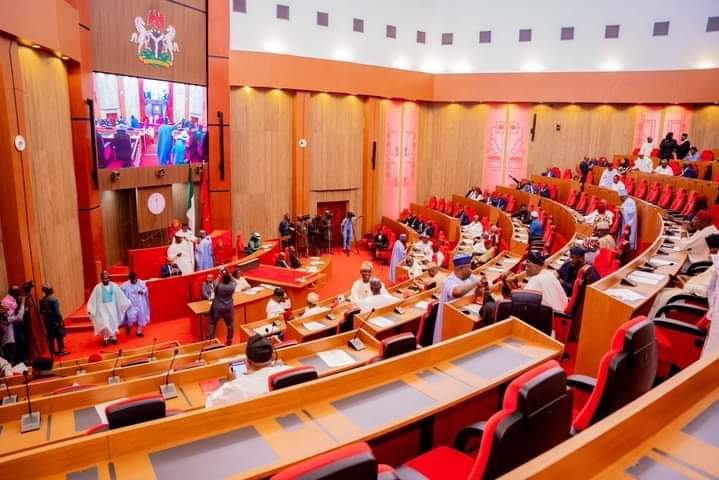
Senate passes Legal Practitioners, Proceeds of Crime Recovery amendment bills
Abstract
The Nigerian Senate has recently passed two pivotal legislative instruments: the Legal Practitioners Act Repeal and Re-enactment Bill, 2026 (SB. 965) and the Proceeds of Crime Recovery and Management Amendment Bill, 2026 (SB. 343). The Legal Practitioners Bill aims to overhaul the existing regulatory framework for Nigeria's legal profession, introducing modern standards for ethics, discipline, and practice. Concurrently, the Proceeds of Crime Recovery Amendment Bill seeks to establish a dedicated agency for the centralized recovery, preservation, and management of assets derived from unlawful activities, thereby strengthening Nigeria's anti-corruption efforts and enhancing transparency in asset recovery. These legislative actions signify a concerted effort to bolster the rule of law and improve governance within the country.
Introduction
The Nigerian legal landscape is on the cusp of significant transformation following the recent passage by the Senate of two critical bills: the Legal Practitioners Act Repeal and Re-enactment Bill, 2026 (SB. 965) and the Proceeds of Crime Recovery and Management Amendment Bill, 2026 (SB. 343). These legislative developments, which scaled the third reading after thorough consideration of reports by the Senate Committee on Judiciary, Human Rights and Legal Matters, are poised to redefine the operational parameters for legal professionals and reshape the nation's approach to combating financial crimes.
The Legal Practitioners Bill, in particular, represents a comprehensive effort to modernize the regulatory framework governing the legal profession, which has long operated under an outdated statute. Its passage underscores the urgent need to align professional standards, ethics, and disciplinary mechanisms with contemporary global best practices and the evolving demands of justice delivery in Nigeria. Similarly, the amendment to the Proceeds of Crime Act addresses persistent challenges in the management of recovered assets, aiming to introduce greater transparency and accountability into a process previously criticized for its fragmentation and potential for abuse.
This article delves into the core provisions and implications of these two landmark bills, examining their objectives, the problems they seek to resolve, and their potential impact on legal practitioners and the broader administration of justice in Nigeria. By analyzing the proposed changes, we aim to provide legal professionals with a clear understanding of the impending reforms and their practical consequences.
Background
The existing Legal Practitioners Act, Cap L11, Laws of the Federation of Nigeria, 2004, has been the primary statute regulating the legal profession in Nigeria, tracing its origins back to 1962 and re-enacted in 1975. Over the decades, the profession has expanded significantly, leading to calls for a more robust and responsive regulatory framework to address issues of professional conduct, ethics, and public confidence. The current Act establishes bodies such as the General Council of the Bar and the Body of Benchers, which are charged with the general management of the affairs of the Nigerian Bar Association and the call to the Bar, respectively.
In parallel, Nigeria's fight against corruption and financial crimes has been underpinned by various legislations, most notably the Proceeds of Crime (Recovery and Management) Act 2022 (POCA). POCA was enacted to provide comprehensive provisions for the seizure, confiscation, forfeiture, and management of properties reasonably suspected to have been derived from unlawful activities, including non-conviction-based forfeiture. However, the implementation of POCA revealed institutional gaps and challenges, particularly concerning the fragmented approach to asset management, with multiple agencies involved in the recovery, preservation, and disposal of assets. This fragmentation often led to operational overlaps, institutional rivalries, and concerns about accountability and transparency in the handling of recovered assets, necessitating a review of the framework.
Analysis
The Legal Practitioners Act Repeal and Re-enactment Bill, 2026 (SB. 965), aims to replace the outdated Legal Practitioners Act, Cap L11, Laws of the Federation of Nigeria, 2004, with a modern legal framework designed to strengthen the regulation of the legal profession. Key reforms include enhancing professional ethics and accountability, establishing a more effective disciplinary committee with powers to impose penalties such as suspension or removal from the legal roll, and introducing mandatory continuing legal education for all legal practitioners. The Bill also proposes a mandatory two-year pupillage for new lawyers before they can fully qualify, along with provisions for the licensing and accreditation of law offices and the compulsory use of official seals and stamps to authenticate legal documents. These measures are intended to restore public confidence in the legal system, improve professional standards, and ensure the profession aligns with contemporary demands.
Concurrently, the Proceeds of Crime Recovery and Management Amendment Bill, 2026 (SB. 343), addresses critical shortcomings in the existing asset recovery framework. The primary objective of this amendment is the establishment of a dedicated, independent Proceeds of Crime Recovery and Management Agency. This new agency will be vested with full legal personality and the responsibility for the recovery, preservation, management, and disposal of properties reasonably suspected to have been derived from unlawful activities across Nigeria. This centralization is a direct response to the previous fragmented system, where numerous agencies, including the Economic and Financial Crimes Commission (EFCC) and the Independent Corrupt Practices and Other Related Offences Commission (ICPC), had overlapping responsibilities in asset management.
The establishment of a specialized agency is expected to eliminate duplication of efforts, curb potential abuses, and introduce greater transparency and accountability in the handling of forfeited properties. By separating the functions of investigation and prosecution from asset management, the amendment seeks to align Nigeria's anti-corruption architecture with international best practices observed in jurisdictions like the United Kingdom, the United States, and South Africa. This strategic shift aims to ensure that recovered assets are administered transparently and utilized for the benefit of Nigerians, thereby closing a significant institutional gap in the country's fight against corruption.
While distinct in their immediate focus, both bills collectively contribute to strengthening the rule of law and good governance in Nigeria. The Legal Practitioners Bill fosters a more ethical and competent legal profession, which is fundamental to a robust justice system. The Proceeds of Crime Recovery Amendment Bill, on the other hand, enhances the state's capacity to effectively tackle financial crimes and manage the proceeds thereof, reinforcing the principle that crime should not pay. The synergy between a reformed legal profession and an efficient asset recovery mechanism is crucial for building a more just and accountable society.
Conclusion
The passage of the Legal Practitioners Act Repeal and Re-enactment Bill, 2026, and the Proceeds of Crime Recovery and Management Amendment Bill, 2026, by the Nigerian Senate marks a significant legislative milestone. For legal practitioners, the new Legal Practitioners Act will usher in a more stringent and modernized regulatory environment, demanding adherence to enhanced ethical standards, mandatory continuing professional development, and potentially a two-year pupillage for new entrants. Firms will need to review their internal policies to ensure compliance with new licensing, accreditation, and documentation requirements, including the mandatory use of official seals and stamps.
For all legal professionals, particularly those involved in anti-corruption and financial crime litigation, the Proceeds of Crime Recovery and Management Amendment Bill signals a new era of centralized and transparent asset recovery. The establishment of a dedicated agency will streamline processes, but also likely increase scrutiny on the origins of assets and the mechanisms for their forfeiture and management. Practitioners should anticipate clearer guidelines and standardized procedures from the new agency, which will necessitate a thorough understanding of the amended framework. As these bills await presidential assent to become law, legal professionals must closely monitor their final enactment and the subsequent regulations and guidelines that will govern their implementation, preparing for the inevitable shifts in practice and compliance.
Citations
- 1.Legal Practitioners Act, Cap L11, Laws of the Federation of Nigeria, 2004
- 2.Proceeds of Crime (Recovery and Management) Act, 2022
- 3.Legal Practitioners Act Repeal and Re-enactment Bill, 2026 (SB. 965)
- 4.Proceeds of Crime Recovery and Management Amendment Bill, 2026 (SB. 343)
- 5.Premium Times Nigeria, "Senate passes Legal Practitioners, Proceeds of Crime Recovery amendment bills," July 9, 2026.
- 6.Businessday NG, "Senate passes bill to create agency for asset recovery," July 9, 2026.
- 7.Juritrust Centre, "A Note on the Proceeds of Crime (Recovery and Management) Act 2022," September 6, 2025.
- 8.The Sun Nigeria, "Senate begins amendment of Proceeds of Crime Management Act," May 20, 2025.
- 9.Scribd, "Highlights of Nigeria's 2022 Crime Act."
- 10.Punch Newspapers, "Senate Okays Agency to Manage Recovered Criminal Assets," July 10, 2026.
- 11.Vanguard News, "Senate passes bill to create agency for management of recovered assets," July 9, 2026.
- 12.Vanguard News, "Senate Passes Bill To Establish Agency For Management Of Recovered Assets," July 9, 2026.
- 13.Law Nigeria, "LEGAL PRACTITIONERS ACT, CHAPTER L11 LAWS OF THE FEDERATION OF NIGERIA, L.F.N. 2004," February 4, 2025.
- 14.Law Nigeria, "PROCEEDS OF CRIME (RECOVERY AND MANAGEMENT) ACT, 2022," February 6, 2024.
- 15.Recovered Asset Monitoring Nigeria, "Asset Recovery and Management Law."
- 16.CLEAR, "Nigeria considers reform of legal profession regulation," November 25, 2025.
- 17.Vanguard News, "Senate advances bill to create asset recovery agency for transparency," May 20, 2025.
- 18.Africa Legal, "Sweeping reforms ahead for Nigerian lawyers as Tinubu sends Legal Practitioners Bill to Senate," November 27, 2025.
- 19.Accendo-law, "A CRITIQUE OF THE NIGERIAN PROCEEDS OF CRIME (RECOVERY & MANAGEMENT) ACT 2022."
- 20.THISDAYLIVE, "Legal Practitioners Bill 2025: The Pros and Cons," January 20, 2026.
- 21.The Guardian Nigeria News, "Legal Practitioners Act is the only authority for law practice," February 21, 2024.
- 22.TheNigeriaLawyer, "Legal Practitioners Act Cap. L11 LFN 2004 (Repeal and Re-Enactment) Bill, 2021 (SB.815)."
- 23.Vanguard News, "Senate passes Proceeds of Crime Bill 2022," March 9, 2022.
- 24.Scribd, "Legal Practitioners Bill, 2025 01."
- 25.Nigerian Lawyers Directory, "Legal Practitioners Act 1975 Chapter L11 (Cap. L11) Laws of the Federation of Nigeria 2004."
- 26.PLAC BILLSTRACK, "LEGAL PRACTITIONERS BILL, 2025 ARRANGEMENT OF SECTIONS."
- 27.The Sun Nigeria, "Group faults NASS' conduct on legal practitioner's bill," December 24, 2025.
- 28.SAS Open Journals, "THE LEGAL PRACTITIONERS ACT: A CODE FOR REGULATING THE CONDUCT OF LAWYERS IN NIGERIA*."
- 29.HOUSE OF REPRESENTATIVES FEDERAL REPUBLIC OF NIGERIA ORDER PAPER PRESENTATION OF BILLS, February 6, 2025.
How does this affect your business?
Get an AI analysis of this article grounded in your jurisdictions, practice areas, and any policy documents you've uploaded to Wansom.