
Shanzu Chief Magistrate's Court Sh8.2bn Meth Bust Case Closed
Abstract
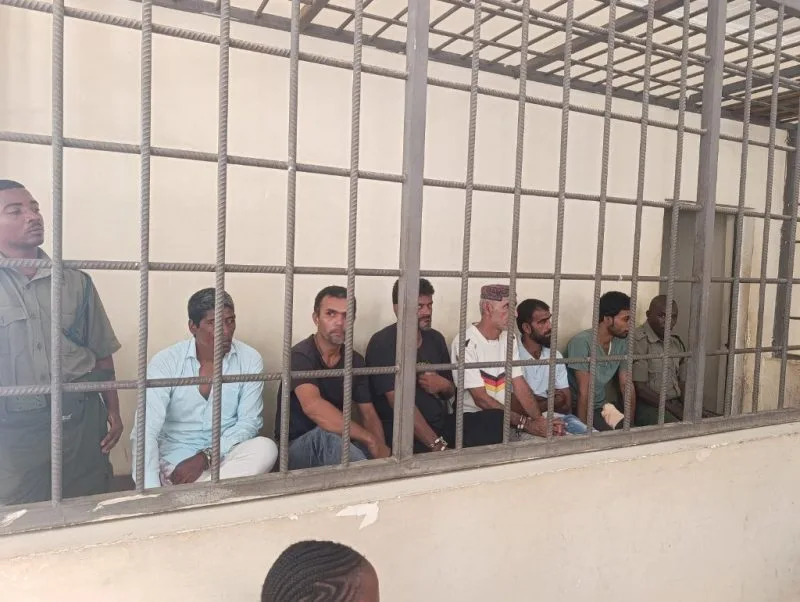
The Office of the Director of Public Prosecutions (ODPP) in Kenya has concluded its case against six Iranian nationals accused of trafficking over one tonne of methamphetamine, valued at approximately Sh8.2 billion. The prosecution presented 12 witnesses before the Shanzu Chief Magistrate's Court, detailing the high-seas interception of a stateless vessel carrying the illicit consignment. This landmark trial, conducted under the Narcotic Drugs and Psychotropic Substances (Control) Act, Cap. 245, now moves to a critical phase where the court will determine if the accused have a case to answer, highlighting Kenya's ongoing efforts to combat international drug trafficking and the severe penalties associated with such offences.
Introduction
Kenya's legal landscape is currently seized with a significant international drug trafficking case, as the Office of the Director of Public Prosecutions (ODPP) formally closed its case against six Iranian nationals. The accused stand charged with trafficking more than one tonne (1,036.044 kilograms) of methamphetamine, a haul estimated to be worth a staggering Sh8.2 billion. This development marks a crucial juncture in a trial that has drawn considerable attention, underscoring Kenya's strategic importance as a transit point for illicit narcotics and its commitment to disrupting global drug supply chains.
The case, heard before the Shanzu Chief Magistrate's Court, involves the interception of a 'dark vessel' on the high seas, approximately 350 nautical miles east of the Port of Mombasa, in October 2025. The prosecution's closure of its case, following testimony from 12 witnesses, now paves the way for the court to consider whether the defence has a case to answer. For legal practitioners, this trial offers valuable insights into the complexities of prosecuting transnational drug offences, the application of maritime law in drug interdictions, and the robust enforcement of Kenya's anti-narcotics legislation.
This article will delve into the statutory framework governing drug trafficking in Kenya, analyse the procedural implications of the prosecution's case closure, and discuss the potential ramifications for the accused and the broader fight against narcotics in the region. It will also touch upon the severe penalties prescribed by law and recent policy discussions surrounding drug offences.
Background
The legal framework for combating drug trafficking in Kenya is primarily enshrined in the Narcotic Drugs and Psychotropic Substances (Control) Act, Cap. 245, Laws of Kenya. Enacted in 1994, this comprehensive legislation aims to control the possession of, and trafficking in, narcotic drugs and psychotropic substances, as well as the cultivation of certain plants. The Act provides for stringent penalties, including imprisonment and substantial fines, reflecting the gravity with which the Kenyan state views drug-related offences. Specifically, Section 4 of the Act addresses trafficking, prescribing severe sanctions for those found guilty.
Under the current provisions of the Act, individuals convicted of trafficking narcotic drugs or psychotropic substances face imprisonment for a term of not less than twenty years, which can extend to life imprisonment. Additionally, offenders are liable to a fine of not less than one million shillings or three times the market value of the narcotic drug or psychotropic substance, whichever is greater. It is crucial to note that, despite recent public discourse, the death penalty is not currently prescribed for drug offences under Kenyan law. However, President William Ruto has publicly indicated plans to amend the narcotics laws to introduce capital punishment for hard drug traffickers, classifying such offences as capital crimes.
Kenya has historically been a significant transit route for illicit drugs, particularly heroin from Asia destined for Europe, and cocaine from South America. This has led to several high-profile seizures and prosecutions over the years, including a 1,000-kilogram cocaine bust in 2004 and the widely publicised case of the Akasha brothers. These cases underscore the persistent challenge of drug trafficking and the continuous efforts by Kenyan law enforcement agencies, often in collaboration with international partners, to intercept and prosecute those involved.
Analysis
The closure of the prosecution's case in the Shanzu Chief Magistrate's Court signifies a procedural milestone. After presenting evidence from 12 witnesses, including the lead investigating officer, Inspector Shadrack Kemei, the ODPP has laid out its narrative of how the six Iranian nationals allegedly trafficked the methamphetamine. The evidence detailed the intelligence-led interception of the vessel 'Mashaallah' by the Kenya Navy, its stateless status, the discovery of 769 packets of high-purity methamphetamine concealed within its compartments, and the alleged origin from Iran destined for Mauritius.
Following the conclusion of the prosecution's case, the court has directed both the prosecution and the defence to file written submissions within 14 days. This period is critical for the defence team to articulate why their clients may not have a case to answer, potentially challenging the sufficiency of the evidence presented, the chain of custody, the legality of the search and seizure, or the jurisdictional aspects given the interception occurred on the high seas. The concept of a 'case to answer' requires the court to determine whether a reasonable tribunal, properly directing itself, could convict on the evidence presented. If the court finds no case to answer, the accused may be acquitted without being called upon to present their defence.
The sheer quantity and value of the seized narcotics – over one tonne of methamphetamine worth Sh8.2 billion – places this case among Kenya's most significant drug busts. The successful prosecution of such a large-scale operation would send a strong message to international drug cartels that Kenya is not a soft target. The involvement of a 'dark vessel' and its stateless nature also highlights the sophisticated methods employed by traffickers and the challenges faced by maritime security agencies in monitoring and interdicting such operations. The Narcotic Drugs and Psychotropic Substances (Control) Act, Cap. 245, as amended, provides for the forfeiture of property derived from or used in illicit traffic, which could extend to the seized vessel in this instance.
Comparative legal perspectives reveal that many jurisdictions grapple with similar challenges in prosecuting transnational drug crimes, particularly concerning jurisdiction over offences committed in international waters. However, international conventions such as the UN Convention against Illicit Traffic in Narcotic Drugs and Psychotropic Substances (1988) provide a framework for cooperation and jurisdiction over such offences. Kenya, as a signatory, is empowered to act against vessels engaged in drug trafficking on the high seas under certain conditions, especially if the vessel is stateless or consents to jurisdiction. The outcome of the 'case to answer' ruling will be a critical indicator of the strength of the prosecution's evidence and the court's interpretation of the legal thresholds for conviction in complex international drug trafficking cases.
Conclusion
The closure of the prosecution's case in the Sh8.2 billion methamphetamine trafficking trial marks a pivotal moment for the six Iranian nationals and for Kenya's anti-narcotics efforts. Legal practitioners should closely monitor the Shanzu Chief Magistrate's Court's ruling on whether the accused have a case to answer, as this decision will provide crucial guidance on the evidentiary standards and procedural requirements for large-scale drug trafficking prosecutions in Kenya. The case highlights the robust application of the Narcotic Drugs and Psychotropic Substances (Control) Act, Cap. 245, and the collaborative efforts of Kenyan security agencies in combating transnational organised crime.
Beyond the immediate outcome, this trial underscores the ongoing policy debate surrounding drug penalties in Kenya, particularly in light of proposed legislative amendments to introduce capital punishment for hard drug traffickers. Practitioners should remain abreast of these legislative developments, as they could significantly alter the landscape of drug offence sentencing. The ultimate judgment in this landmark case will not only determine the fate of the accused but also reinforce Kenya's resolve in the global fight against illicit drugs, potentially influencing future strategies for interdiction and prosecution in the East African region.
Citations
- 1.Narcotic Drugs and Psychotropic Substances (Control) Act, Chapter 245, Laws of Kenya
- 2.Capital FM Kenya, "DPP Closes Case in Sh8.2bn Meth Bust As Six Iranians Await Fate In Landmark Drug Trafficking Trial," June 26, 2026
- 3.allAfrica.com, "Kenya: DPP Closes Case in Sh8.2bn Meth Bust As Six Iranians Await Fate in Landmark Drug Trafficking Trial," June 26, 2026
- 4.Nairobi Wire, "ODPP Closes Case Against 6 Iranians in Sh8.2 Billion Meth Trafficking Trial," June 29, 2026
- 5.Tripbase, "Kenya drug laws: what's legal & the penalties (2026)," June 20, 2026
- 6.The Star, "Ruto proposes death penalty for hard drug traffickers in major law shift," January 4, 2026
- 7.Capital FM Kenya, "ODPP Closes Case in Sh8.2bn Methamphetamine Trafficking Trial involving Six Iranian Nationals," June 27, 2026
- 8.NACADA Secures Landmark Conviction in Wamunyu Narcotics Case - Capital FM, April 21 2026
How does this affect your business?
Get an AI analysis of this article grounded in your jurisdictions, practice areas, and any policy documents you've uploaded to Wansom.