
Social engineering remains Ghana’s weakest link in digital fraud fight – e-Crime Bureau Chair
Abstract
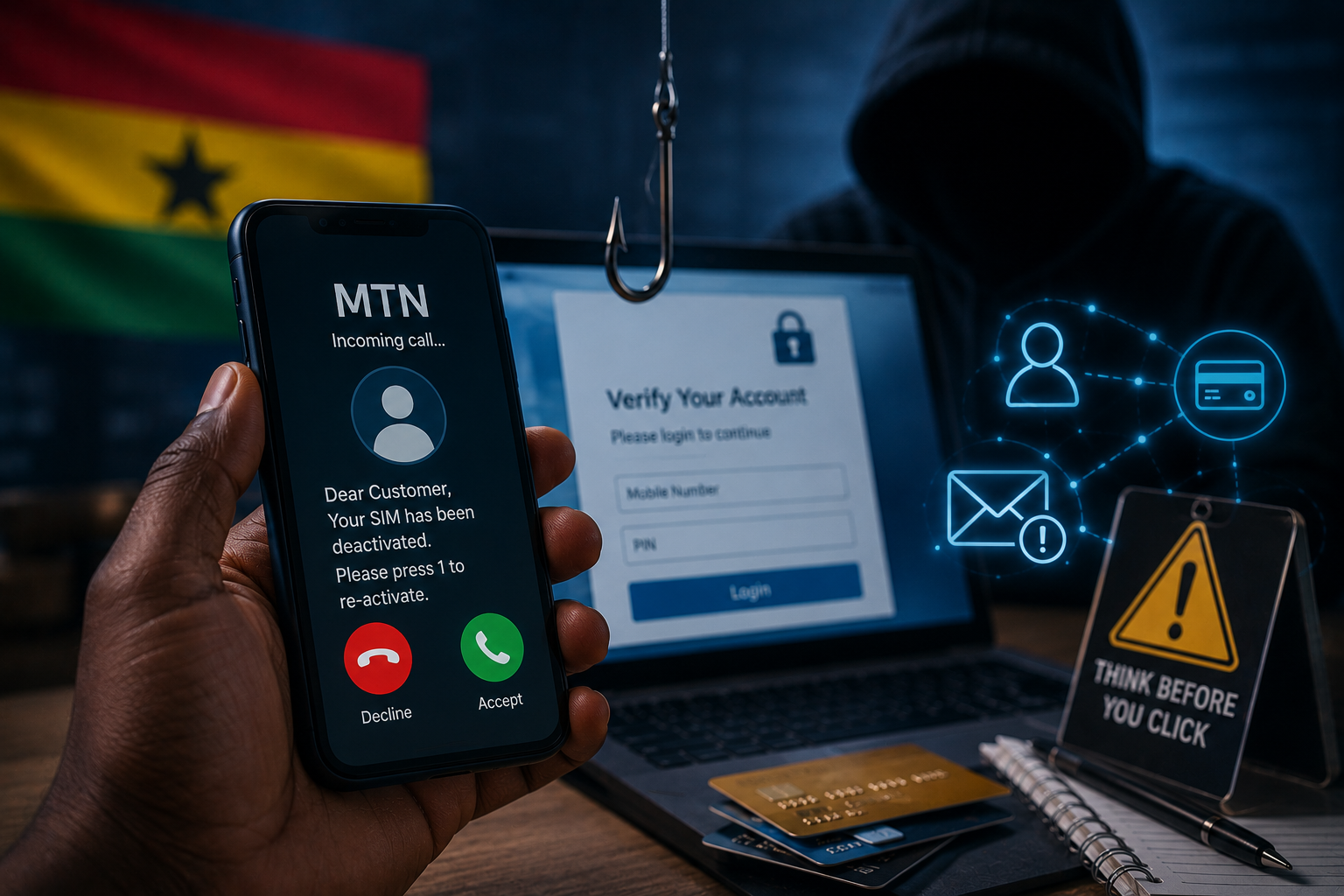
Social engineering has emerged as Ghana's most significant vulnerability in the ongoing battle against digital fraud, as highlighted by Dr. Albert Antwi-Boasiako, Executive Chair of the e-Crime Bureau. Fraudsters are increasingly leveraging human psychology—trust, fear, ignorance, and online habits—to illicitly obtain money and personal information, extending beyond traditional phone calls to sophisticated phishing, cloned accounts, and impersonation schemes. This article examines the legal and regulatory landscape in Ghana, particularly the Cyber Security Act, 2020 (Act 1038) and the Electronic Transactions Act, 2008 (Act 772), in addressing these evolving threats. It delves into the challenges faced by law enforcement and financial institutions in prosecuting complex cybercrime cases and recovering stolen funds, emphasizing the critical need for enhanced public awareness and multi-stakeholder collaboration to build a resilient digital ecosystem.
Introduction
Ghana's burgeoning digital economy, while a catalyst for growth and innovation, faces a formidable adversary in the form of sophisticated digital fraud. At the forefront of this challenge is social engineering, identified by Dr. Albert Antwi-Boasiako, Founder and Executive Chair of the e-Crime Bureau, as the nation's weakest link in the fight against cybercrime. Fraudsters are increasingly exploiting human vulnerabilities such as trust, fear, ignorance, and established online habits to defraud unsuspecting individuals and organisations, moving beyond simple scams to elaborate schemes involving phishing links, cloned social media accounts, fake public officials, fraudulent e-commerce platforms, and brand impersonation.
This pervasive threat underscores a critical dilemma: while technological safeguards continue to advance, the human element remains susceptible to manipulation. The economic implications are substantial, with the Bank of Ghana reporting a significant increase in digital fraud cases and value at risk across the financial sector. This article will explore the current legal and regulatory framework in Ghana designed to combat digital fraud, analyse the specific challenges posed by social engineering tactics, and discuss the practical implications for legal practitioners and other stakeholders in fostering a more secure digital environment.
Background
The legal framework for combating cybercrime and digital fraud in Ghana is primarily anchored in several key statutes. The Cyber Security Act, 2020 (Act 1038), is a cornerstone, establishing the Cyber Security Authority (CSA) to regulate cybersecurity activities, protect Critical Information Infrastructure (CII), and provide for cybercrime provisions, investigative powers, and penalties. The CSA's mandate includes preventing, managing, and responding to cybersecurity threats and incidents, as well as promoting cybersecurity development and awareness. Complementing this is the Electronic Transactions Act, 2008 (Act 772), which provides for the regulation of electronic communications and transactions, granting consumer rights in digital commerce and addressing the legal status of electronic records and signatures.
Further legislative support comes from the Criminal Offences Act, 1960 (Act 29), which contains provisions relating to fraud, including defrauding by false pretences (Sections 131-135), which can be applied to digital fraud cases. The Anti-Money Laundering Act, 2020 (Act 1044), which repealed and replaced the 2008 Act, strengthens the legal regime against money laundering and terrorist financing, establishing the Financial Intelligence Centre (FIC) as the national hub for receiving and analysing suspicious transaction reports. These legislative instruments, alongside the National Cybersecurity Policy and Strategy, aim to create a robust defence against cyber threats and financial crimes.
Analysis
Despite a comprehensive legal framework, the fight against social engineering fraud in Ghana faces significant hurdles. The essence of social engineering lies in manipulating individuals, rather than directly exploiting technical vulnerabilities, making it particularly challenging to combat through purely technical means. While the Cyber Security Act, 2020, broadly covers cyber deception, identity theft, and unlawful data manipulation, and imposes penalties for producing or sharing false or misleading digital content, the human element often complicates prosecution. Proving the intent to defraud, as required under Section 131 of the Criminal Offences Act, 1960, can be difficult when victims willingly provide information due to manipulation.
Law enforcement agencies, such as the Ghana Police Service's Cybercrime Unit, are equipped with digital forensics laboratories and conduct training on social engineering. However, the complexity of cybercrime cases, coupled with challenges in digital forensics, low technical expertise among some law enforcement personnel, and jurisdictional issues, often hinder successful investigations and prosecutions. The Bank of Ghana's 2024 fraud report indicated that while banks and specialised deposit-taking institutions reported GH¢83 million in fraud value at risk, only GH¢3 million was recovered, highlighting the significant challenge in recovering stolen funds, partly due to prolonged legal proceedings. This low recovery rate and the perceived slow pace of justice may not provide sufficient deterrence to offenders.
Financial institutions and payment service providers (PSPs) are mandated by the Bank of Ghana to implement robust fraud prevention systems, strengthen authentication processes, and enhance customer awareness. However, social engineering often bypasses these technical controls by tricking customers into divulging sensitive information like PINs and passwords. The Electronic Transactions Act, 2008, offers consumer protection, including recourse against payment fraud, but a lack of public awareness regarding these rights and an enforcement vacuum have rendered some provisions largely theoretical. Cases such as romance scams and unrealistic profit ventures continue to ensnare victims, with studies indicating that only a small fraction of culprits are imprisoned, often through conventional policing rather than sophisticated cybercrime strategies. The recent arrest of 53 Nigerian nationals involved in cybercrime exploitation in Ghana, and cases like that of Frederick Kumi, accused of romance scams, demonstrate ongoing enforcement efforts, yet the scale of the problem remains substantial.
Comparative analysis reveals that many jurisdictions grapple with similar issues. The human factor remains a universal vulnerability. Effective countermeasures often involve a multi-pronged approach combining stringent legal frameworks, enhanced law enforcement capabilities, robust technological defences, and, crucially, continuous and widespread public education. Ghana's National Cybersecurity Policy and Strategy explicitly includes capacity development and awareness as key objectives, recognising the need to equip individuals and organisations with skills to combat cyber threats.
Conclusion
The persistent challenge of social engineering in Ghana's digital fraud landscape necessitates a concerted and multi-faceted response from all stakeholders. For legal practitioners, this implies a growing demand for expertise in cybercrime litigation, digital forensics, and advising clients on robust cybersecurity policies and employee training to mitigate human-centric risks. Understanding the interplay between the Cyber Security Act, the Electronic Transactions Act, and the Criminal Offences Act is paramount, particularly in navigating the complexities of evidence and intent in social engineering cases.
Looking ahead, there is a critical need for continuous legal and regulatory adaptation to keep pace with evolving fraud tactics, possibly including specific provisions addressing advanced social engineering techniques and AI-enabled deception. Enhanced collaboration between law enforcement, financial institutions, telecommunication companies, and the Cyber Security Authority is crucial for intelligence sharing, rapid response, and effective prosecution. Furthermore, sustained public awareness campaigns, as advocated by experts, are indispensable in empowering citizens to recognise and resist social engineering attempts, thereby strengthening Ghana's overall digital resilience. Practitioners should advise clients not only on compliance with existing regulations but also on proactive measures to foster a culture of cyber vigilance within their organisations and among their customers.
How does this affect your business?
Get an AI analysis of this article grounded in your jurisdictions, practice areas, and any policy documents you've uploaded to Wansom.