
Supreme Court Insulates Executive Branch Power Over Temporary Protected Status Terminations
Abstract
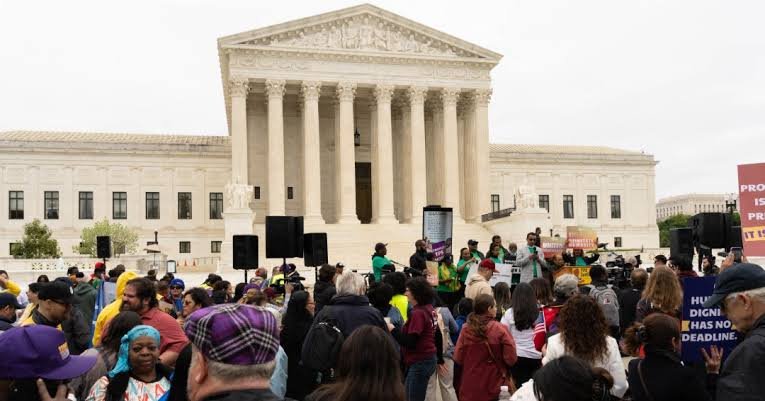
On June 25, 2026, the Supreme Court of the United States issued its highly anticipated decision in Mullin v. Doe (consolidated with Trump v. Miot), fundamentally altering the checks and balances governing humanitarian immigration programs. By ruling that the Immigration and Nationality Act (INA) bars judicial review of executive decisions to end TPS designations, the Court dissolved long-standing lower-court injunctions that had paused the termination of protections for nationals from Haiti and Syria. This article analyzes the legal mechanics of the decision, the immediate operational and Form I-9 reverification liabilities confronting American employers, and the systemic implications for over one million TPS beneficiaries nationwide.
Introduction
The administrative firewall shielding Temporary Protected Status (TPS) beneficiaries from deportation has been dismantled by the highest court in the United States. On June 25, 2026, the Supreme Court delivered a decisive 6–3 ruling affirming that federal courts lack the jurisdictional authority to review or overturn decisions by the Secretary of Homeland Security to terminate a country's TPS designation.
The decision marks a definitive victory for the executive branch's protectionist immigration agenda. By lifting the lower-court pauses that had artificially sustained TPS benefits for humanitarian migrants amidst multi-year litigations, the Supreme Court has set off an immediate regulatory scramble. For enterprise legal teams, HR departments, and vulnerable foreign workers, the ruling transforms TPS from an indefinitely extended safety net back into its original statutory definition: an explicitly temporary, politically contingent benefit
Background
Established by Congress under the Immigration Act of 1990, Temporary Protected Status gives the Secretary of Homeland Security the absolute discretion to grant temporary administrative relief to foreign nationals already present in the U.S. if their home countries are experiencing ongoing armed conflict, catastrophic environmental disasters, or other extraordinary, temporary conditions. While active, TPS status provides comprehensive protection from removal and issues formal Employment Authorization Documents (EADs). The current crisis traces back to late 2025, when then-DHS Secretary Kristi Noem published formal Federal Register notices terminating TPS designations for Syria and Haiti, citing material improvements in local safety baselines. Advocacy groups promptly sued, securing preliminary injunctions from federal district courts that temporarily frozen the terminations and extended work permits. The federal government appealed, asserting that Congress explicitly insulated these geopolitical, discretionary determinations from second-guessing by the judiciary.
Analysis
1. The Death of Non-Constitutional Judicial Review
Writing for the 6–3 majority in Mullin v. Doe, the Court held that the clear statutory language of the INA explicitly bars judicial review over non-constitutional claims challenging how the DHS Secretary executes, extends, or terminates a country's TPS status.
The High Bar for Claims: The Court rejected arguments that the executive branch violated administrative procedures or misevaluated country conditions.
Dismissal of Equal Protection Arguments: Crucially, the majority dismissed an equal protection challenge asserting that the termination of Haiti's TPS was racially motivated, concluding the claims completely failed to meet the high threshold required for preliminary injunctive relief.
2. The Dominos Falling Beyond Haiti and Syria
While the immediate face of the litigation directly governs roughly 334,000 affected immigrants from Haiti and Syria, the legal precedent acts as a structural execution order for an array of other contested designations. Corporate risk officers must realize that the ruling effectively seals the fate of outstanding injunctions protecting thousands of workers from other nations.
CountryActive Status / Operational ImpactHaiti & SyriaTerminations greenlit; lower courts must issue implementing orders within roughly 30 days.
VenezuelaCore designations already lapsed late last year; remaining iterations phase out by October 2026.
Burma, Ethiopia, Somalia, South SudanTerminations previously paused by district courts are highly likely to be rapidly dismissed under the new precedent.
Afghanistan, Cameroon, Honduras, Nepal, NicaraguaAlready phased out; previous terminations have taken full effect.
3. Immediate Liability and Form I-9 Risks for Corporate Employers
The operational exposure for enterprises employing TPS beneficiaries is immediate and severe. Prior to the SCOTUS ruling, DHS instructions had designated July 1, 2026 as the baseline expiration date for the automatic extension of EADs held by Haitian and Syrian beneficiaries.
Corporate Risk Warning: Allowing an employee to continue working past the official regulatory termination date without verifying an alternative, valid visa or work authorization exposes a company to direct statutory liability, substantial civil fines, and federal sanctions for knowingly employing unauthorized workers.
Legal teams must immediately execute a comprehensive audit of all Form I-9 and E-Verify records. Affected workers must be transitioned to valid alternative pathways—such as pending asylum applications, family-sponsored visas, or employment-based petitions—to avoid immediate termination and loss of access to employer-sponsored healthcare coverage.
Conclusion
The Supreme Court's ruling in Mullin v. Doe delivers absolute, unreviewable leverage to the executive branch over the country's humanitarian immigration framework. By stripping the courts of their ability to pause TPS rollbacks, the judiciary has set off a ticking clock for over one million workers and their corporate employers. As DHS prepares to issue its final implementation guidelines over the coming weeks, businesses must treat immigration compliance as an active corporate governance priority to insulate themselves from severe operational disruptions and federal enforcement penalties.
Citations
- 1.Mullin v. Doe, No. 25A952 & Trump v. Miot, No. 25A999 (U.S. Supreme Court, June 25, 2026) — Ruling on INA statutory bars to judicial review over TPS terminations.
- 2.Immigration and Nationality Act (INA), 8 U.S.C. § 1254a — Statutory framework establishing Temporary Protected Status and administrative protocols.
- 3.Department of Homeland Security (DHS) Federal Register Enforcement Directives on Syria (September 2025) and Haiti (November 2025) TPS Terminations.
- 4.U.S. Citizenship and Immigration Services (USCIS) Employer Compliance Manual, Form I-9 and E-Verify Employment Eligibility Verification Instructions (As updated June 2026). American Immigration Council & KFF Institutional Data Assessments on Healthcare and Economic Footprints of TPS Beneficiaries (June 2026)