
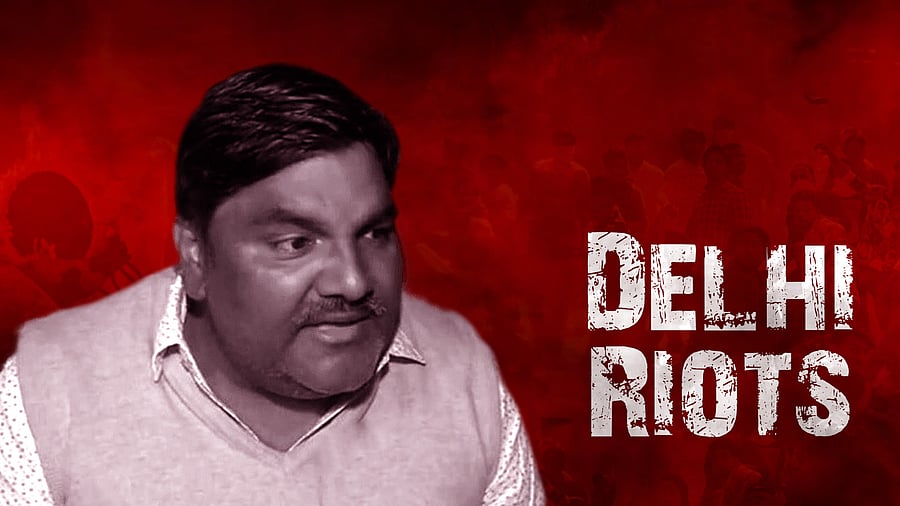
Tahir Hussain was member of unlawful assembly hostile to Hindus: Delhi Court in conviction order
Abstract
A Delhi court recently convicted former Aam Aadmi Party (AAP) councillor Tahir Hussain and four others for the murder of Intelligence Bureau (IB) officer Ankit Sharma during the 2020 Delhi riots. The court found Hussain to be a member of an unlawful assembly that harboured "animus against Hindus" and shared a common object of rioting, looting, and arson. This landmark judgment, delivered on July 13, 2026, underscores the robust application of collective criminal liability under Sections 141 and 149 of the Indian Penal Code, 1860. It highlights the judiciary's firm stance against communal violence and the accountability of individuals who participate in or instigate such unlawful gatherings, even without directly inflicting fatal injuries.
Introduction
In a significant development concerning the 2020 Delhi riots, a Delhi court on July 13, 2026, convicted former Aam Aadmi Party (AAP) councillor Tahir Hussain and four co-accused for the murder of Intelligence Bureau (IB) officer Ankit Sharma. The judgment, delivered by Additional Sessions Judge Praveen Singh of Karkardooma court, meticulously detailed how Hussain was part of a large, unlawful assembly that had gathered with a clear "animus against Hindus" and a common object to commit rioting, loot, arson, and cause damage to the property and persons of the Hindu community. This conviction is a pivotal moment in the ongoing legal proceedings related to the widespread communal violence that engulfed parts of North East Delhi in February 2020, resulting in significant loss of life and property.
The court's finding that Hussain was a member of an unlawful assembly with a specific communal animus is particularly noteworthy. It reinforces the principles of collective criminal liability enshrined in the Indian Penal Code, 1860, particularly Sections 141 and 149, which are crucial for prosecuting mob-related crimes where individual actions may be difficult to isolate. This article will delve into the statutory framework governing unlawful assembly and collective liability, analyse the court's application of these provisions in the Tahir Hussain case, and discuss the broader implications for legal practitioners dealing with cases of communal violence.
Background
The legal framework for addressing collective criminality in India is primarily laid down in Chapter VIII of the Indian Penal Code, 1860 (IPC), which deals with offences against public tranquillity. Central to this framework are the provisions relating to 'unlawful assembly'. Section 141 of the IPC defines an 'unlawful assembly' as an assembly of five or more persons whose common object falls into one of five specified categories, including using criminal force to overawe the government, resisting the execution of any law, committing mischief or criminal trespass or any other offence, forcibly taking possession of property, or compelling a person to do what they are not legally bound to do. An assembly that is initially lawful can subsequently become unlawful.
Section 142 of the IPC clarifies that whoever, being aware of facts which render any assembly an unlawful assembly, intentionally joins or continues in it, is deemed a member of such an assembly. The most potent provision in this context is Section 149 of the IPC, which establishes the principle of vicarious liability. It states that if an offence is committed by any member of an unlawful assembly in prosecution of the common object of that assembly, or such as the members of that assembly knew to be likely to be committed in prosecution of that object, every person who, at the time of the committing of that offence, is a member of the same assembly, is guilty of that offence. This section ensures that all members of an unlawful assembly are held accountable for crimes committed by any of their members, provided the act is linked to the common object or was a foreseeable consequence. The 2020 Delhi riots, during which Ankit Sharma was murdered, were a period of intense communal violence, which the Solicitor General of India has described as pre-planned and orchestrated.
Analysis
The Delhi court's conviction of Tahir Hussain and others in the Ankit Sharma murder case provides a critical illustration of the application of collective criminal liability under the IPC. The judgment explicitly found that Hussain was a member of a large crowd and unlawful assembly at Chand Bagh Pulia on February 25, 2020. Crucially, the court determined that this assembly possessed a specific "animus against Hindus" and a common object encompassing rioting, looting, arson, and causing harm to members of the Hindu community. This finding directly engages the requirements of Section 141 IPC, establishing the unlawful nature of the assembly based on its discriminatory common object.
The application of Section 149 IPC is central to the conviction. The court held Hussain responsible for the offences committed, including murder, even though it did not find that he personally inflicted the fatal injuries on Ankit Sharma. This aligns with the principle of vicarious liability, where membership in an unlawful assembly with a shared common object makes every member guilty of offences committed in its prosecution. The prosecution successfully demonstrated that the members of this assembly were heavily armed and knew that death was a likely outcome of their actions. This 'knowledge of likelihood' is a key component of Section 149, extending liability beyond direct participation to all who share the common object and foresee the potential for serious harm.
Indian jurisprudence, as seen in cases like *Mizaji v. State of U.P.* (AIR 1959 SC 572), has consistently held that the common object of an unlawful assembly can be inferred from the nature of the assembly, the weapons carried, and the conduct of its members. In *Mizaji*, where an armed assembly gathered to take forcible possession of land, the Supreme Court concluded that members knew murder was likely, thus holding all liable under Section 149. Similarly, in the present case, the court's finding regarding the assembly's armed nature and its specific animus against a community strongly supports the inference that members knew serious violence, including murder, was a likely consequence. While the Supreme Court has cautioned against mechanically invoking Section 149 based on mere presence, requiring proof of active sharing of the common object, the Delhi court's detailed findings on Hussain's role and the assembly's specific intent satisfy this higher threshold.
Hussain was convicted under various IPC sections, including 302 (murder), 147 (punishment for rioting), 148 (rioting, armed with deadly weapon), 149 (every member of unlawful assembly guilty of offence committed in prosecution of common object), 153A (promoting enmity between different groups), and 364 (kidnapping or abducting in order to murder). Notably, he was acquitted of charges related to criminal conspiracy (Section 120B) and abetment (Section 109) read with Section 149. This distinction is significant, indicating that the conviction rests on his direct membership and shared common object within the unlawful assembly, rather than a broader, pre-meditated conspiracy, although the Solicitor General has argued the riots themselves were pre-planned. The judgment thus meticulously applied the principles of collective liability, holding individuals accountable for the collective actions of a violent mob where a common unlawful object is established beyond reasonable doubt.
Conclusion
The conviction of Tahir Hussain and others for the murder of Ankit Sharma marks a crucial moment in the jurisprudence surrounding communal violence and collective criminal liability in India. It powerfully reaffirms the efficacy of Sections 141 and 149 of the Indian Penal Code, 1860, in holding individuals accountable for the actions of an unlawful assembly, particularly when a specific communal animus and a common object to commit grave offences are proven. The judgment sends an unequivocal message that those who instigate, lead, or actively participate in mob violence, even without directly committing the fatal act, will face severe legal consequences.
For legal practitioners, this case underscores the paramount importance of meticulously establishing the 'common object' and the 'knowledge of likelihood' among members of an unlawful assembly. The court's reliance on circumstantial evidence, the nature of the assembly, and the specific intent to target a community provides valuable guidance for prosecuting similar cases. As the sentencing phase and potential appeals unfold, this judgment will undoubtedly contribute to shaping the legal landscape for addressing communal violence, reinforcing the principle that collective criminal acts, especially those driven by discriminatory intent, will not go unpunished. Practitioners should closely monitor further developments to understand the full implications for future cases involving mob violence and public order offences.
Citations
- 1.Indian Penal Code, 1860, Section 109
- 2.Indian Penal Code, 1860, Section 120B
- 3.Indian Penal Code, 1860, Section 141
- 4.Indian Penal Code, 1860, Section 142
- 5.Indian Penal Code, 1860, Section 147
- 6.Indian Penal Code, 1860, Section 148
- 7.Indian Penal Code, 1860, Section 149
- 8.Indian Penal Code, 1860, Section 153A
- 9.Indian Penal Code, 1860, Section 302
- 10.Indian Penal Code, 1860, Section 364
- 11.Mizaji v. State of U.P., AIR 1959 SC 572
How does this affect your business?
Get an AI analysis of this article grounded in your jurisdictions, practice areas, and any policy documents you've uploaded to Wansom.