
Unpacking the Future of AI: The Promise of Embodied Intelligence
Abstract
The advent of embodied intelligence, where Artificial Intelligence (AI) systems manifest physically and interact with the real world, presents a unique set of legal challenges and opportunities for Ghana. While Ghana currently lacks a dedicated AI statute, the legal landscape is evolving, with the proposed Emerging Technologies Bill, 2025, poised to introduce a comprehensive regulatory framework. Presently, existing legislation such as the Data Protection Act, 2012 (Act 843), the Cybersecurity Act, 2020 (Act 1038), and the Electronic Transactions Act, 2008 (Act 772), indirectly govern aspects of AI deployment. This article explores the current legal preparedness of Ghana for embodied AI, highlighting critical areas like liability, data privacy, and the nascent debate on legal personhood for autonomous systems, urging practitioners to prepare for an imminent shift in regulatory paradigms.
Introduction
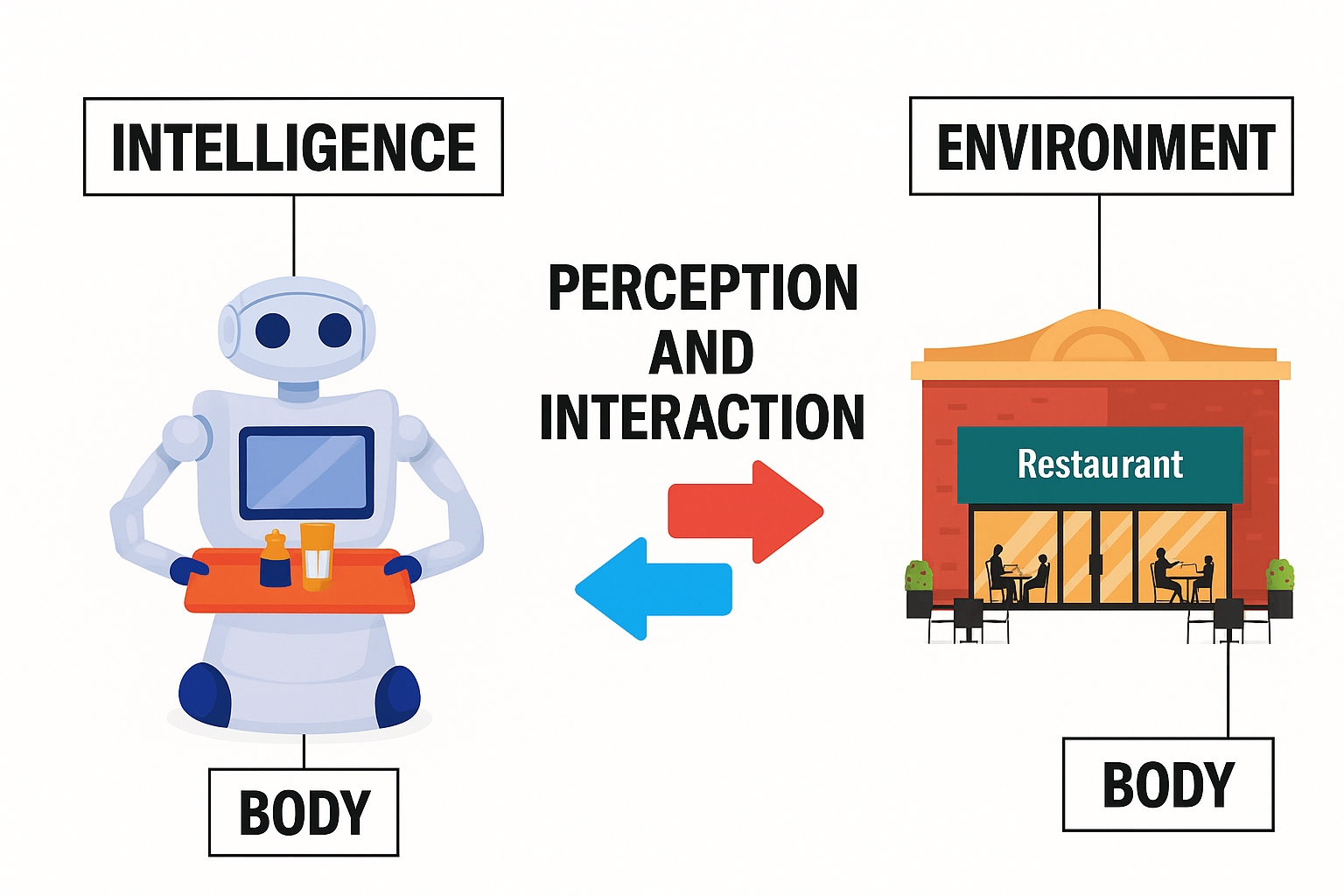
The concept of embodied intelligence, which enables Artificial Intelligence (AI) to physically manifest and interact with its environment much like living organisms, is rapidly transitioning from science fiction to tangible reality. This technological frontier promises transformative impacts across various sectors, from healthcare and manufacturing to logistics and public safety, by deploying machines capable of perception, learning, and autonomous physical action. As these sophisticated systems become increasingly integrated into daily life, they introduce complex legal questions that challenge traditional regulatory frameworks.
In Ghana, the discourse around AI has gained significant momentum, culminating in the launch of the National Artificial Intelligence Strategy (2025-2035) in April 2026, which outlines a strategic roadmap for ethical and inclusive AI adoption. However, the legal infrastructure specifically addressing the unique implications of embodied AI, particularly concerning accountability for physical actions and interactions, remains largely nascent. This article delves into Ghana's current legal and policy landscape, examining how existing laws apply to embodied intelligence and identifying critical gaps that the forthcoming Emerging Technologies Bill, 2025, seeks to address, thereby shaping the future practice of law in this dynamic domain.
Background
Ghana's legal framework for technology, while robust in certain areas, has not yet developed a standalone statute specifically for Artificial Intelligence. Nevertheless, several existing laws provide an indirect regulatory foundation for AI, particularly concerning data and digital transactions. The Data Protection Act, 2012 (Act 843), is paramount, regulating the collection, processing, storage, and disclosure of personal information and establishing the Data Protection Commission (DPC) to ensure compliance. This Act is critical for embodied AI systems that inevitably collect and process vast amounts of data, granting individuals rights such as the right to object to decisions made solely by automated processing.
Complementing data protection are the Cybersecurity Act, 2020 (Act 1038), which imposes security and incident reporting duties for critical information infrastructure, and the Electronic Transactions Act, 2008 (Act 772), which provides legal recognition for electronic records and transactions. These statutes form the current backbone for managing digital aspects of AI. However, recognizing the need for a more comprehensive approach, the Ministry of Communication, Digital Technology and Innovations has introduced the Emerging Technologies Bill, 2025. This proposed legislation, currently undergoing public participation, aims to establish a dedicated legal and regulatory framework for AI, blockchain, and other emerging technologies, including the establishment of an Emerging Technologies Agency. This bill signifies a proactive step towards addressing the regulatory vacuum for advanced AI applications, particularly those with physical manifestations.
Analysis
The physical nature of embodied intelligence introduces novel challenges, particularly in the realm of liability. Traditional tort law in Ghana, drawing heavily from English common law, typically assigns liability based on fault (negligence) or, in some cases, strict liability for defective products. However, when an autonomous embodied AI system causes harm, determining fault becomes complex. Questions arise: Is the manufacturer liable for a design defect? Is the programmer responsible for an algorithmic error? Or is the operator accountable for improper deployment or supervision? Current jurisprudence largely treats AI as a tool, meaning liability for its actions typically rests with the human operators, developers, or manufacturers. This approach, while pragmatic for now, may prove inadequate as AI systems gain greater autonomy and decision-making capabilities.
Data privacy remains a significant concern, directly addressed by the Data Protection Act, 2012 (Act 843). Embodied AI systems, by their nature, interact with and collect data from the physical environment, often including personal and biometric information. Compliance with Act 843's principles, such as lawful processing, purpose specification, data quality, and security safeguards, is therefore non-negotiable. The Act's provisions on automated decision-making, which grant individuals the right to request human intervention, are particularly relevant as embodied AI increasingly makes real-time decisions impacting individuals. The proposed Data Protection Bill, 2025, if passed, is expected to further strengthen these explicit duties for automated decision-making.
Beyond liability and data, the ethical deployment and safety of embodied AI are paramount. The National Artificial Intelligence Strategy (2025-2035) emphasizes responsible, ethical, and inclusive AI adoption, aligning with international recommendations like the UNESCO Recommendation on the Ethics of Artificial Intelligence. This policy framework underscores the need for robust governance structures to ensure fairness, transparency, and public trust, especially as AI and robotics are increasingly championed for enhancing occupational safety in hazardous sectors like mining and construction. The Emerging Technologies Bill, 2025, is expected to introduce regulatory sandboxes and standard-setting functions, which could be crucial for testing and certifying the safety and ethical compliance of embodied AI products before widespread deployment.
The debate surrounding legal personhood for AI systems is also gaining traction globally and in Ghana. While AI is currently viewed as property or a tool, the increasing sophistication and autonomy of embodied AI raise questions about whether they should be granted a form of legal personality, akin to corporations. Granting legal personhood could clarify liability, protect AI-generated intellectual property, and ensure ethical treatment. However, significant hurdles remain, including defining the scope of duties, liabilities, and accountability for non-biological entities. The current legal consensus in Ghana, as in many jurisdictions, is that AI lacks the consciousness and autonomy typically associated with legal personhood, making its actions attributable to human creators or operators. This position will likely be challenged as embodied AI evolves, necessitating a re-evaluation of traditional legal constructs.
Conclusion
The rise of embodied intelligence presents a pivotal moment for Ghana's legal and regulatory landscape. While existing statutes like the Data Protection Act, 2012 (Act 843), the Cybersecurity Act, 2020 (Act 1038), and the Electronic Transactions Act, 2008 (Act 772), offer foundational principles, they were not designed to address the complex, physical interactions and autonomous decision-making capabilities of embodied AI. The ongoing development of the Emerging Technologies Bill, 2025, and the National Artificial Intelligence Strategy (2025-2035) signal a crucial recognition by the Ghanaian government of the need for a dedicated and forward-looking regulatory framework.
For legal practitioners, this evolving environment necessitates proactive engagement. Advising clients on compliance with current data protection and cybersecurity laws, particularly concerning data collected by embodied AI, is immediately critical. Furthermore, staying abreast of the Emerging Technologies Bill's progress and its implications for product liability, ethical guidelines, and regulatory oversight will be essential. The future of embodied intelligence in Ghana hinges on striking a delicate balance between fostering innovation and ensuring robust safeguards for safety, privacy, and accountability. Practitioners must prepare to navigate a legal landscape that is rapidly adapting to the profound societal and economic shifts brought about by physically manifested AI.
Citations
- 1.Data Protection Act, 2012 (Act 843)
- 2.Cybersecurity Act, 2020 (Act 1038)
- 3.Electronic Transactions Act, 2008 (Act 772)
- 4.Ghana National Artificial Intelligence Strategy (2025-2035)
- 5.Emerging Technologies Bill, 2025 (Proposed Legislation)
- 6.Consumer Protection Act, 1987 (Act 239)
How does this affect your business?
Get an AI analysis of this article grounded in your jurisdictions, practice areas, and any policy documents you've uploaded to Wansom.