
Unregulated mercury use under microscope
Abstract
Malawi's burgeoning artisanal and small-scale gold mining (ASGM) sector faces a critical environmental and public health crisis due to the widespread and unregulated use of mercury. Despite the sector's potential for economic growth, informal miners often handle mercury without protective gear or technical knowledge, leading to severe health risks and environmental contamination. This article examines the existing legal framework in Malawi, including the Mines and Minerals Act, the Environmental Management Act, and the Occupational Safety, Health and Welfare Act, alongside Malawi's recent ratification of the Minamata Convention on Mercury. It highlights the gaps in enforcement, the challenges of formalising the ASGM sector, and the urgent need for robust regulatory measures and increased awareness to mitigate the devastating impacts of mercury pollution on communities and ecosystems.
Introduction
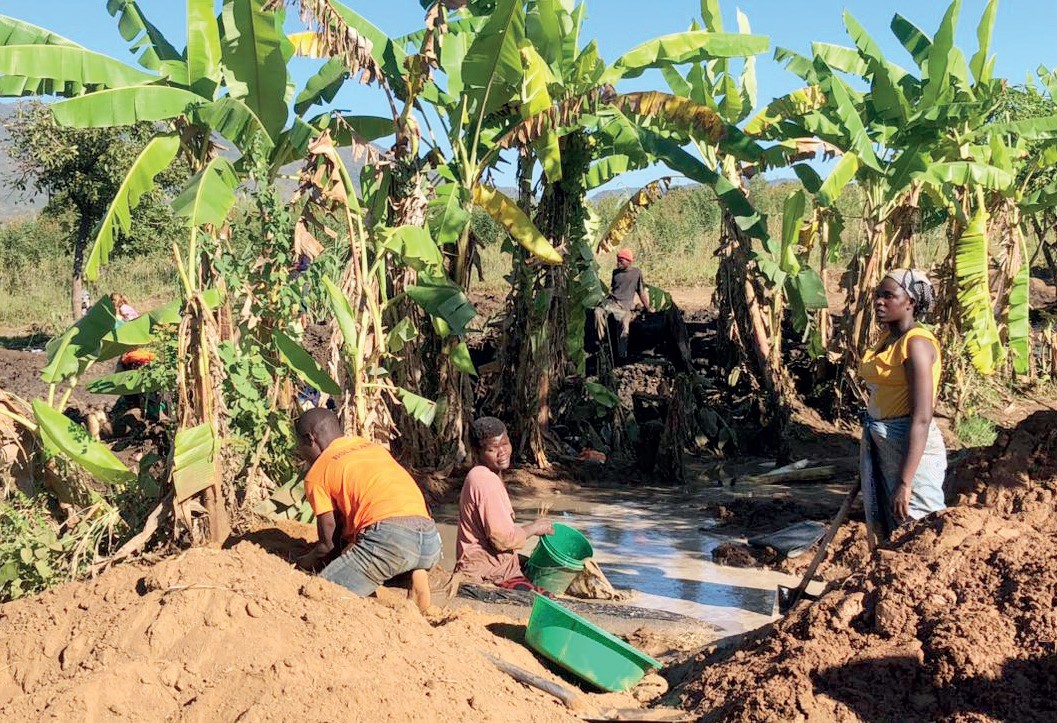
Malawi, a nation increasingly recognised for its rich mineral deposits, is experiencing a dual reality in its artisanal and small-scale gold mining (ASGM) sector. While the sector offers new avenues for economic growth and rural livelihoods, it simultaneously grapples with an escalating environmental and public health crisis. Informal miners, often operating outside formal regulatory structures, predominantly rely on mercury, and in some instances cyanide, to extract gold from ore. This practice, largely unregulated, exposes miners, their families, and surrounding communities to severe health and environmental hazards.
The pervasive use of mercury, a potent neurotoxin, without adequate protective measures or technical expertise, has led to irreversible health damage, including brain damage, developmental disorders, and organ failure. The environmental impact is equally dire, with mercury contaminating water sources and ecosystems. This article delves into the Malawian legal landscape governing mining, environmental protection, and public health, assessing its adequacy in addressing the challenges posed by unregulated mercury use in ASGM. It argues that while a foundational legal framework exists, its effective implementation and specific application to the informal ASGM sector, particularly concerning mercury, remain significant hurdles.
Background
The legal framework governing mining activities in Malawi is primarily anchored in the Mines and Minerals Act, 2019 (Act No. 25 of 2023), which repealed and replaced the outdated Mines and Minerals Act of 1981. This Act aims to regulate the development of Malawi's mineral resources in line with sustainable development principles, promoting economic growth, protecting citizens' welfare, and fostering investment. It sets out rules for exploration, mining, processing, and mineral sales, requiring licenses and adherence to specific conditions, including environmental reports.
Complementing the mining legislation is the Environmental Management Act, 2017 (Act No. 19 of 2017), which superseded the 1996 Act. This Act provides a comprehensive framework for environmental conservation and management, prescribing environmental standards and requiring Environmental Impact Assessments (EIAs) for projects likely to have significant adverse environmental impacts. Furthermore, the Occupational Safety, Health and Welfare Act, 1997 (Cap. 55:07, Laws of Malawi), along with its subsidiary Mining (Safety) Regulations, governs health and safety in mining workplaces, aiming to prevent injuries and occupational diseases. The Public Health Act, 1948 (Cap. 34:01, Laws of Malawi), while largely focused on infectious diseases and considered outdated, broadly addresses the preservation of public health.
A significant development in Malawi's commitment to addressing mercury pollution is its ratification of the Minamata Convention on Mercury. Malawi signed the Convention on October 10, 2013, ratified it on June 23, 2023, and it officially entered into force for the country on September 21, 2023. This international treaty obliges parties to reduce and, where feasible, eliminate mercury use in ASGM, control emissions and releases, and manage mercury waste. The Malawian government has since announced plans to implement a total import ban on mercury and mercury apparatus in the 2023/24 financial year, signalling a move towards compliance with its international obligations.
Analysis
Despite the existence of a robust legislative framework, the unregulated use of mercury in Malawi's ASGM sector highlights significant challenges in enforcement and the specific application of these laws. The Mines and Minerals Act, 2019, while promoting sustainable development, primarily targets formal mining operations. Artisanal miners often operate informally, making it difficult to enforce licensing requirements, environmental standards, or safety protocols. The Act's provisions for environmental reports and conditions on mineral rights, while applicable to licensed operations, struggle to reach the multitude of small-scale, often transient, informal miners.
The Environmental Management Act, 2017, mandates EIAs for projects with significant environmental impacts. However, the fragmented and often clandestine nature of ASGM makes comprehensive EIA implementation and monitoring exceptionally challenging. While the Act's broader provisions on pollution control and environmental standards should theoretically apply to mercury contamination, the practicalities of identifying, prosecuting, and remediating widespread, diffuse pollution from numerous small-scale operations are daunting. The Malawi Environmental Protection Authority (MEPA), though recently instituted, has limited institutional capacity to effectively regulate mercury use and management in this sector.
The Occupational Safety, Health and Welfare Act, 1997, aims to protect workers, but its effectiveness in the ASGM sector is hampered by a lack of awareness among miners regarding the dangers of mercury and the absence of protective equipment. Miners often handle mercury with bare hands, unaware of the severe health consequences. Furthermore, the Public Health Act, 1948, is largely ill-equipped to address modern public health concerns like heavy metal poisoning, being primarily designed for infectious diseases. Its outdated nature and insignificant penalties for non-compliance further limit its utility in tackling mercury-related health crises.
Malawi's ratification of the Minamata Convention on Mercury provides a powerful new legal instrument. Article 7 of the Convention specifically addresses ASGM, requiring parties to take steps to reduce and, where feasible, eliminate mercury use. This includes developing National Action Plans (NAPs) if ASGM is more than insignificant. The government's announced import ban on mercury and mercury apparatus is a direct step towards fulfilling these obligations. However, the challenge lies in translating these international commitments and national policy statements into effective, on-the-ground enforcement and behavioural change within the informal sector, particularly given the identified lack of technical and financial resources and systematic awareness plans.
Conclusion
The unregulated use of mercury in Malawi's artisanal and small-scale gold mining sector presents a complex legal and socio-economic challenge, demanding a multi-faceted approach. While Malawi possesses a foundational legal framework through the Mines and Minerals Act, the Environmental Management Act, and the Occupational Safety, Health and Welfare Act, their effective application to the informal ASGM sector, particularly concerning mercury, remains problematic. The recent ratification and entry into force of the Minamata Convention on Mercury for Malawi marks a pivotal moment, providing a clear international mandate and a framework for national action to curb mercury pollution.
For legal practitioners, this scenario underscores the growing importance of environmental law, human rights, and corporate social responsibility in the mining sector. Attorneys advising mining companies, both formal and those seeking to formalise ASGM operations, must be acutely aware of the evolving regulatory landscape, including the implications of the Minamata Convention and the impending mercury import ban. There is a pressing need for increased legal literacy and advocacy within mining communities, empowering miners to understand their rights and the dangers of unregulated practices. Future developments will likely focus on the implementation of National Action Plans under the Minamata Convention, enhanced inter-agency collaboration for enforcement, and sustained efforts to formalise the ASGM sector, offering safer, mercury-free alternatives. Legal professionals should monitor these developments closely and prepare to assist clients in navigating this critical transition towards more sustainable and responsible mining practices in Malawi.
Citations
- 1.Mines and Minerals Act, 2019 (Act No. 25 of 2023)
- 2.Environmental Management Act, 2017 (Act No. 19 of 2017)
- 3.Occupational Safety, Health and Welfare Act, 1997 (Cap. 55:07, Laws of Malawi)
- 4.Public Health Act, 1948 (Cap. 34:01, Laws of Malawi)
- 5.Minamata Convention on Mercury
- 6.C.N.197.2023.TREATIES-XXVII.17 (Depositary Notification) MINAMATA CONVENTION ON MERCURY KUMAMOTO, 10 OCTOBER 2013 Malawi: Ratification (June 23, 2023)
- 7.Malawi | Minamata Convention on Mercury (September 21, 2023)
- 8.Parties and Signatories | Minamata Convention on Mercury (June 26, 2026)
- 9.Mercury in Malawi: Doing Away with the Silent Killer - Unsustainable Magazine (October 04, 2025)
- 10.Unregulated mercury use under microscope - Malawi Nation (July 11, 2026)
- 11.Gold Mining in Malawi: Investment Opportunities, Regulatory Framework & Insights (February 02, 2026)
- 12.The Mining Licencing Regime in Malawi | Mineral & Energy Resources Law in Africa (June 02, 2020)
- 13.malawi - LEX Africa
- 14.Working environment versus workers' compliance with occupational safety and health protective equipment in Malawi's mining sector - Sabinet African Journals (November 10, 2021)
- 15.Technical file with Grain Malunga: Occupational Safety, Health and Environment in Mining (November 07, 2017)
- 16.National Report Pursuant to Article 21 - 2025: Submission #114 | Minamata Convention on Mercury (December 31, 2025)
- 17.“They Destroyed Everything”: Mining and Human Rights in Malawi | HRW (September 27, 2016)
- 18.MALAWI COUNTRY PROFILE ON OCCUPATIONAL SAFETY AND HEALTH 2009 - International Labour Organization
- 19.(PDF) Working environment versus workers' compliance with occupational safety and health protective equipment in Malawi's mining sector - ResearchGate (June 18, 2021)
- 20.Chap1 - Malawi SDNP
- 21.World Bank Document
- 22.Environment Management Act (No. 19 of 2017) - Climate Change Laws of the World
- 23.Public Health Act 1948 | PolicyVault.Africa
- 24.A Review of the Public Health Act in Malawi: A Case for Reform and Consolidation - Preprints.org (April 02, 2020)
- 25.Public Health Act (Chapter 34:01) | AMP EID
- 26.Environment Management Act, 2017 (No. 19 of 2017) | AMP EID
- 27.Mines and Minerals Act - MWEITI
- 28.mines & minerals policy of malawi - National Planning Commission
- 29.MALAWI REPORT MERCURY INITIAL ASSESSMENT UNDER THE MINAMATA CONVENTION ON MERCURY (January 03, 2021)
- 30.A Review of the Public Health Act in Malawi: A Case for Reform and Consolidation (April 28, 2020)
How does this affect your business?
Get an AI analysis of this article grounded in your jurisdictions, practice areas, and any policy documents you've uploaded to Wansom.