
Violence, Bribery Claims Put Ol Kalou By-Election in Jeopardy
Abstract
The upcoming Ol Kalou by-election in Kenya faces significant legal jeopardy following widespread allegations of voter bribery, illegal campaigning beyond stipulated hours, and politically-linked violence, including a fatality. The Independent Electoral and Boundaries Commission (IEBC) has launched investigations into these claims, warning of potential disqualification of candidates or even postponement of the election if the integrity of the process is compromised. This article examines the legal framework governing electoral conduct in Kenya, focusing on the Elections Act, 2011, and the Election Offences Act, 2016, and discusses the high evidentiary bar for proving such malpractices in election petitions. It highlights the critical role of the IEBC, the Directorate of Public Prosecutions, and the judiciary in upholding the constitutional principles of free and fair elections amidst these challenges.
Introduction
The integrity of Kenya's electoral process is once again under scrutiny, with the forthcoming Ol Kalou by-election embroiled in serious allegations of electoral malpractices. Reports from the constituency detail claims of rampant voter bribery, campaigning conducted outside the legally permitted hours, and an alarming incident of violence that resulted in one fatality on July 1, reportedly linked to heightened political activity.
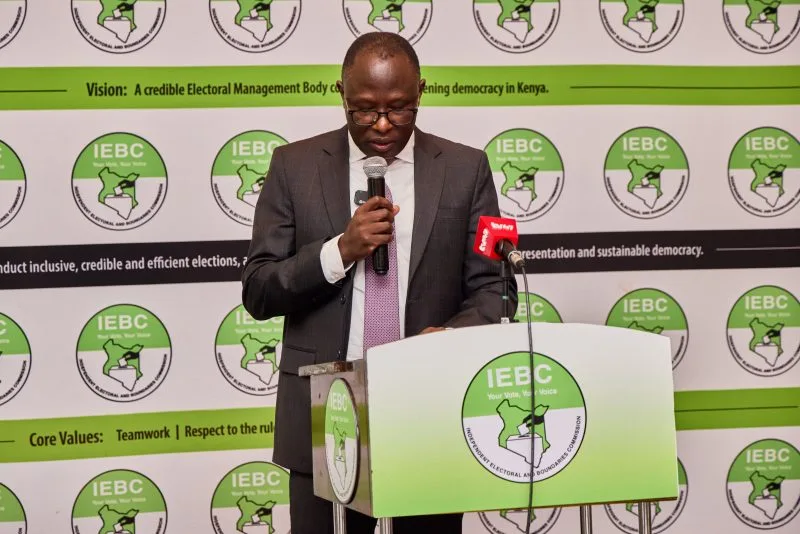
These allegations have prompted the Independent Electoral and Boundaries Commission (IEBC) to dispatch investigative teams to Ol Kalou, signalling a potential threat to the legitimacy of the by-election. IEBC Chairperson Erastus Ethekon has publicly stated that if culpability or breaches of the electoral code of conduct are found, appropriate remedies, including candidate disqualification or even postponement of the election, will be considered. This situation underscores the persistent challenges in safeguarding democratic principles and the rule of law in Kenyan elections, placing a spotlight on the robustness of the country's electoral legal framework and its enforcement mechanisms.
This article will delve into the statutory and doctrinal underpinnings of electoral integrity in Kenya, analysing the specific offences alleged in Ol Kalou against the backdrop of the Elections Act, 2011, and the Election Offences Act, 2016. It will further explore the judicial interpretation of these laws, particularly concerning the standards of proof required for nullifying election results, and discuss the broader implications for practitioners involved in election dispute resolution and the future of electoral justice in Kenya.
Background
Kenya's electoral landscape is governed primarily by the Constitution of Kenya, 2010, the Elections Act, 2011 (No. 24 of 2011), and the Election Offences Act, 2016 (No. 37 of 2016). The Constitution, under Article 81, mandates that elections must be free, fair, and credible, while Article 88 establishes the Independent Electoral and Boundaries Commission (IEBC) as the body responsible for conducting and supervising elections and referenda.
The Elections Act, 2011, provides the comprehensive framework for the conduct of elections, including voter registration, nomination of candidates, and the determination and declaration of results. Crucially, it empowers the IEBC to regulate the campaign period, which is typically gazetted and includes specific daily campaign hours. Any campaigning outside these designated periods is deemed unlawful. The Act also outlines the process for challenging election results through election petitions, which are heard by designated election courts.
Complementing the Elections Act is the Election Offences Act, 2016, which criminalises various acts that undermine electoral integrity. This Act specifically addresses offences such as bribery (Section 9), undue influence (Section 10), use of force or violence during the election period (Section 11), and breaches of the Electoral Code of Conduct (Section 20). It also grants the Director of Public Prosecutions (DPP) the power to order investigations and prosecute offences under the Act, with proceedings typically commenced within twelve months of the election date. These statutes collectively aim to ensure that elections are not only free and fair but also conducted in an environment free from coercion, corruption, and violence.
Analysis
The allegations emanating from the Ol Kalou by-election touch upon several critical electoral offences. Voter bribery, as defined under Section 9 of the Election Offences Act, 2016, occurs when a person directly or indirectly offers a bribe to influence a voter to vote or refrain from voting for a particular candidate or political party. This offence also extends to influencing attendance at political events or unlawfully influencing election results. The Act imposes severe penalties, including fines not exceeding two million shillings or imprisonment for up to six years, or both, upon conviction. The IEBC has noted that both the giver and receiver of a bribe are liable under the law.
Campaigning beyond legally permitted hours, including early campaigning, constitutes a breach of the Electoral Code of Conduct, an offence under Section 20 of the Election Offences Act. The Elections Act, 2011, stipulates that the official campaign period is determined and gazetted by the IEBC, commencing no more than 60 days before a general election, with specific daily hours (e.g., 7:00 a.m. to 6:00 p.m.). The High Court has previously affirmed that any campaigning outside the IEBC-gazetted period infringes the Elections Act and violates constitutional principles. The IEBC has expressed concern over the growing trend of premature campaigns and is seeking enhanced powers to address such violations.
The claims of violence and the tragic death in Ol Kalou fall under Section 11 of the Election Offences Act, which prohibits the use of force or violence during an election period. Such acts, alongside undue influence (Section 10), directly undermine the constitutional right to free and fair elections. The National Police Service (NPS), in conjunction with the IEBC, is responsible for ensuring election security and investigating such criminal acts. The involvement of the Directorate of Public Prosecutions (DPP) is crucial in prosecuting these criminal offences, as highlighted by the DPP's recent establishment of an Elections Preparedness Committee.
In election petitions, the evidentiary bar for proving electoral offences like bribery and violence is notably high. Kenyan courts have consistently held that such allegations must be proven not merely on a balance of probabilities, but to a standard approaching criminal certainty. Furthermore, for an election result to be nullified, the petitioner must demonstrate that the alleged irregularities or illegalities substantially affected the outcome of the election. The Supreme Court, in various pronouncements, has emphasized that minor administrative lapses that do not impact the overall fairness or credibility of the election will not lead to nullification. This stringent test, while aimed at upholding the sanctity of the vote, often makes it challenging for petitioners to overturn results based on malpractices, even when their presence is acknowledged.
Conclusion
The unfolding situation in the Ol Kalou by-election serves as a stark reminder of the persistent challenges in upholding electoral integrity in Kenya. For legal practitioners, these developments underscore the critical importance of meticulous evidence gathering and strategic litigation in election petitions. The high evidentiary threshold for proving electoral offences, particularly bribery, and the materiality test for nullification, necessitate robust and compelling proof that alleged malpractices not only occurred but also substantially altered the election's outcome. This requires a deep understanding of both the statutory framework and judicial precedents.
Moving forward, all eyes will be on the IEBC's investigations into the Ol Kalou allegations, as its findings and subsequent actions will set a precedent for future electoral conduct. The potential for candidate disqualification or election postponement highlights the Commission's crucial role as the primary custodian of electoral standards. Furthermore, the involvement of the Directorate of Public Prosecutions and the National Police Service in investigating criminal aspects, including the reported death, signals a broader commitment to electoral justice. Practitioners should remain vigilant, advising political actors on strict adherence to the Elections Act, 2011, and the Election Offences Act, 2016, to foster an environment where democratic choices are made freely, fairly, and without fear or undue influence.
Citations
- 1.Constitution of Kenya, 2010
- 2.Elections Act, 2011 (No. 24 of 2011)
- 3.Election Offences Act, 2016 (No. 37 of 2016)
- 4.Independent Electoral and Boundaries Commission Act, 2011 (No. 9 of 2011)
- 5.National Police Service Act, 2011 (No. 11A of 2011)
- 6.Dennis Magare Makori & another v Independent Electoral and Boundaries Commission & 3 others [2018] KECA 431 (KLR)
- 7.Legal Advice Centre t/a Kituo Cha Sheria & Another v IEBC & Others, High Court Ruling, Petition No. E032 of 2023 (cited in 'Before the Ballot, There's Duty: Cease Early Campaigning and Serve the Nation', July 04 2025)
- 8.The Kenya Gazette, Vol. CXXIV—No. 207, Gazette Notice No. 11945, 4th October, 2022 (IEBC Notice on By-Elections)
How does this affect your business?
Get an AI analysis of this article grounded in your jurisdictions, practice areas, and any policy documents you've uploaded to Wansom.