
When justices wade into politics
Briefly Analysis
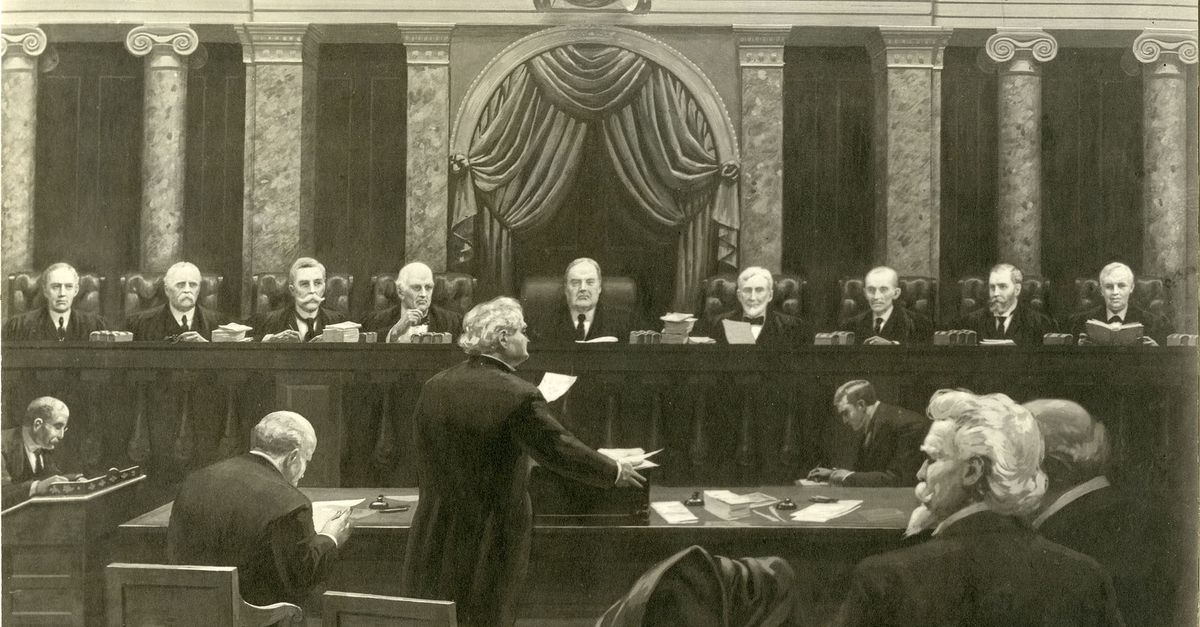
Scholar Robert Dahl, writing back in 1957, once remarked that “Americans are not quite willing to accept the fact that [the Supreme Court] is a political institution and not quite capable of denying it; so that frequently we take both positions at once.”Generally, the justices have refrained from explicitly commenting on politics. That custom, however, is more a matter of practice and institutional norms than a hard-and-fast rule, and over more than two centuries, justices have at times set it aside while sitting on the bench.As the current court continues to generate criticism from both sides of the aisle, it seemed relevant to take a deep dive into the (somewhat) rare occasions when justices have openly – and often controversially – done so.Politics from the benchIn the court’s earliest years, the judicial and political roles were hard to separate – in ways that might shock those who currently accuse the court of partisanship. Besides often being heavily invested in political causes (e.g., campaigning on behalf of elected officials or seeking elected office themselves), the early justices often used addresses to grand juries while circuit riding as occasions for commentary beyond the strictly legal. At that time, such bodies were not simply assembled to decide whether to indict individuals. Instead, the responsible circuit justice would address the grand jurors at the start of each court term, “laying out their duty and the manner in which it was to be performed,” and “lect