
Cameroun : le Minesup réajuste le régime des études en capacité
Abstract
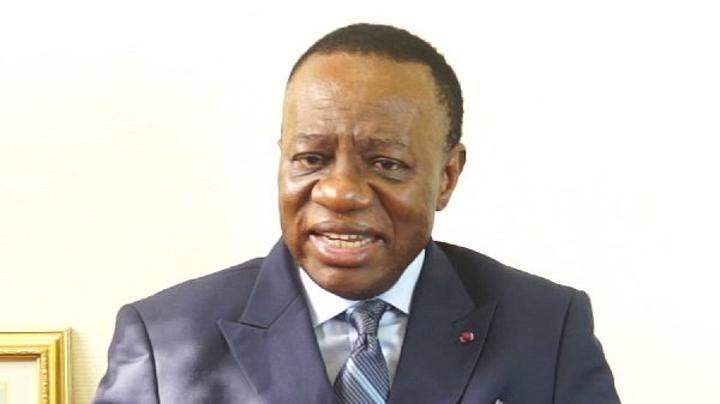
The Cameroonian Minister of State, Minister of Higher Education, Jacques Fame Ndongo, has issued a new arrêté dated July 3, 2026, significantly adjusting the regime governing "études en capacité" (capacity studies) across the nation. This new regulation, which modifies a previous framework from October 18, 2017, expands the available training domains from an unspecified scope to four distinct areas: Law and Political Sciences, Economics and Management, Sciences and Techniques, and Arts, Letters and Human Sciences. Crucially, the arrêté also tightens the conditions under which private higher education institutions (IPES) can offer these programs, mandating academic tutelage agreements with geographically proximate and habilitated public universities, along with the remittance of public university fees. This development aims to enhance the quality and oversight of these foundational higher education pathways, impacting both public and private providers and prospective students.
Introduction
The landscape of higher education in Cameroon has recently undergone a significant regulatory adjustment with the promulgation of a new arrêté by the Minister of State, Minister of Higher Education, Jacques Fame Ndongo, on July 3, 2026. This instrument specifically redefines the regime for "études en capacité," a crucial pathway for many Cameroonians seeking access to university-level education. The modifications introduced by this arrêté are poised to have far-reaching implications for both public and private higher education institutions, as well as for the thousands of students aspiring to pursue these foundational studies.
This article delves into the specifics of the new ministerial order, analyzing its provisions concerning the expanded domains of study and the stringent conditions imposed on private institutions. It aims to provide legal professionals with a comprehensive understanding of the updated regulatory framework, highlighting its potential impact on academic governance, quality assurance, and the operational modalities of private higher education providers. The analysis will also consider the broader statutory context within which these changes are enacted, offering insights into compliance requirements and potential areas of legal scrutiny.
The core thesis of this analysis is that the 2026 arrêté represents a concerted effort by the Cameroonian government to standardize and elevate the quality of "études en capacité" programs, particularly by reinforcing the supervisory role of state universities over private institutions. While this move is intended to safeguard academic standards and ensure equitable access, it also introduces new administrative and financial obligations that legal practitioners advising educational entities must carefully navigate.
Background
Higher education in Cameroon is primarily governed by a robust legal framework designed to ensure quality and accessibility. Central to this framework is Law No. 2023/007 of July 25, 2023, on the Orientation of Higher Education in Cameroon, which sets the general legal and fundamental orientations for the sector. This law builds upon earlier foundational legislation, notably Law No. 005 of April 16, 2001, which established the state's role in organizing and controlling higher education. Further detailed provisions are found in Decree No. 93/027 of January 19, 1993, concerning common provisions applicable to universities, as amended and supplemented by Decree No. 2005/342 of September 10, 2005.
"Études en capacité," often referred to as "Capacité en Droit et Sciences économiques," serve as a vital alternative pathway to higher education for individuals who may not possess a Baccalauréat or its equivalent. This two-year program typically opens doors to various administrative competitive examinations at the Baccalauréat level and facilitates professional reclassification in sectors such as the judiciary. The regime for these studies was previously structured by an arrêté of the Minister of Higher Education, specifically the Arrêté of October 18, 2017, which defined the curriculum, evaluation methods, and teaching programs for "Capacité" in faculties of legal and political sciences.
The regulation of private higher education institutions (IPES) is also a critical component of the Cameroonian system. Decree No. 2001/832/PM of September 19, 2001, sets out the common rules applicable to IPES, complemented by Arrêté No. 01/0096/MINESUP of December 7, 2001, which details the conditions for their creation and operation. A key aspect of this oversight is the concept of academic tutelage, further elaborated by Circular No. 13/0003/MINESUP/SG/DDES/DAJ of October 22, 2013. This circular defines academic tutelage as a pedagogical control exercised by a state university over an IPES to guarantee the quality of teaching and the validity of diplomas awarded. These foundational texts provide the legal backdrop against which the latest ministerial arrêté must be understood and implemented.
Analysis
The Arrêté of July 3, 2026, issued by the Minister of State, Minister of Higher Education, introduces several pivotal changes to the regime of "études en capacité" in Cameroon. Foremost among these is the expansion of the training domains. While the previous regime, established by the Arrêté of October 18, 2017, primarily focused on legal and economic sciences, the new text broadens the scope to include four distinct fields: Droit et Sciences politiques, Economie et Gestion, Sciences et Techniques, and Arts, Lettres et Sciences humaines. This expansion reflects a strategic move to diversify access to higher education and align "capacité" programs with a wider array of national development needs and student aspirations.
A significant portion of the new arrêté is dedicated to regulating the involvement of private higher education institutions (IPES) in offering these programs. The text explicitly states that IPES can only provide "études en capacité" through an academic tutelage agreement (convention de tutelle académique) with a state university. This requirement is not new, as the principle of academic tutelage for IPES is enshrined in earlier regulations, such as Arrêté No. 01/0096/MINESUP of December 7, 2001, and further detailed in Circular No. 13/0003/MINESUP/SG/DDES/DAJ of October 22, 2013. However, the 2026 arrêté imposes additional specific conditions: the state university must be "geographically close" to the private institution and must itself be "habilitated to train in the domain" concerned. This geographical proximity clause, while seemingly straightforward, may present practical challenges in sparsely populated regions or for IPES located far from established state university campuses.
Furthermore, the arrêté mandates that private institutions must remit to their tutelary state university fees equivalent to those applied in public institutions. This provision aims to standardize the financial aspect of these programs and potentially ensure a revenue stream for public universities, which often bear the burden of quality assurance and diploma validation. However, it could also impact the business models of private institutions, potentially leading to increased tuition costs for students or reduced profit margins for providers. Legal professionals advising IPES will need to meticulously review existing tutelage agreements and financial structures to ensure compliance with these new requirements.
Admission to "études en capacité" remains competitive, requiring candidates to pass an examination with a minimum average of 10/20. The eligibility criteria, which include holding a BEPC, CAP, or GCE O'level (with at least three subjects excluding religion) for salaried individuals, and a minimum age of 21 for non-salaried candidates, are maintained. The examination typically comprises a text summary and a general culture test. The emphasis on a rigorous entrance examination, coupled with the enhanced oversight of programs, underscores the Ministry's commitment to maintaining academic standards and ensuring that only adequately prepared candidates access these pathways to higher education. The requirement for prior ministerial validation of programs for public institutions also reinforces centralized control over curriculum development and quality.
Conclusion
The Arrêté of July 3, 2026, represents a significant recalibration of the regulatory framework for "études en capacité" in Cameroon, reflecting a clear intent by the Ministry of Higher Education to enhance quality, standardize offerings, and reinforce state oversight. The expansion of training domains to include Law and Political Sciences, Economics and Management, Sciences and Techniques, and Arts, Letters and Human Sciences broadens the scope of opportunity for aspiring students, while simultaneously demanding greater rigor in program design and delivery.
For legal practitioners, the implications of this new arrêté are substantial, particularly for those advising private higher education institutions. The reinforced requirements for academic tutelage, including geographical proximity and habilitation of the supervising state university, alongside the mandate for fee remittance, necessitate a thorough review of existing operational models and contractual agreements. Compliance with these provisions will be paramount to avoid sanctions and ensure the continued accreditation of "capacité" programs offered by IPES. Practitioners should advise their clients on the need for proactive engagement with state universities to formalize or update tutelage conventions and to adjust financial planning accordingly. Moving forward, it will be crucial to monitor the implementing decrees and guidelines that may further clarify aspects such as the definition of "geographically close" and the precise mechanisms for fee remittance, as these will shape the practical application and potential challenges of this important regulatory reform.
Citations
- 1.Arrêté du Ministre d'État, Ministre de l'Enseignement Supérieur, Jacques Fame Ndongo, du 03 juillet 2026 (as referenced in Journal du Cameroun, July 15, 2026, and L'Économie, July 14, 2026).
- 2.Arrêté n°26/00762/MINESUP/SG/IGS/DDES/DAJ du 03 juillet 2026 (as referenced in L'Économie, July 14, 2026).
- 3.Arrêté n° ______ /MINESUP/SG/IGS/DDES/DAJ du 03 JUIL 2026 fixant les Dispositions Générales Applicables à l'Organisation des Enseignements dans les Universités d'État du Cameroun (as referenced in Maathis, July 03, 2026).
- 4.Arrêté du 18 octobre 2017 (as referenced in L'Économie, July 14, 2026).
- 5.Loi n° 2023/007 du 25 juillet 2023 portant Orientation de l'Enseignement Supérieur au Cameroun (as referenced in PRC.cm, July 25, 2023, and Minesup documents, July 03, 2026, July 06, 2026, and GPE Cameroun Guide de l'Enseignant).
- 6.Loi n° 005 du 16 avril 2001 portant orientation de l'enseignement supérieur (as referenced in Scribd, and L'aménagement linguistique dans le monde, and PRC.cm, June 22, 2020, and Minesup documents, December 05, 2003, April 28, 2017, September 14, 2006).
- 7.Décret n° 93/027 du 19 janvier 1993 portant dispositions communes aux Universités, modifié et complété par le Décret n° 2005/342 du 10 septembre 2005 (as referenced in Minesup documents, July 03, 2026, July 06, 2026, September 14, 2006, May 16, 2017, and PRC.cm, June 22, 2020, and GPE Cameroun Guide de l'Enseignant).
- 8.Décret n° 2001/832/PM du 19 septembre 2001 fixant les règles communes applicables aux institutions privées d'enseignement supérieur (as referenced in Minesup documents, December 05, 2003, July 03, 2026, July 06, 2026, and Scribd, December 07, 2001).
- 9.Arrêté n° 01/0096/MINESUP du 07 décembre 2001 fixant les conditions de création et de fonctionnement des institutions privées d'enseignement supérieur (as referenced in CampusJeunes, October 22, 2013, and Scribd, December 07, 2001, and TAICEP Overview of Higher Education in Cameroon).
- 10.Circulaire n°13/0003/MINESUP/SG/DDES/DAJ du 22 octobre 2013 relative aux modalités d'exercice et aux conditions de la tutelle académique des Instituts Privés d'Enseignement Supérieur (IPES) par les Universités d'Etat (as referenced in CampusJeunes, October 22, 2013, and France Éducation international, July 2025).
How does this affect your business?
Get an AI analysis of this article grounded in your jurisdictions, practice areas, and any policy documents you've uploaded to Wansom.