
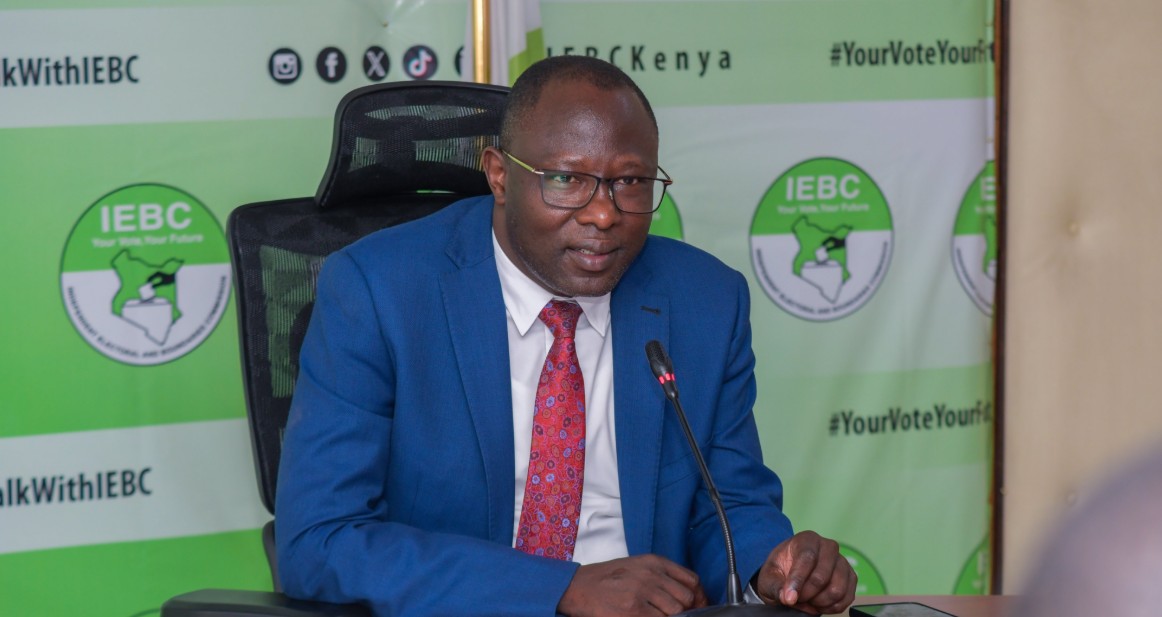
IEBC begins public participation on campaign financing regulations
Abstract
The Independent Electoral and Boundaries Commission (IEBC) of Kenya has initiated public participation on its Draft Election Campaign Financing Regulations, authorised expenditures, and spending limits for the 2027 General Election. This move is a critical step towards operationalising the long-dormant Election Campaign Financing Act, 2013, which aims to foster transparency, accountability, and a level playing field in Kenyan elections. The proposed regulations, which include a KSh 4.44 billion spending cap for presidential candidates, follow a significant High Court ruling that clarified the IEBC's mandate to set these limits without parliamentary approval, provided there is robust public engagement. This article examines the legal framework, historical challenges, and implications of these proposed regulations for political parties, candidates, and the broader democratic process in Kenya.
Introduction
Kenya's Independent Electoral and Boundaries Commission (IEBC) has embarked on a crucial public participation exercise concerning the Draft Election Campaign Financing Regulations, authorised expenditures, and spending limits for the upcoming 2027 General Election. This initiative, announced with a deadline for submissions by July 15, 2026, marks a significant effort to bring much-needed structure and transparency to the financing of political campaigns in the country. The proposed regulations are designed to provide a comprehensive framework for managing campaign funds and regulating election-related expenditure by candidates and political parties, directly addressing long-standing concerns about the influence of money in politics.
For practising attorneys and legal professionals, these developments are of paramount importance. The effective regulation of campaign finance is central to upholding the integrity of the electoral process, promoting fair competition, and curbing corruption. The IEBC's current undertaking is not merely a procedural step but a response to constitutional mandates and past judicial pronouncements that have underscored the necessity of a robust, enforceable campaign finance regime. This article will delve into the legal underpinnings of these regulations, trace the historical challenges in their implementation, analyse the key provisions of the proposed framework, and discuss the practical implications for stakeholders in the Kenyan political and legal landscape.
Background
The legal foundation for regulating election campaign financing in Kenya is firmly rooted in the Constitution of Kenya, 2010. Article 88(4)(i) explicitly mandates the IEBC to regulate the amount of money that may be spent by or on behalf of a candidate or political party in respect of any election. This constitutional imperative is operationalised by the Election Campaign Financing Act, 2013 (No. 42 of 2013), which was enacted to provide for the regulation, management, expenditure, and accountability of election campaign funds during election and referendum campaigns. Complementary legislation, such as the Elections Act, 2011 (No. 24 of 2011) and the Political Parties Act, 2011 (No. 11 of 2011), further contributes to the overall electoral legal framework, addressing aspects like public funding for political parties and prohibiting foreign government donations.
Despite this robust legal framework, the implementation of campaign finance regulations in Kenya has historically faced significant hurdles. The Election Campaign Financing Act, 2013, has not been fully operationalised for previous election cycles, including the 2017 and 2022 General Elections, largely due to a lack of political will, parliamentary rejection of proposed regulations, and insufficient public participation. This regulatory vacuum has been widely criticised for fostering an environment conducive to illicit funds, opaque political donations, and increased costs of political competition, thereby undermining democratic accountability and electoral integrity.
Analysis
A pivotal development that paved the way for the current public participation exercise was the High Court's ruling in *Katiba Institute et al v. Independent Electoral and Boundaries Commission et al and the Law Society of Kenya* [2022] eKLR. This landmark decision clarified that the provisions of Sections 12, 18, and 19 of the Election Campaign Financing Act, 2013, which empower the IEBC to set spending limits and disclosure requirements, do not require parliamentary approval. Crucially, the Court declared Section 29 of the Act unconstitutional to the extent that it mandated parliamentary approval for such regulations, thereby affirming the IEBC's independence in this critical area, provided that the regulations are subjected to appropriate public engagement. This ruling effectively removed a significant roadblock that had previously allowed Parliament to frustrate the operationalisation of campaign finance laws.
The proposed regulations, now open for public input, aim to address the gaps identified in previous electoral cycles. They cover critical aspects such as contributions, spending limits, authorised expenditures, disclosures, monitoring, and record-keeping. Specifically, the IEBC has proposed a campaign spending limit of KSh 4.44 billion for presidential candidates and an overall cap of KSh 17.7 billion for political parties for the 2027 General Election. These limits are to be prescribed by Gazette notice at least twelve months before a general election, as stipulated by Sections 12, 18, and 19 of the ECFA. The regulations also detail permissible election expenses, including transportation, media advertising, branding, campaign materials, and payments to agents.
Furthermore, the draft regulations are expected to reinforce provisions on the sources of campaign funds, including limits on total contributions and contributions from a single source, as well as the regulation of loans and paid-up media coverage. A notable inclusion is the prohibition of direct donations from foreign governments, aligning with efforts to safeguard national sovereignty in electoral processes. The framework also mandates the reporting of surplus campaign funds within three months post-election, with provisions for their submission to political parties or designated charitable organisations.
However, the effectiveness of these regulations will hinge on robust enforcement and genuine political will. Past experiences highlight challenges such as weak enforcement capacity, lack of transparency in party finances, and limited public access to political finance information. The principle of public participation, enshrined in Article 10 of the Constitution, is not merely a formality but requires meaningful engagement to ensure that the final regulations reflect the will and needs of the people. The IEBC's commitment to this process, especially in light of the High Court's emphasis on public engagement, will be crucial in building public confidence and ensuring the legitimacy of the regulatory framework.
Conclusion
The IEBC's current public participation drive on campaign financing regulations represents a pivotal moment for electoral integrity in Kenya. By seeking input on the draft regulations, the Commission is not only fulfilling its constitutional and statutory mandate but also responding to a history of challenges that have undermined the effective regulation of money in politics. The proposed framework, if effectively implemented and enforced, holds the promise of fostering greater transparency, accountability, and a more equitable electoral landscape for the 2027 General Election.
For legal practitioners, this period demands close attention. Advising political parties, candidates, and other stakeholders will require a thorough understanding of the finalised regulations, including the prescribed spending limits, disclosure requirements, and permissible expenditures. Practitioners should also be prepared to navigate potential compliance issues and enforcement actions by the IEBC. The successful operationalisation of these regulations will ultimately depend on sustained political will, robust oversight, and continued public vigilance, making it imperative for legal professionals to remain engaged and informed as Kenya strives to strengthen its democratic processes.
Citations
- 1.Constitution of Kenya, 2010
- 2.Election Campaign Financing Act, 2013 (No. 42 of 2013)
- 3.Elections Act, 2011 (No. 24 of 2011)
- 4.Political Parties Act, 2011 (No. 11 of 2011)
- 5.Katiba Institute et al v. Independent Electoral and Boundaries Commission et al and the Law Society of Kenya [2022] eKLR (High Court Petition No. E409 of 2021)