
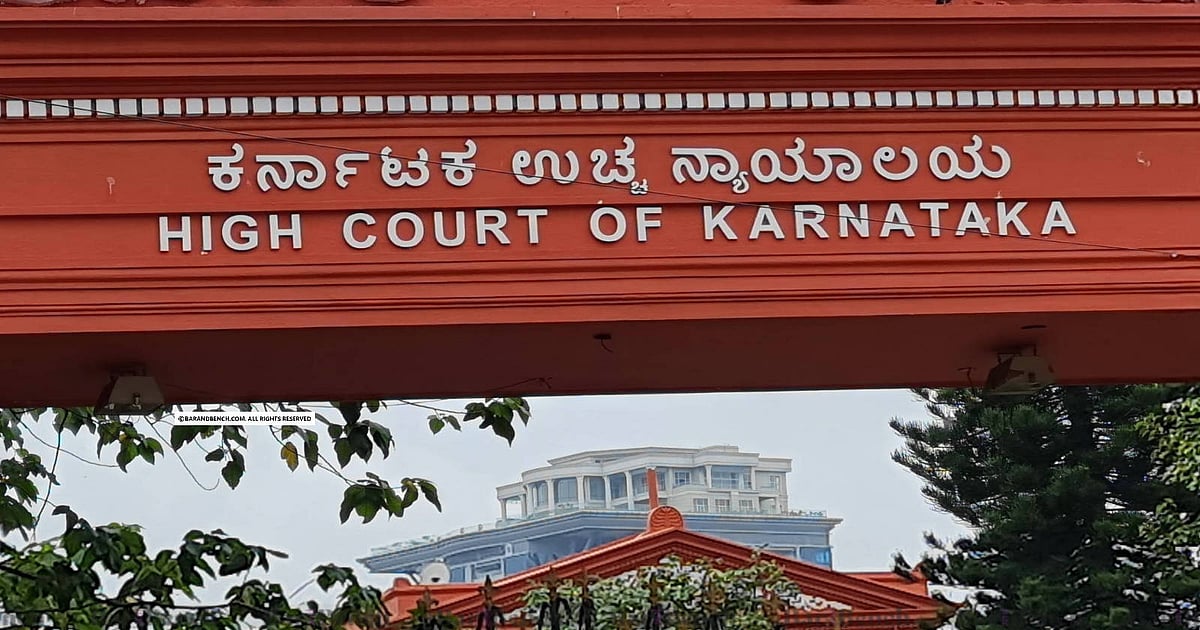
Karnataka High Court upholds law assigning first appeals against senior civil judge decrees to district courts
Abstract
The Karnataka High Court recently affirmed the constitutional validity of the Karnataka Civil Courts (Amendment) Act, 2023, and the Karnataka High Court (Amendment) Act, 2023. These amendments reassign the jurisdiction for first appeals against decrees and orders of Senior Civil Judges from the High Court to the District Courts, irrespective of the pecuniary value of the suit. While upholding the amendments, a Division Bench comprising Chief Justice Vibhu Bakhru and Justice C.M. Poonacha, in the case of Smt. Narayanamma v. State of Karnataka, critically read down Section 4 of the Civil Courts Amendment Act. This section had initially provided for retrospective application from August 28, 2007. The Court clarified that the retrospective effect would only apply to pending appellate proceedings, explicitly excluding appeals already concluded by final judgments and orders, and orders passed in proceedings that were pending. This decision aims to streamline the appellate process and reduce the High Court's backlog while safeguarding legal finality.
Introduction
In a significant development for judicial administration in India, the Karnataka High Court has upheld the constitutional validity of the Karnataka Civil Courts (Amendment) Act, 2023, and the Karnataka High Court (Amendment) Act, 2023. These legislative changes fundamentally alter the appellate hierarchy for civil matters originating from Senior Civil Judges, redirecting first appeals to District Courts rather than the High Court, irrespective of the suit's monetary value. The decision, rendered by a Division Bench led by Chief Justice Vibhu Bakhru and Justice C.M. Poonacha, addresses long-standing concerns regarding judicial efficiency and the burden of pendency on higher courts.
This ruling carries substantial implications for litigants and legal practitioners across Karnataka, redefining the forum for challenging initial decrees and orders. The amendments are primarily aimed at decongesting the High Court and enhancing access to justice at the district level, where a greater number of judicial officers can expedite the appellate process. However, the Court's nuanced approach to the retrospective application of these amendments, particularly the reading down of Section 4 of the Civil Courts Amendment Act, introduces critical considerations regarding vested rights and the finality of judgments. This article will delve into the background of these amendments, analyze the High Court's reasoning, and explore the practical consequences for the legal fraternity.
Background
Prior to the 2023 amendments, the appellate jurisdiction for decrees and orders passed by Senior Civil Judges in Karnataka was bifurcated based on pecuniary limits. Appeals from suits valued above ₹10 lakh were to be filed directly before the High Court, while those below this threshold lay with the District Courts. This system, while seemingly clear, contributed to a significant backlog of first appeals in the High Court, impeding the swift dispensation of justice.
To address this challenge, the Karnataka State Legislature enacted the Karnataka Civil Courts (Amendment) Act, 2023 (Karnataka Act No. 33 of 2024), and the Karnataka High Court (Amendment) Act, 2023 (Karnataka Act No. 32 of 2024). The core objective of these amendments was to streamline the appellate process by assigning all first appeals from the decrees and orders of Senior Civil Judges in civil matters to the District Courts, thereby removing the pecuniary distinction that previously directed higher-value appeals to the High Court. Section 19 of the Karnataka Civil Courts Act, 1964, was specifically amended to reflect this change. Crucially, Section 4 of the Karnataka Civil Courts (Amendment) Act, 2023, initially stipulated that these amendments would come into force retrospectively from August 28, 2007, a provision that became a central point of contention in the challenge before the High Court.
Analysis
The Division Bench of the Karnataka High Court, in Smt. Narayanamma v. State of Karnataka, meticulously examined the constitutional validity of the 2023 amendments. The Court affirmed the legislative competence of the State to alter appellate forums and pecuniary jurisdictions, thereby upholding the core provisions of both the Karnataka Civil Courts (Amendment) Act, 2023, and the Karnataka High Court (Amendment) Act, 2023. The rationale behind this legislative shift, primarily to reduce the pendency of first appeals in the High Court and to utilize the increased number of competent judicial officers in District Courts, was acknowledged as a valid objective.
A pivotal aspect of the judgment, however, concerned the retrospective operation clause embedded in Section 4 of the Civil Courts Amendment Act, which sought to apply the changes from August 28, 2007. The High Court found this blanket retrospective application to be problematic, noting that it could lead to absurdity and confusion, potentially nullifying judgments already rendered by courts that had jurisdiction prior to the amendment. Adhering to established principles of statutory interpretation, which generally presume prospective operation unless retrospectivity is expressly provided or necessarily implied and does not impair vested rights, the Court proceeded to 'read down' Section 4.
The reading down of Section 4 was critical: the Court explicitly excluded from its retrospective operation (i) all appeals that stood concluded by final judgments and orders, and (ii) all orders passed in proceedings that were pending. This means that judgments already delivered under the unamended law remain valid and cannot be reopened. The retrospective effect was thus limited to pending appellate proceedings, which would be transferred to the competent District Courts and continue from the stage at which they were transferred. This nuanced interpretation balances the legislative intent of judicial reform with the fundamental legal principle of finality of judgments and the protection of vested rights. The Court also dismissed challenges based on Article 14 of the Constitution, finding a reasonable distinction between Senior Civil Judges in districts and City Civil Judges in Bengaluru, whose appeals continue to lie before the High Court.
Conclusion
The Karnataka High Court's decision to uphold the 2023 amendments, while significantly reading down their retrospective application, marks a crucial juncture in the state's judicial landscape. For practising attorneys, the immediate implication is a clear shift in the appellate forum for first appeals against decrees and orders of Senior Civil Judges. All such appeals will now lie before the respective District Courts, irrespective of the pecuniary value, necessitating a reorientation of litigation strategies and familiarity with District Court procedures for these matters.
Practitioners must meticulously review the status of ongoing cases. Appeals that have already been concluded by final judgments and orders, or where orders have been passed in pending proceedings, are unaffected by the retrospective clause. However, pending appellate proceedings will be transferred to the jurisdictional District Courts and will continue from their current stage. This requires careful identification of affected cases and proactive measures to ensure compliance with the new jurisdictional framework. Moving forward, legal professionals should advise clients on the revised appellate path, emphasizing the importance of timely and correctly filed appeals in the appropriate forum. The long-term impact of these amendments on judicial efficiency and access to justice in Karnataka will be an important area to monitor, as the High Court's backlog is expected to reduce, potentially leading to faster resolution of first appeals at the district level.
Citations
- 1.Karnataka Civil Courts (Amendment) Act, 2023 (Karnataka Act No. 33 of 2024)
- 2.Karnataka High Court (Amendment) Act, 2023 (Karnataka Act No. 32 of 2024)
- 3.Smt. Narayanamma v. State of Karnataka, connected with Babu Rao & Anr. v. State of Karnataka (W.P. No. 17588/2024 c/w W.A. No. 200260/2025, High Court of Karnataka, Bengaluru, dated 8 July 2026)
How does this affect your business?
Get an AI analysis of this article grounded in your jurisdictions, practice areas, and any policy documents you've uploaded to Wansom.