
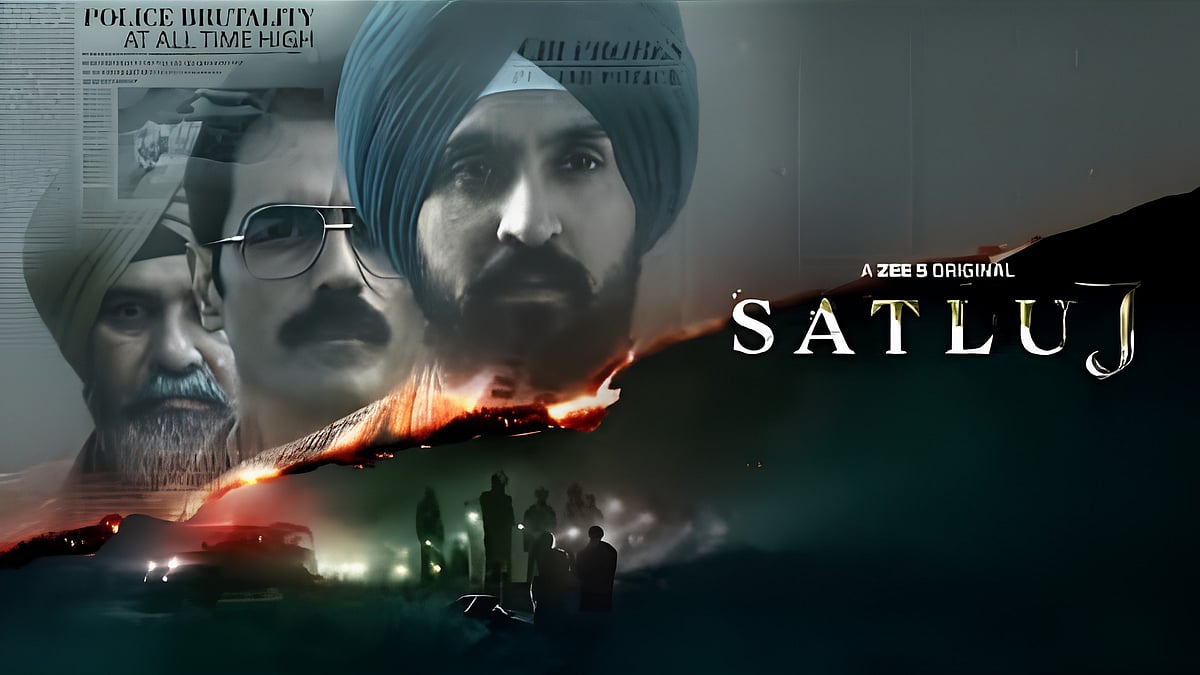
PIL in Punjab and Haryana High Court to restore Diljit Dosanjh-starrer Satluj on Zee5
Abstract
A Public Interest Litigation (PIL) has been filed before the Punjab and Haryana High Court seeking the restoration of the Diljit Dosanjh-starrer film, "Satluj," on the Zee5 OTT platform. The film, based on the life of human rights activist Jaswant Singh Khalra, was removed just two days after its release, following a prolonged battle with the Central Board of Film Certification (CBFC) for theatrical release. The petitioner, a Zee5 subscriber, argues that the abrupt removal, without a disclosed statutory order or judicial direction, curtails the fundamental right to freedom of speech and expression under Article 19(1)(a) of the Constitution of India and deprives subscribers of paid content. This case highlights the ongoing tension between artistic freedom, historical narratives, and government regulation in the digital streaming space.
Introduction
The digital landscape in India is currently grappling with significant questions surrounding content regulation and fundamental rights, brought to the forefront by a recent Public Interest Litigation (PIL) in the Punjab and Haryana High Court. The petition seeks the immediate restoration of the film "Satluj" on the Zee5 Over-The-Top (OTT) platform, a move that has ignited a crucial debate on censorship in the digital age. The film, starring popular actor Diljit Dosanjh, chronicles the life and work of human rights activist Jaswant Singh Khalra, whose investigations into alleged extra-judicial killings in Punjab during the 1980s and 1990s stirred considerable controversy.
"Satluj" (originally titled "Punjab '95") endured a protracted struggle with the Central Board of Film Certification (CBFC), which reportedly demanded over a hundred cuts and title changes, effectively stalling its theatrical release for three years. Despite these hurdles, the film eventually premiered on Zee5, only to be taken down from the platform in India within 48 hours. The Union government has reportedly cited "security concerns" and "obligations" under the Information Technology (Intermediary Guidelines and Digital Media Ethics Code) Rules, 2021 (IT Rules, 2021) for directing its removal, and a panel has been constituted to review its content. The PIL contends that this arbitrary removal infringes upon the fundamental right to freedom of speech and expression guaranteed by Article 19(1)(a) of the Constitution of India, and the public's right to receive information. This case is poised to be a significant test of the boundaries of digital content regulation and the scope of fundamental rights in India's evolving media landscape.
Background
The legal framework governing freedom of speech and expression in India is primarily enshrined in Article 19(1)(a) of the Constitution, which guarantees all citizens the right to freedom of speech and expression. However, this right is not absolute and is subject to "reasonable restrictions" under Article 19(2) on grounds such as the sovereignty and integrity of India, the security of the State, public order, decency or morality, contempt of court, defamation, or incitement to an offence. Historically, films intended for theatrical release have been subject to pre-censorship under the Cinematograph Act, 1952, with the CBFC playing a crucial role in certifying content. The Supreme Court, in cases like *K.A. Abbas v. Union of India* (1971), upheld the constitutionality of film censorship, acknowledging the medium's significant impact, but stressed that such restrictions must align with Article 19(2).
With the advent of digital streaming platforms, the regulatory landscape expanded to include the Information Technology (Intermediary Guidelines and Digital Media Ethics Code) Rules, 2021. These rules were introduced to regulate online content, including that on OTT platforms, establishing a three-tier grievance redressal mechanism and an oversight mechanism under the Ministry of Information & Broadcasting. Crucially, the IT Rules, 2021, stipulate that intermediaries must remove or disable access to unlawful information upon receiving a court order or being notified by the appropriate government or its agency. This provision is particularly relevant in light of the Supreme Court's landmark judgment in *Shreya Singhal v. Union of India* (2015), which struck down Section 66A of the Information Technology Act, 2000, and clarified that intermediaries are only obligated to take down content upon receipt of a court order or a government direction, not merely on private complaints.
Analysis
The core of the PIL challenging the removal of "Satluj" rests on the argument that the film's abrupt disappearance from Zee5, without any publicly disclosed statutory order or judicial direction, constitutes an arbitrary curtailment of fundamental rights. The petitioner invokes Article 19(1)(a), asserting both the right of the creators to express their artistic vision and the right of the public, particularly paid subscribers, to receive information and artistic expression. This aligns with judicial pronouncements in *Odyssey Communications (P) Ltd. v. Lokvidayan Sanghatana* (1995), where the Supreme Court affirmed that the right to exhibit films is part of the fundamental right under Article 19(1)(a).
The government's reported directive to Zee5, citing "security concerns" and "obligations" under the IT Rules, 2021, will be subject to intense scrutiny. The *Shreya Singhal* judgment is a pivotal precedent here, as it unequivocally established that content removal by intermediaries must be predicated on a reasoned order from a court or a government authority, not on vague or arbitrary grounds. The PIL's contention that the removal lacked "statutory order, judicial direction or lawful authority" directly challenges whether the government's action met the stringent procedural safeguards mandated by the Supreme Court. The IT Rules, 2021, while empowering the government to issue directions, must operate within the constitutional limits of Article 19(2) and the principles laid down in *Shreya Singhal*.
Furthermore, the film's subject matter – the life of Jaswant Singh Khalra and his investigations into alleged human rights abuses – inherently touches upon sensitive historical events. The prior extensive censorship demands by the CBFC for the film's theatrical release, including numerous cuts and title changes, underscore the contentious nature of its narrative. While OTT platforms are not subject to CBFC certification, they are regulated under Part III of the IT Rules, 2021. The formation of a government panel to review the film's content post-removal raises questions about the transparency and due process involved in such directives. This situation also echoes the principles from *S. Rangarajan v. P. Jagjivan Ram* (1989), where the Supreme Court held that the mere threat of public outrage or demonstrations should not be a ground to curtail the freedom of speech of filmmakers if the content does not fall under the reasonable restrictions of Article 19(2).
The case also brings to light the potential for a "chilling effect" on artistic expression and critical historical narratives, particularly when content is removed without clear, legally sound justifications. The argument that subscribers have been deprived of content for which they paid also introduces a consumer rights dimension to the freedom of expression debate. The High Court's decision will likely clarify the extent to which government directives can compel OTT platforms to remove content, and the procedural safeguards required to protect fundamental rights in the digital streaming ecosystem.
Conclusion
The PIL concerning the film "Satluj" presents a critical juncture for the interpretation and enforcement of freedom of speech and expression in India's rapidly evolving digital media landscape. The Punjab and Haryana High Court's decision will have far-reaching implications for content creators, OTT platforms, and the viewing public, potentially setting a precedent for how historical narratives and sensitive subjects are treated in the online space. It will test the robustness of the safeguards established in *Shreya Singhal v. Union of India* against arbitrary content removal and clarify the scope of "lawful authority" under the IT Rules, 2021.
For legal practitioners, this case underscores the increasing importance of understanding the interplay between constitutional rights, traditional censorship laws, and emerging digital regulations. Attorneys advising OTT platforms, content producers, and distributors must be acutely aware of the procedural requirements for content moderation and removal, ensuring compliance with judicial precedents and statutory provisions. The outcome of this PIL will be closely watched as it will likely shape the future of digital content regulation in India, emphasizing the need for transparency, due process, and a balanced approach that respects both national security concerns and fundamental freedoms.
Citations
- 1.Article 19(1)(a) of the Constitution of India
- 2.Article 19(2) of the Constitution of India
- 3.Cinematograph Act, 1952
- 4.Information Technology Act, 2000
- 5.Information Technology (Intermediary Guidelines and Digital Media Ethics Code) Rules, 2021
- 6.K.A. Abbas v. Union of India, (1971) 2 SCC 78
- 7.Odyssey Communications (P) Ltd. v. Lokvidayan Sanghatana, (1995) 2 SCC 637
- 8.S. Rangarajan v. P. Jagjivan Ram, (1989) 2 SCC 574
- 9.Shreya Singhal v. Union of India, (2015) 5 SCC 1
How does this affect your business?
Get an AI analysis of this article grounded in your jurisdictions, practice areas, and any policy documents you've uploaded to Wansom.