
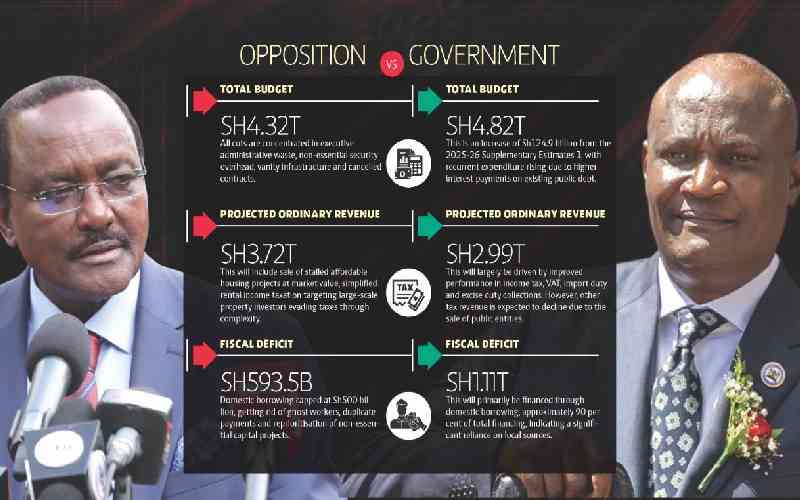
People Vs State: Mbadi's Sh4.8tr budget raises tax fears
Abstract
Kenya's proposed KES 4.8 trillion budget has ignited significant apprehension among legal professionals and the public regarding potential tax increases. This article examines the legal framework underpinning Kenya's budget-making process and the implications of the substantial revenue targets on existing tax legislation. It delves into the constitutional provisions governing taxation, the role of the Public Finance Management Act, 2012, and recent legislative proposals, such as those in the Finance Bill, 2024, which sought to expand the tax base and introduce new levies. Practitioners must navigate an evolving tax landscape, marked by increased scrutiny on compliance and potential for disputes, necessitating a deep understanding of the Income Tax Act (Cap 470), Value Added Tax Act, 2013, and the dispute resolution mechanisms provided by the Tax Appeals Tribunal Act, 2013.
Introduction
The recent announcement of a KES 4.8 trillion budget by the Treasury Cabinet Secretary has sent ripples across Kenya's economic and legal landscape, sparking widespread concerns over an impending increase in the tax burden on citizens and businesses. This colossal spending plan, aimed at financing government operations and development projects, necessitates substantial revenue generation, inevitably leading to a re-evaluation and potential expansion of the country's tax regime. The public outcry and pushback, as highlighted by the excerpt, underscore the delicate balance between national fiscal needs and the economic realities faced by Kenyans.
For legal practitioners, this development signals a period of heightened activity and complexity. The government's ambitious revenue targets often translate into new tax policies, amendments to existing tax laws, and intensified enforcement efforts by the Kenya Revenue Authority (KRA). Understanding the constitutional and statutory underpinnings of taxation, anticipating legislative changes, and advising clients on compliance and dispute resolution strategies are paramount in this evolving environment. This article will dissect the legal framework governing Kenya's budget and taxation, analyze the implications of recent tax proposals, and provide insights for legal professionals navigating this challenging terrain.
Background
Kenya's public finance management is primarily governed by the Constitution of Kenya, 2010, and the Public Finance Management Act, 2012 (PFM Act). Article 209 of the Constitution grants the national government the exclusive power to impose income tax, value-added tax (VAT), customs duties, and excise tax, while county governments are limited to property rates and entertainment taxes, with Parliament having the power to authorize other taxes. Crucially, Article 210 mandates that no tax or licensing fee may be imposed, waived, or varied except as provided by legislation, emphasizing the principle of legality in taxation.
The budget process itself is a structured, year-round constitutional process, guided by the PFM Act, 2012, which outlines four key stages: formulation, approval, implementation, and audit and evaluation. The Cabinet Secretary for the National Treasury is required to table budget estimates before the National Assembly at least two months before the end of each financial year, typically by June 13th. The Finance Act, passed annually, gives legal effect to the revenue and tax measures proposed in the budget statement. This framework ensures parliamentary oversight and, theoretically, public participation in financial matters, as enshrined in Article 201 of the Constitution, which advocates for openness and accountability.
Analysis
The proposed KES 4.8 trillion budget for the fiscal year 2024/2025, with projected revenue of KES 3.4 trillion, necessitates aggressive tax measures to bridge the significant fiscal deficit. The Finance Bill, 2024, which was introduced to the National Assembly, contained a wide array of tax and administrative proposals aimed at expanding the tax base and increasing revenues. While some controversial proposals, such as a 16% VAT on bread and taxes on motor vehicles and mobile money transfers, were withdrawn following public protests, the Bill still sought to introduce significant changes.
Key proposals in the Finance Bill, 2024, included the introduction of a motor vehicle tax at a rate of 2.5% of the vehicle's value, with a minimum of KES 5,000 and a maximum of KES 100,000. It also proposed a minimum top-up tax for multinational corporations with a consolidated annual turnover of at least EUR 750 million, ensuring an effective corporate tax rate of at least 15%, aligning with OECD Pillar 2 initiatives. Furthermore, the Bill aimed to replace the Digital Services Tax (DST) with a Significant Economic Presence (SEP) tax, targeting non-resident persons providing services through a digital marketplace, with a deemed taxable profit of 20% of gross turnover subject to a 30% income tax. Excise duty on certain services offered by non-residents through digital platforms was also proposed.
These proposals, if enacted, would significantly amend existing legislation such as the Income Tax Act (Cap 470), the Value Added Tax Act, 2013, and the Excise Duty Act, 2015. Legal challenges to such measures often arise on grounds of constitutionality, particularly concerning public participation requirements and the fairness of the tax burden, as stipulated in Article 201 of the Constitution. The Tax Appeals Tribunal (TAT), established under the Tax Appeals Tribunal Act, 2013, serves as the primary quasi-judicial body for resolving tax disputes between taxpayers and the Kenya Revenue Authority (KRA), offering a specialized avenue for challenging assessments, penalties, or enforcement actions. Decisions of the TAT can be further appealed to the High Court.
The withdrawal of some contentious clauses from the Finance Bill, 2024, following public pressure, underscores the importance of public participation in the legislative process and the potential for judicial review to challenge tax laws that fail to meet constitutional muster. This dynamic environment requires practitioners to not only understand the letter of the law but also to be attuned to the political and social pressures influencing tax policy and implementation.
Conclusion
The ambitious KES 4.8 trillion budget and the associated tax proposals represent a critical juncture for Kenya's fiscal policy and its impact on the legal and business communities. Legal practitioners must remain vigilant in monitoring the final versions of the Finance Act and other related legislation, as these will dictate the new compliance landscape. Advising clients will require a comprehensive understanding of the amended Income Tax Act, Value Added Tax Act, and Excise Duty Act, as well as the procedural intricacies of the Tax Procedures Act, 2015.
Furthermore, the increased emphasis on revenue collection is likely to lead to more aggressive enforcement by the KRA, potentially resulting in a rise in tax audits and disputes. Practitioners should therefore be prepared to guide clients through objection procedures with the KRA and, if necessary, represent them before the Tax Appeals Tribunal and higher courts. Proactive tax planning, robust compliance frameworks, and a readiness to engage with the dispute resolution mechanisms will be essential for businesses and individuals seeking to navigate Kenya's evolving tax regime successfully. The ongoing tension between the government's need for revenue and the public's capacity to bear increased taxation will continue to shape the legal discourse around fiscal policy in Kenya.
Citations
- 1.Constitution of Kenya, 2010, Article 201
- 2.Constitution of Kenya, 2010, Article 209
- 3.Constitution of Kenya, 2010, Article 210
- 4.Income Tax Act, Cap 470
- 5.Public Finance Management Act, 2012
- 6.Tax Appeals Tribunal Act, 2013
- 7.Value Added Tax Act, 2013
- 8.Finance Bill, 2024 (as referenced in news and analysis, noting its withdrawal and subsequent legislative developments)
How does this affect your business?
Get an AI analysis of this article grounded in your jurisdictions, practice areas, and any policy documents you've uploaded to Wansom.