
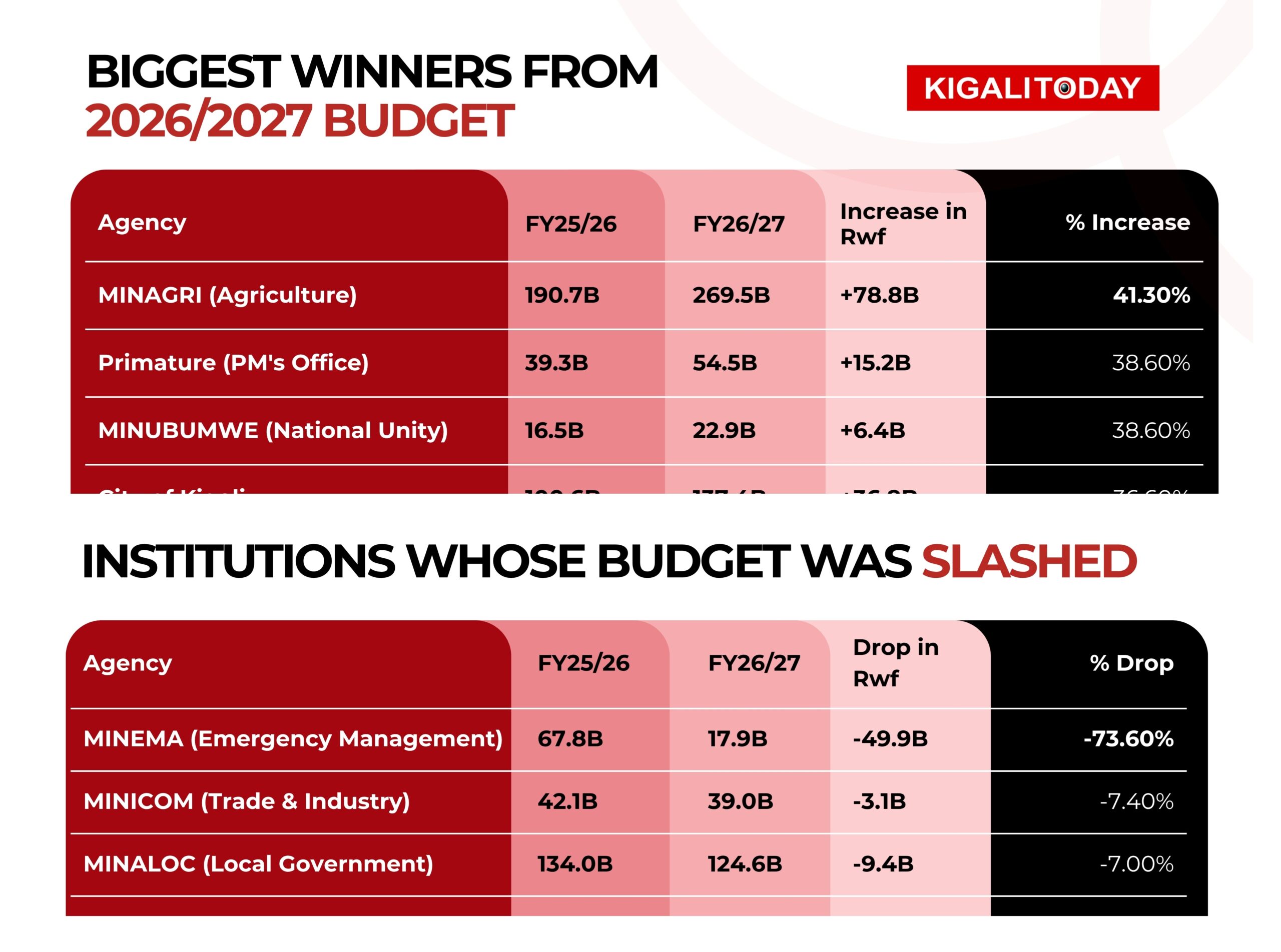
Rwanda’s 2026/27 Budget: Agriculture Biggest Winner, Disaster Management Funding Down 70%
Abstract
Rwanda's 2026/27 national budget marks a significant shift in governmental priorities, with an increase of over Rwf844 billion from the previous fiscal year. A key highlight is the substantial boost in funding for the agriculture sector, signaling a strategic focus on food security and economic transformation. Conversely, the budget allocates a drastic 70% reduction in funding for disaster management. This article examines the legal implications of these budgetary reallocations for legal professionals, considering Rwanda's public finance management framework, national development strategies, and specific sectoral laws. It delves into the opportunities arising from increased agricultural investment and the potential legal challenges and liabilities stemming from diminished disaster management resources, urging practitioners to understand the evolving regulatory landscape.
Introduction
Rwanda's proposed budget for the 2026/27 financial year, reflecting an increase of more than Rwf844 billion compared to the revised 2025/26 budget, signals a clear recalibration of national priorities. The most prominent shifts include a substantial increase in allocations to the agriculture sector, positioning it as the primary beneficiary, while funding for disaster management faces a drastic reduction of 70%. These budgetary decisions are not merely economic adjustments; they carry significant legal implications that demand close attention from practising attorneys and legal professionals.
These reallocations are set against the backdrop of Rwanda's ambitious National Strategy for Transformation (NST2) and its existing robust legal framework governing public finance, environmental protection, and sectoral development. Understanding the interplay between these budgetary shifts and the underlying legal and policy instruments is crucial for advising clients, mitigating risks, and capitalizing on new opportunities. This article will explore the legal context, analyze the implications of these funding changes, and highlight key considerations for legal practitioners in Rwanda.
The thesis of this article is that while the increased investment in agriculture presents new avenues for legal practice related to land use, investment, and regulatory compliance, the sharp cut in disaster management funding may expose the state and other entities to heightened legal risks and challenges in fulfilling existing statutory obligations. Legal professionals must therefore be adept at navigating these evolving priorities to provide comprehensive and forward-looking counsel.
Background
The allocation of public funds in Rwanda is governed by a comprehensive legal framework, primarily rooted in the Constitution of the Republic of Rwanda of 2003, as amended, and the Organic Law N° 002/2022.OL of 12/12/2022 on Public Finance Management. These instruments establish the principles and modalities for sound management of the state budget, including planning, budgeting, allocation, monitoring, and reporting. The budget process involves the Cabinet's approval of the medium-term budget framework and annual estimates, followed by submission to both Chambers of Parliament for legislative approval, with the Chamber of Deputies adopting the annual budget after consultation with the Senate. This framework underscores the legal imperative for all expenditures to be within the approved budget, prohibiting extra-budgetary spending.
Budgetary decisions are also strategically aligned with Rwanda's overarching national development blueprint, the National Strategy for Transformation (NST). The current phase, NST2 (2024-2029), builds upon the achievements of NST1 (2017-2024) and aims for sustainable economic growth, social welfare, and governance improvements, with key priorities including enhancing climate resilience, developing domestic industries, and improving food security. Sector-specific policies further guide these allocations. The National Agriculture Policy (2018) envisions a nation with food security, nutritional health, and sustainable agricultural growth, emphasizing modern agribusiness technologies and professionalizing farmers.
Conversely, disaster management is guided by the National Disaster Management Policy (revised 2023), which establishes guiding principles for disaster risk management (DRM) and aims to strengthen legal and institutional frameworks to increase resilience. This policy is complemented by Law N°41/2015 of 29/08/2015 Relating to Disaster Management, which outlines responsibilities and mechanisms for disaster preparedness, response, and recovery. Furthermore, the National Environment and Climate Change Policy (2019) integrates climate change considerations into cross-government planning, aiming for a clean and healthy environment resilient to climate variability. These foundational legal and policy documents provide the essential context for understanding the implications of the 2026/27 budget shifts.
Analysis
The significant increase in agriculture funding aligns directly with Rwanda's strategic objectives under NST2, which prioritizes food security, economic transformation, and job creation through a productive and market-led agricultural sector. For legal practitioners, this presents a burgeoning area of practice. Increased investment is likely to spur activity in land acquisition and tenure, requiring expertise in land law and property rights, particularly given Rwanda's dense population and land pressure. Furthermore, the emphasis on professionalizing farming, as seen in the proposed plant production bill to classify farmers and introduce enforceable standards, will necessitate legal advice on regulatory compliance, contract farming agreements, and dispute resolution within the agricultural value chain. Environmental compliance, including Environmental Impact Assessments (EIAs) mandated by Law N°48/2018 on the environment, will also be critical for new agricultural projects, creating demand for environmental law specialists.
In stark contrast, the 70% reduction in disaster management funding raises serious legal concerns. Rwanda is highly susceptible to natural hazards such as floods, landslides, and droughts, exacerbated by climate change and unsustainable land use practices. The National Disaster Management Policy and Law N°41/2015 on Disaster Management place clear responsibilities on the state and other entities for disaster risk reduction and response. A drastic cut in funding could potentially undermine the capacity to fulfill these statutory obligations, leading to increased vulnerability and a higher likelihood of legal challenges related to negligence, inadequate protection, or failure to implement disaster preparedness measures. Legal professionals may see a rise in claims for damages following disaster events, requiring expertise in public liability, administrative law, and potentially human rights law if the state's duty to protect its citizens is perceived to be breached.
Moreover, the reduction in disaster management funding appears to be at odds with the objectives of the National Environment and Climate Change Policy (2019), which aims to enhance climate resilience and strengthen meteorological and early warning services. This creates a potential policy contradiction that legal professionals must navigate when advising clients on climate-related risks and adaptation strategies. The Organic Law N° 002/2022.OL of 12/12/2022 on Public Finance Management mandates adherence to approved budget allocations and prohibits unlawful expenditures, meaning that the reduced allocation itself becomes the legal ceiling for spending in this critical sector. This necessitates a rigorous legal interpretation of the state's minimum obligations under existing disaster management laws, even with reduced financial resources.
The budgetary shifts also highlight the ongoing role of parliamentary oversight. The Constitution and the Organic Law on Public Finance Management empower Parliament to scrutinize budget allocations and hold the executive accountable for their implementation. Legal professionals involved in public policy advocacy or legislative analysis will find these shifts a critical area for engagement, ensuring that budgetary decisions are transparent, justifiable, and consistent with national laws and international commitments, such as the Sendai Framework for Disaster Risk Reduction. The balance between economic development priorities and essential public safety functions, as reflected in these budget figures, will undoubtedly be a subject of ongoing legal and policy debate.
Conclusion
Rwanda's 2026/27 budget presents a dual landscape for legal professionals: significant opportunities in a burgeoning agricultural sector and considerable challenges arising from reduced disaster management funding. The increased allocation to agriculture, driven by national development strategies, will likely stimulate legal work in areas such as investment, land law, environmental compliance, and contract negotiation, particularly with the anticipated professionalization of farming through new legislation. Practitioners should proactively engage with these developments, advising clients on regulatory frameworks, securing investments, and navigating the evolving agricultural legal landscape.
Conversely, the drastic cut in disaster management funding demands a heightened awareness of potential legal liabilities and risks. Legal professionals must prepare to advise on issues of state responsibility, insurance, and potential litigation arising from inadequate disaster preparedness or response. It is crucial to monitor how the government intends to fulfill its statutory obligations under existing disaster management and climate change laws with significantly reduced resources. This budgetary shift underscores the dynamic nature of public policy and its profound impact on legal practice, requiring attorneys to remain vigilant, adaptable, and well-versed in both the economic drivers and the intricate legal frameworks that govern Rwanda's development trajectory.
Citations
- 1.Constitution of the Republic of Rwanda of 2003, as amended
- 2.Law N° 006/2021 of 5 February 2021 (Investment Code)
- 3.Law N°41/2015 of 29/08/2015 Relating to Disaster Management
- 4.Law N°48/2018 on the environment
- 5.National Agriculture Policy (2018)
- 6.National Disaster Management Policy (revised 2023)
- 7.National Environment and Climate Change Policy (2019)
- 8.National Strategy for Transformation (NST1)
- 9.National Strategy for Transformation (NST2)
- 10.Organic Law N° 002/2022.OL of 12/12/2022 on Public Finance Management
- 11.Organic Law No 37/2006 of 12/09/2006 on State Finances and Property
How does this affect your business?
Get an AI analysis of this article grounded in your jurisdictions, practice areas, and any policy documents you've uploaded to Wansom.