
Suisse/ Cameroun : Issa Tchiroma Bakary saisit la justice de deux plaintes
Abstract
Issa Tchiroma Bakary, a prominent Cameroonian opposition figure, has initiated legal proceedings in Switzerland and France, filing criminal complaints against President Paul Biya and other senior Cameroonian officials. These complaints, lodged in July and June 2026 respectively, invoke the principle of universal jurisdiction to address alleged serious human rights violations, including massacres, torture, and arbitrary detentions, that reportedly occurred following the disputed presidential election of October 12, 2025. The actions underscore a growing trend of leveraging extraterritorial jurisdiction in European courts to seek accountability for international crimes committed in countries where domestic judicial avenues are perceived as compromised, highlighting the complexities and potential impact of such high-profile international litigation.
Introduction
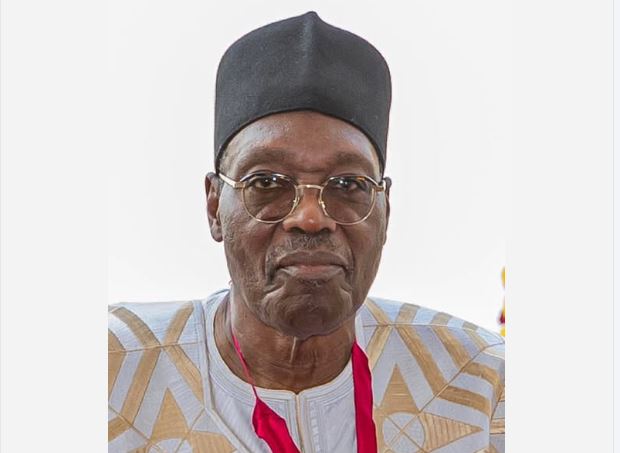
In a significant development for international justice and human rights accountability, Issa Tchiroma Bakary, a leading Cameroonian opposition figure and former minister, has announced the filing of criminal complaints in Switzerland and France. These legal actions target President Paul Biya and numerous high-ranking Cameroonian political, military, and security officials, alleging their responsibility for massacres, torture, enforced disappearances, and other acts of repression. The complaints specifically relate to the aftermath of the disputed presidential election held on October 12, 2025, where Tchiroma Bakary claims widespread human rights abuses were perpetrated against citizens demanding electoral truth.
These filings are particularly noteworthy as they invoke the principle of universal jurisdiction, a crucial doctrine in international law that allows national courts to prosecute individuals for certain egregious international crimes, regardless of where the crimes were committed or the nationality of the perpetrators or victims. The move reflects a strategic effort to bypass perceived limitations and lack of independence within Cameroon's domestic judicial system, seeking redress in European jurisdictions renowned for their robust legal frameworks on international crimes. This article will delve into the legal basis for these complaints in Switzerland and France, examine the challenges inherent in such prosecutions, and consider the broader implications for international accountability.
Background
Universal jurisdiction is a fundamental principle of international law, asserting that certain crimes are so heinous that they offend the conscience of humanity and can therefore be prosecuted by any state, irrespective of territoriality, nationality of the perpetrator or victim, or specific state interest. This doctrine emerged historically to combat piracy and has since expanded to encompass grave international crimes such as genocide, crimes against humanity, war crimes, and torture. Its application serves as a critical tool in the fight against impunity, particularly when the state where the crimes occurred is unwilling or unable to prosecute.
Both Switzerland and France have incorporated aspects of universal jurisdiction into their national legal systems, albeit with varying conditions and scope. Switzerland, a signatory to numerous international human rights instruments and the Rome Statute of the International Criminal Court, recognizes universal jurisdiction as a customary principle. Its Criminal Code (SCC) provides for the prosecution of genocide (Art. 264 SCC), crimes against humanity (Art. 264a SCC), and war crimes (Arts. 264b to 264j SCC), as well as crimes under international agreements (Art. 6 SCC) and particularly serious crimes proscribed by the international community (Art. 7, para. 2(b) and Art. 264m SCC). The Swiss Criminal Procedure Code (SCPC) further outlines the framework, with federal jurisdiction for these crimes established under Article 23(1)(g) SCPC. However, Switzerland generally applies a “conditional” or “limited” form of universal jurisdiction, requiring the alleged perpetrator to be present on Swiss territory and not subject to extradition to another competent jurisdiction.
France's legal framework for universal jurisdiction is primarily found in its Code of Criminal Procedure (CCP). Article 689 CCP allows for jurisdiction over offenses committed outside France when an international convention grants such authority to French courts. Specifically, Article 689.2 CCP implements the Convention against Torture, enabling universal jurisdiction for torture. For other international crimes like genocide, crimes against humanity, and war crimes, France's application of universal jurisdiction has historically been subject to several restrictive conditions, often referred to as the “four locks.” These include requirements for double criminality, the habitual residence of the accused in France, the principle of subsidiarity (requiring the International Criminal Court to decline jurisdiction), and prosecutorial discretion. Crimes against humanity are defined in Articles 211-1 to 212-3 of the French Criminal Code and are punishable by life imprisonment without a statute of limitations.
Analysis
Issa Tchiroma Bakary's complaints in Switzerland and France leverage these distinct universal jurisdiction frameworks. In Switzerland, the complaints concerning massacres, torture, and repression would likely fall under the categories of crimes against humanity (Art. 264a SCC) and potentially war crimes (Arts. 264b-264j SCC) or torture, given the allegations of widespread and systematic attacks against a civilian population in the post-election context. The critical hurdle for Swiss authorities will be the requirement that the alleged perpetrators be present on Swiss territory. Should any of the named officials travel to Switzerland, the legal basis for investigation and prosecution would be firmly established, provided no extradition to another competent jurisdiction is underway.
In France, the legal landscape for universal jurisdiction has seen recent developments that may be favorable to Tchiroma Bakary's case. While the “four locks” have historically constrained such prosecutions, recent rulings by the French Cour de Cassation in May 2023 have notably loosened some of these restrictions. Specifically, the Court clarified that the double criminality requirement for international crimes is satisfied if the underlying acts (e.g., murder, rape, torture) are criminalized in the state where they occurred, even if that state's domestic law does not explicitly recognize “crimes against humanity” as such. This interpretation could significantly ease the path for prosecuting crimes against humanity (Arts. 211-1 to 212-3 French Criminal Code) and war crimes.
However, the requirement of “habitual residence” in France for the accused (Art. 689-11 CCP) remains a significant challenge. This condition necessitates a substantial connection between the accused and France, going beyond mere transit. While the complaints also cite ongoing repression and inhumane detention conditions, the primary focus on post-election violence from October 2025 means the alleged crimes are recent, falling well within any potential temporal jurisdiction limitations. The complaints specifically mention massacres, torture, and arbitrary detentions, which align with crimes against humanity and torture, both subject to universal jurisdiction in France under certain conditions.
The unusual aspect of the complaints referencing events following a future election (October 2025, with complaints filed in June/July 2026) has been clarified by subsequent reporting, indicating the allegations pertain to the aftermath of a disputed election that has already occurred. This temporal clarity grounds the complaints in actual alleged events, rather than speculative future ones. The success of these complaints will hinge on the ability of Tchiroma Bakary's legal team to provide compelling evidence, the willingness of Swiss and French judicial authorities to pursue the cases, and the eventual presence of the accused officials within the respective jurisdictions.
Conclusion
The criminal complaints filed by Issa Tchiroma Bakary in Switzerland and France represent a critical effort to hold alleged perpetrators of serious human rights violations accountable through the principle of universal jurisdiction. For legal practitioners, these cases highlight the increasing importance of understanding and navigating the complex and evolving landscape of international criminal law and extraterritorial jurisdiction. The distinct legal frameworks in Switzerland and France, with their respective conditions and recent judicial interpretations, offer both opportunities and formidable challenges for such high-stakes litigation.
Practitioners involved in human rights and international criminal law should closely monitor the progression of these complaints. The outcomes could set important precedents for the application of universal jurisdiction, particularly concerning the interpretation of habitual residence and double criminality in France, and the practical enforcement mechanisms in Switzerland. These cases serve as a powerful reminder that national courts in countries like Switzerland and France can play a vital role in combating impunity for international crimes, offering a potential avenue for justice when domestic systems fail. The pursuit of accountability, even across borders, remains a cornerstone of international legal order and a beacon of hope for victims of grave abuses.
Citations
- 1.Swiss Criminal Code (SCC), Recueil systématique 311.0
- 2.French Code of Criminal Procedure (CCP)
- 3.French Criminal Code
- 4.Convention against Torture and Other Cruel, Inhuman or Degrading Treatment or Punishment (CAT)
- 5.Rome Statute of the International Criminal Court (ICC)
- 6.Law No. 95-1 of January 2, 1995 (France)
- 7.Law No. 96-432 of May 22, 1996 (France)
- 8.Law No. 2010-930 of August 9, 2010 (France)
- 9.Swiss Criminal Procedure Code (SCPC)
- 10.Journal du Cameroun (July 11, 2025, as per excerpt)
- 11.CameroonOnline.org (June 15, 2026)
- 12.Africa Briefing (June 29, 2026)
- 13.Seneweb (July 05, 2026)
- 14.Wilson Musa, "Tchiroma Says He Files Criminal Complaints Against Biya, Senior Officials in Switzerland," (July 12, 2026)
How does this affect your business?
Get an AI analysis of this article grounded in your jurisdictions, practice areas, and any policy documents you've uploaded to Wansom.